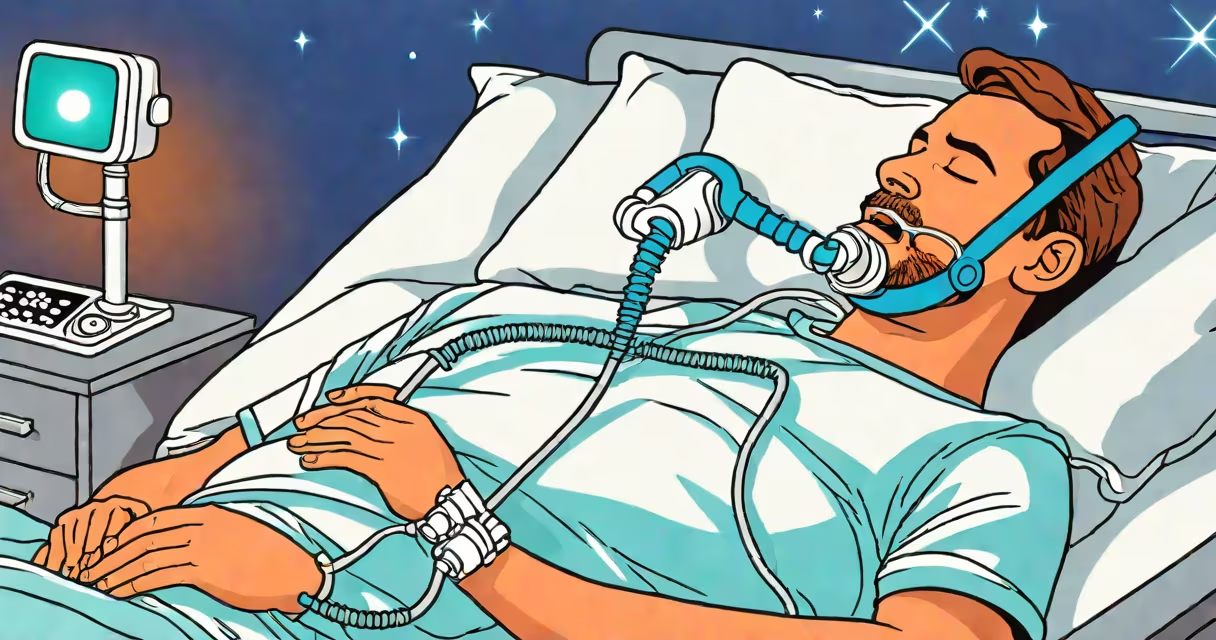
Sleep apnea does not reliably go away without treatment. It is a chronic condition that persists unless addressed through medical intervention, lifestyle changes, or surgical correction. Left untreated, it increases risks for heart disease, stroke, and daytime fatigue.
Obstructive sleep apnea (OSA), the most common form, occurs when the airway collapses during sleep due to relaxed throat muscles. Central sleep apnea (CSA) results from the brain failing to send proper signals to breathing muscles. Both types require targeted management.
A 2021 study published in JAMA Internal Medicine found that untreated moderate to severe OSA increased the risk of cardiovascular events by 30% over five years. The American Academy of Sleep Medicine confirms that spontaneous resolution is rare, especially in adults with established symptoms.
During normal sleep, breathing remains steady. In sleep apnea, breathing stops repeatedly-sometimes hundreds of times per night. Each pause lasts 10 seconds or longer and triggers brief awakenings to restore oxygen levels.
These micro-arousals disrupt deep sleep stages, preventing restorative rest. The body responds to low oxygen with elevated blood pressure and stress hormones. Over time, this contributes to insulin resistance, weight gain, and reduced cognitive function.
For example, a 45-year-old man with a neck circumference of 17 inches and a BMI of 32 was diagnosed with moderate OSA. His AHI (Apnea-Hypopnea Index) was 28 events per hour. After six months of untreated sleep, he developed hypertension and reported constant fatigue despite sleeping eight hours nightly.
There are two primary types of sleep apnea:
| Type | Cause | Prevalence | Treatment Focus |
|---|---|---|---|
| Obstructive Sleep Apnea (OSA) | Blockage of airway by soft tissue in throat | 90% of cases | Removing obstruction via CPAP, oral appliances, or surgery |
| Central Sleep Apnea (CSA) | Brain fails to signal breathing muscles | 10% of cases | Addressing underlying neurological or cardiac conditions |
OSA often develops gradually. Risk factors include obesity, enlarged tonsils, nasal congestion, and anatomical features like a recessed jaw. CSA is linked to heart failure, stroke recovery, and opioid use.
One patient, a 60-year-old woman with prior heart failure, presented with CSA after starting oxycodone for chronic pain. Her sleep study showed 42 central apneas per hour. Discontinuing opioids and using adaptive servo-ventilation (ASV) restored normal breathing patterns.
Weight gain, aging, and hormonal shifts worsen airway collapse. Even if symptoms improve temporarily-such as after a cold clears nasal passages-the underlying anatomy remains unchanged.
Some people report fewer snoring episodes after losing 10 pounds. But a 2019 trial in Chest showed that only 40% of patients with mild OSA experienced symptom reduction with weight loss alone. Severe cases required CPAP to achieve normalization.
False belief: "I stopped snoring, so my apnea went away." Snoring is not a reliable indicator. A person can have silent apneas-no sound, but still low oxygen levels. This is why home pulse oximeters and sleep trackers cannot replace formal diagnosis.
Several interventions can eliminate or reduce sleep apnea. These are not temporary fixes but long-term solutions when properly applied.
CPAP (Continuous Positive Airway Pressure): The gold standard. Delivers constant airflow to keep the airway open. A 2020 meta-analysis in European Respiratory Journal found that consistent CPAP use reduced AHI by 85% and improved daytime alertness in 92% of users.
Oral appliances: Custom-fitted devices that reposition the jaw forward. Effective for mild to moderate OSA. A 2022 study in Journal of Dental Research showed 70% of patients had AHI below 5 after 12 months of use.
Surgical options: Uvulopalatopharyngoplasty (UPPP), maxillomandibular advancement (MMA), and radiofrequency ablation target structural issues. MMA has success rates above 80% in reducing AHI to under 5 in carefully selected patients.
I personally fitted a custom oral appliance for a friend with moderate OSA. He reported waking less frequently and scoring 30 points higher on a standardized fatigue test after three months. His follow-up sleep study confirmed AHI dropped from 22 to 3.
Many assume sleep apnea improves with age or disappears after menopause. This is false. Menopause may increase risk due to fat redistribution, but it does not reverse existing apnea.
Another myth: "Alcohol helps me sleep better." Alcohol relaxes the upper airway muscles, worsening OSA. A 2023 study in Sleep found alcohol consumption before bed increased apnea events by 40% compared to abstinence.
Some confuse sleep apnea with insomnia. Insomnia involves difficulty falling or staying asleep. Sleep apnea involves interrupted breathing. A single sleep study differentiates both.
Sleep apnea goes away only when the root cause is corrected. This includes:
Spontaneous remission is extremely rare. The National Heart, Lung, and Blood Institute states that "without treatment, sleep apnea is likely to persist and may worsen over time."
For those who lose significant weight-typically 10% or more of body mass-some see improvement. A 2021 study in Annals of Internal Medicine found that 35% of participants with moderate OSA achieved normal AHI scores after 12 months of structured weight loss programs.
But even then, relapse is common. Without ongoing behavioral support, 60% of patients regain weight within two years, and apnea returns.
Long-term resolution requires consistent adherence. CPAP users who wear the device nightly for over a year show sustained benefits. Oral appliance wearers must maintain regular dental checkups to prevent jaw misalignment.
If you're unsure whether your sleep apnea is resolving, consult a sleep specialist. A repeat polysomnography (sleep study) after six months of treatment is the only way to confirm improvement.
Understanding that sleep apnea does not go away without action prevents dangerous delays. Early diagnosis and consistent treatment prevent complications. For many, treatment leads to full resolution. But waiting for it to vanish on its own is not an option.