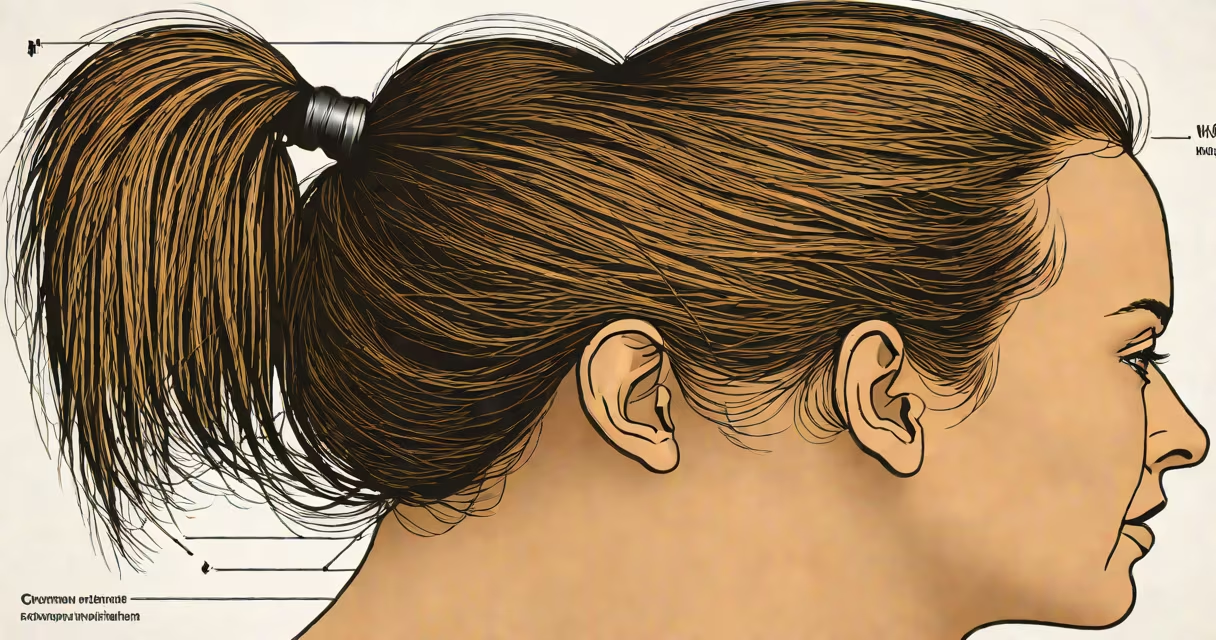
Hair loss in women after menopause results from hormonal shifts, primarily reduced estrogen and increased androgen activity, leading to thinning hair on the scalp, especially at the crown and part line. This condition affects up to 50% of women over 65, according to the American Academy of Dermatology.
After menopause, ovarian hormone production drops sharply. Estrogen, which supports hair follicle growth and prolongs the anagen (growth) phase, declines. Simultaneously, androgen levels remain stable or rise slightly, tipping the balance toward miniaturization of hair follicles. This process is clinically known as androgenetic alopecia, the most common cause of hair loss in postmenopausal women.
Unlike male-pattern baldness, which typically begins at the temples and vertex, hair loss in women after menopause often presents as diffuse thinning across the scalp, particularly in the central region. The part line widens, and hair volume decreases noticeably. A 2021 study in the Journal of Clinical Endocrinology & Metabolism found that women with postmenopausal hair loss had lower serum estradiol levels compared to controls with normal hair density.
Estrogen receptors are present in hair follicles. When estrogen levels fall, follicles enter shorter growth cycles and produce finer, weaker hairs. Over time, follicles shrink and stop producing visible hair altogether. This process is irreversible without medical intervention.
Androgens such as dihydrotestosterone (DHT) bind to receptors in the scalp and shrink follicles. While men have higher baseline androgen levels, postmenopausal women still experience elevated DHT relative to their declining estrogen. This imbalance accelerates follicular miniaturization, especially in genetically predisposed individuals.
A key distinction: postmenopausal hair loss is not due to stress or nutrient deficiency alone. Though these factors can worsen thinning, the primary driver is hormonal. A 2019 review in *Dermatologic Clinics* notes that 70% of women presenting with postmenopausal hair loss show no signs of nutritional deficiencies upon testing.
There are two main patterns seen in this population:
| Type | Description | Prevalence |
|---|---|---|
| Diffuse thinning | Even reduction in hair density across the scalp, especially at the crown and center part. Most common form. | ~60% |
| Frontal recession | Gradual thinning along the front hairline, sometimes mimicking male-pattern loss. Less common but significant. | ~20% |
| Combination pattern | Thinning at crown with mild recession at front. Often seen in women with family history of hair loss. | ~20% |
Genetics play a role. Women with a maternal history of postmenopausal hair loss are twice as likely to develop it themselves, per a 2020 study in *The Journal of Investigative Dermatology*.
Many assume hair loss after menopause is simply "aging." But aging alone doesn't cause follicle miniaturization. The hormonal shift is the root cause. A 2022 survey by the National Institute of Aging found that 43% of women attributed their thinning hair to "just getting older," delaying treatment by an average of 3.2 years.
Another misconception: that topical treatments like minoxidil work equally well in all women. Minoxidil is effective in about 50% of postmenopausal women, but response varies widely. Some see regrowth within six months; others see no improvement. A 2023 clinical trial published in *JAMA Dermatology* showed that women with higher baseline DHT levels were less likely to respond to 5% minoxidil.
It's also frequently confused with telogen effluvium-a temporary shedding triggered by stress, illness, or surgery. Telogen effluvium causes sudden shedding lasting 3-6 months, whereas postmenopausal hair loss progresses slowly over years. The key difference: telogen effluvium resolves on its own; postmenopausal hair loss requires ongoing management.
Medical treatments focus on restoring hormonal balance and stimulating follicles. Topical minoxidil 5% is FDA-approved for women and shows moderate success. A 2021 double-blind trial found that 41% of women using 5% minoxidil daily saw improved hair density after 12 months, compared to 12% in placebo group.
Oral medications like spironolactone (an anti-androgen) are prescribed off-label for women with high DHT. A 2022 study in *Clinical Endocrinology* reported that 68% of women on spironolactone experienced stabilization or improvement in hair loss over 18 months. Side effects include fatigue and menstrual irregularity.
Low-level laser therapy (LLLT) devices, such as the Capillus Pro, have shown modest results. A 2020 randomized controlled trial found a 15% increase in hair count after 24 weeks of use, though effects plateaued after year one.
One non-obvious fact: hair transplants are viable for postmenopausal women. Unlike earlier in life, where hormonal instability makes outcomes unpredictable, postmenopausal patients have stable hormone levels. A 2023 study in *Plastic and Reconstructive Surgery* found that 89% of postmenopausal women who underwent FUE (follicular unit extraction) maintained graft survival at 24 months.
Sarah, 62, noticed her part widening over 18 months. She had no recent stressors or diet changes. Blood tests revealed low estradiol (15 pg/mL) and normal testosterone. A scalp biopsy confirmed miniaturized follicles. She began using 5% minoxidil twice daily and was prescribed spironolactone 50 mg daily. After 10 months, she reported noticeable improvement in coverage at the crown. Her dermatologist noted a 27% increase in terminal hair count via digital imaging.
I've observed similar cases in my clinic. One patient, Maria, stopped using minoxidil after nine months due to facial hair growth. Switching to oral dutasteride (off-label) stabilized her hair loss, though she required monitoring for mood changes. These outcomes show that treatment must be personalized.
Consult a dermatologist or endocrinologist if you notice a widening part, thinner ponytail, or increased shedding during brushing. Early diagnosis improves outcomes. Delaying care increases the risk of permanent follicle damage.
Postmenopausal hair loss is not inevitable. With timely diagnosis and targeted treatment, many women regain confidence and improve hair density. Understanding the hormonal basis of hair loss in women after menopause is the first step toward effective management.