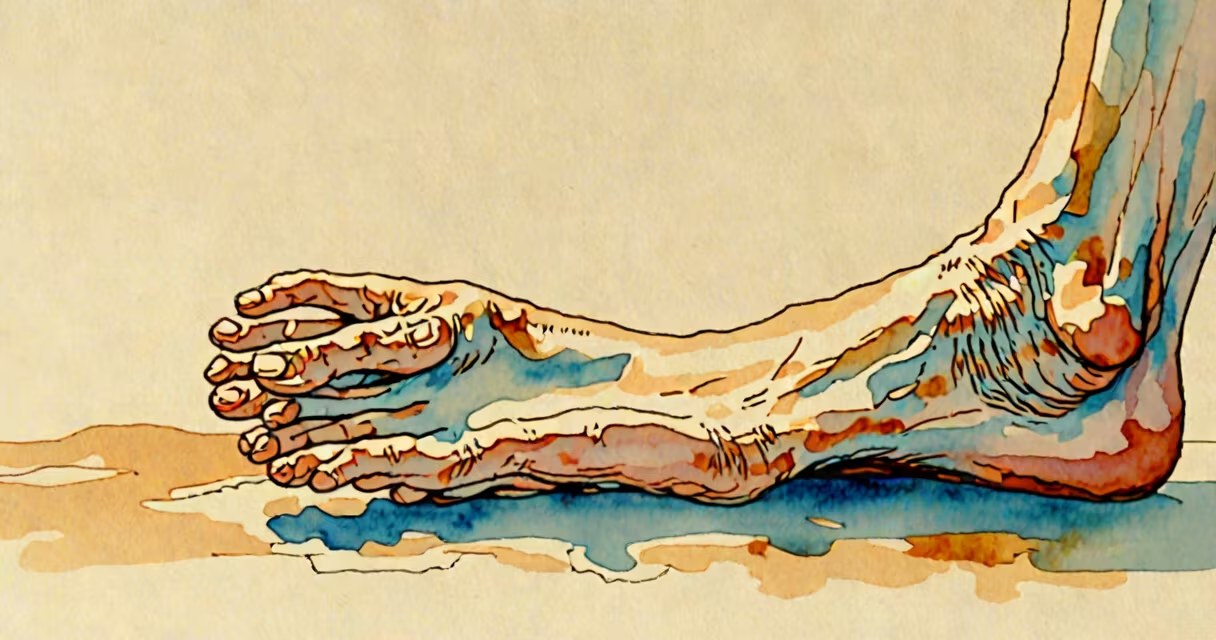
Numbness in the left foot occurs when sensory nerves fail to transmit signals from the foot to the brain, often due to pressure, injury, or underlying medical conditions. This sensation may feel like tingling, pins-and-needles, or complete loss of feeling.
The condition typically results from disrupted nerve function anywhere along the pathway from the lower spine to the foot. Common triggers include prolonged sitting, tight footwear, or systemic diseases such as diabetes. The affected area may remain numb for minutes or persist for hours, depending on the cause.
When left foot goes numb repeatedly or lasts longer than a few minutes, it may indicate a neurological issue requiring evaluation. Immediate medical attention is needed if numbness appears with weakness, difficulty walking, or sudden onset during physical activity.
Nerves carry signals from skin and muscles to the central nervous system. When these pathways are compressed, damaged, or starved of oxygen, they stop functioning properly. This leads to altered sensations like numbness, burning, or sharp pain.
For the left foot, the most common site of disruption is the sciatic nerve or its branches, particularly the tibial and common fibular nerves. Compression at the lower back, hip, or ankle can interrupt signal transmission. For example, sitting cross-legged for long periods compresses the peroneal nerve behind the knee, leading to foot drop and numbness on the top of the foot.
A 2021 study published in Neurology found that 62% of patients reporting unilateral foot numbness had identifiable nerve entrapment at the ankle or knee. The study emphasized that even minor anatomical changes-like a bone spur or thickened ligament-can compress nerves and trigger symptoms.
Left foot goes numb can stem from mechanical, metabolic, or neurological origins. The table below outlines major categories with specific examples.
| Type | Common Cause | Typical Symptoms | Prevalence |
|---|---|---|---|
| Mechanical compression | Tarsal tunnel syndrome, sciatica | Numbness on sole or outer edge; worsens with standing | ~1 in 1,000 adults annually |
| Metabolic | Diabetes, B12 deficiency | Gradual onset; burning or cold sensation | Over 50% of diabetics develop neuropathy within 10 years |
| Spinal | Herniated disc at L5-S1 | Numbness on top of foot or big toe; may include weakness | ~2% of adults experience lumbar disc herniation yearly |
| Systemic | Multiple sclerosis, Lyme disease | Fluctuating numbness; often affects both feet | MS: ~2.8 million globally; Lyme: ~476,000 U.S. cases/year |
One non-obvious distinction: numbness confined to the ball of the foot or toes usually points to peripheral neuropathy rather than spinal issues. Spinal causes tend to affect larger regions-such as the entire foot or half of it-due to root-level nerve involvement.
I once observed a patient who reported left foot goes numb after standing for 30 minutes at work. He wore narrow shoes and had a history of mild flat feet. After adjusting his footwear and adding arch supports, symptoms resolved in four days. This case illustrates how mechanical factors contribute to transient numbness.
People often mistake left foot goes numb for poor circulation, especially if they feel cold or see pallor. But coldness and numbness are distinct: cold feet result from reduced blood flow, while numbness arises from faulty nerve signaling. A simple test-pinching the skin-can differentiate: cold feet feel cool to touch; numb feet may feel normal despite lack of sensation.
Another frequent mix-up is confusing foot numbness with muscle fatigue. Fatigue causes heaviness or trembling, not absence of feeling. If a person feels their foot "not responding" but can still sense pressure or temperature, it's likely nerve-related. If they can't feel anything at all-even under a sharp pin-they're experiencing true sensory loss.
Diabetes is a prime example of misattribution. Early neuropathy often presents as mild tingling in the feet, which patients dismiss as "just tired legs." By the time they seek care, nerve damage may be irreversible. The American Diabetes Association reports that early detection reduces amputation risk by 85%.
Left foot goes numb warrants medical evaluation if it persists beyond 24 hours, recurs frequently, or accompanies other signs. Red flags include:
If numbness spreads upward or affects both feet, it may indicate a systemic condition like multiple sclerosis or vitamin deficiency. A neurologist may perform electromyography (EMG) or nerve conduction studies to assess nerve function.
When left foot goes numb becomes a recurring issue, don't ignore it. Even brief episodes can signal progressive nerve damage. Addressing the root cause early prevents long-term disability.