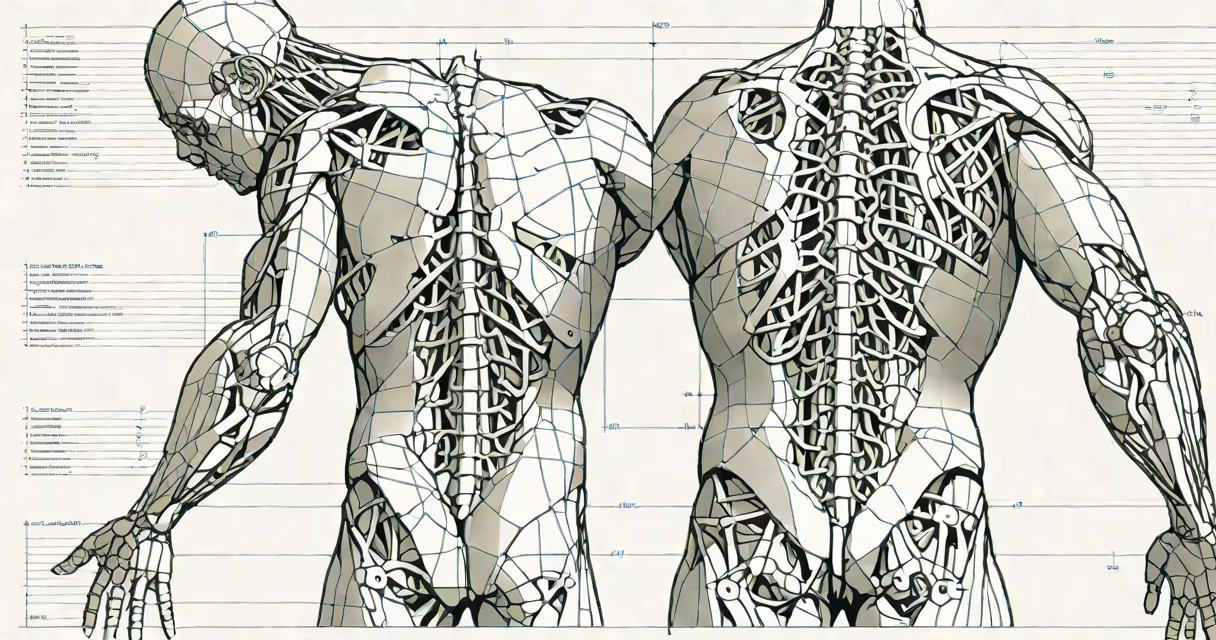
The right side of the human body houses specific organs and skeletal structures that support important functions. These include the liver, right lung, gallbladder, right kidney, and parts of the digestive tract. This arrangement is consistent across most people due to bilateral symmetry in human anatomy.
Human bodies are bilaterally symmetrical, meaning left and right sides mirror each other in structure. However, internal organ placement is not perfectly symmetrical. The liver sits primarily on the right side, occupying most of the upper right quadrant of the abdomen. The right lung is slightly larger than the left to accommodate the heart's position on the left side of the chest. The gallbladder lies beneath the liver, storing bile produced by the liver for digestion.
On the abdominal wall, the right side includes the ascending colon, part of the small intestine (duodenum), and the right kidney. The right hip bone and right femur form the lower limb's right side. The right arm extends from the right shoulder blade (scapula) and includes the humerus, radius, and ulna bones. The right hand contains eight carpal bones, five metacarpals, and fourteen phalanges.
Organs on the right side perform distinct roles. The liver processes nutrients, detoxifies blood, and produces proteins essential for clotting. The right lung handles oxygen exchange, with about 60% of pulmonary blood flow directed through it. The gallbladder releases bile into the duodenum during meals to break down fats.
When you raise your right arm, muscles such as the deltoid and trapezius contract. The right biceps brachii flexes the elbow, while the right extensor carpi radialis stabilizes the wrist. Nerves from the brachial plexus carry signals from the spinal cord to these muscles. Damage to the right cervical spinal nerves can impair movement or sensation on the right side.
A 2021 study published in Journal of Anatomy confirmed that right-sided dominance in motor control affects reaction times. Participants showed faster response times when using their right hand for tasks requiring precision, such as pressing buttons in sequence. This reflects the brain's preference for the dominant hemisphere controlling the opposite side of the body.
Many assume both lungs are equal in size. In reality, the right lung has three lobes-upper, middle, and lower-while the left has only two. The presence of the heart in the left thoracic cavity compresses the left lung, making it smaller. The right lung compensates by expanding more during inhalation.
Another misconception is that the appendix is always on the right side. While it is located in the lower right quadrant of the abdomen, it is not on the right side of the body's central axis. Its position varies slightly between individuals, but it consistently lies near the junction of the small and large intestines in the right lower quadrant.
Some confuse the right side with the dorsal side. Dorsal refers to the back, not the right. The right side is lateral-the side facing away from the body's midline. For example, the right ear is lateral, not dorsal. Lateral and medial are anatomical terms describing relative positions to the body's centerline.
| Category | Body Parts on the Right Side | Function |
|---|---|---|
| Abdominal Organs | Liver, gallbladder, right kidney, ascending colon, duodenum | Digestion, filtration, nutrient processing |
| Chest | Right lung, right clavicle, right scapula | Oxygen exchange, structural support |
| Limbs | Right arm (humerus, radius, ulna), right hand (carpals, metacarpals) | Movement, manipulation, sensation |
| Skeletal | Right hip bone, right femur, right tibia/fibula | Weight-bearing, locomotion |
One non-obvious fact: the right side of the body often shows greater muscle mass in right-handed individuals. A 2019 study in Frontiers in Human Neuroscience found that right-handed adults had 8-12% more muscle density in the right upper limb compared to the left. This difference arises from habitual use, not anatomy.
A 34-year-old patient reported sharp pain in the upper right abdomen after eating fried food. The doctor suspected cholecystitis-gallbladder inflammation. Imaging revealed thickened gallbladder walls and a 1.2 cm stone in the cystic duct. The diagnosis was confirmed via ultrasound, a standard tool for evaluating right-sided abdominal issues.
After treatment with antibiotics and dietary changes, symptoms resolved. The patient later learned that the gallbladder is positioned on the right side of the abdomen, beneath the liver. This explains why pain from gallstones typically presents in the right upper quadrant.
I once observed a medical student struggle to locate the right kidney during an ultrasound lab. The instructor pointed out that the right kidney sits lower than the left due to the liver's weight pushing it downward. This positional difference is critical for accurate imaging and avoids misdiagnosis.
People often ask, "What's under my right ribs?" The answer includes the liver, right kidney, and part of the large intestine. The liver occupies the upper right quadrant, extending from the ribcage down toward the midline. The right kidney lies just below the diaphragm, tucked behind the liver and adjacent to the spine.
Understanding what body part is on the right side matters for health, injury assessment, and medical communication. Knowing the location of organs and limbs prevents confusion during emergencies and improves accuracy in self-reporting symptoms.
When you refer to the right side of the body, you're identifying a region with specific anatomy. The liver, right lung, gallbladder, and right kidney are key components. This knowledge supports better health decisions and clearer conversations with healthcare providers.
Knowing which body part is on the right side helps clarify anatomy, diagnose conditions, and understand bodily function. Always consider the full context of location, function, and individual variation.