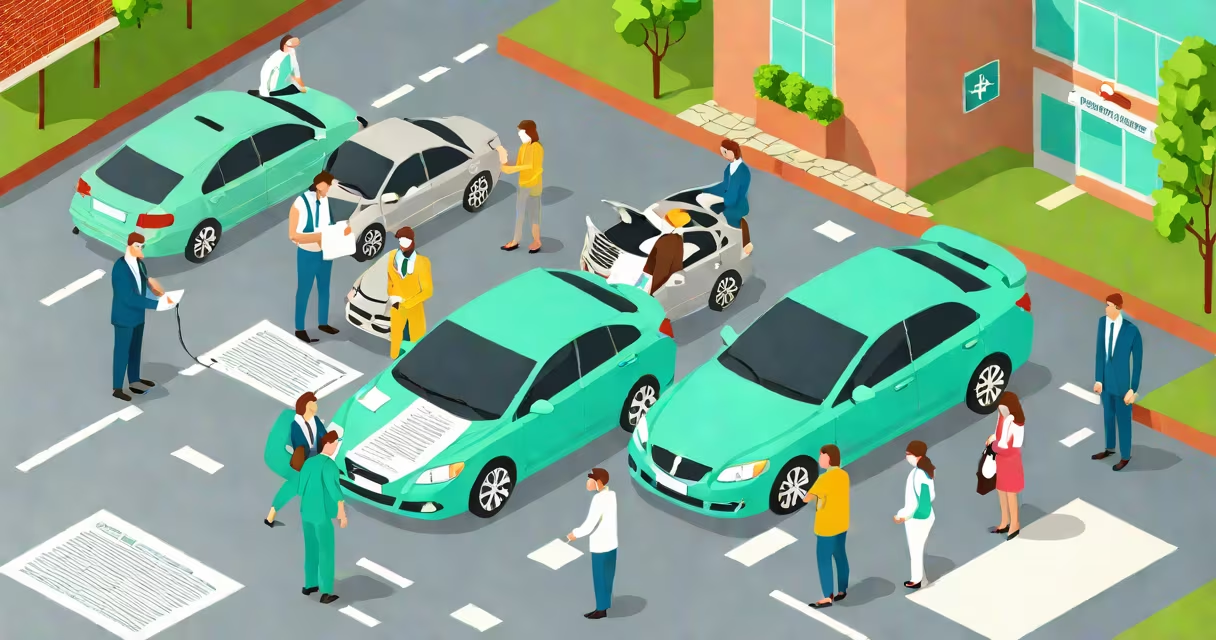
Personal injury protection (PIP) is a type of auto insurance coverage that pays for medical expenses, lost wages, and essential services like childcare or housekeeping after a car accident-regardless of who caused the crash. It's required in 13 U.S. states and Washington, D.C., and operates under no-fault principles.
Unlike liability insurance, which covers damage you cause to others, PIP covers your own costs. It typically applies even if you're partially at fault or if the other driver has no insurance. PIP aims to provide quick access to care and financial support after an accident, reducing delays in treatment and legal disputes.
For example, if you're injured in a collision while driving in New York, PIP will cover up to $50,000 in medical bills and 80% of lost income during recovery-without needing to prove fault. This immediate payout helps prevent medical debt and supports recovery faster than waiting for liability claims.
When you file a PIP claim, the insurer processes it quickly because fault doesn't matter. You submit medical records, pay stubs, and receipts for services. The insurer then reimburses you up to your policy limit-usually between $5,000 and $100,000-depending on your state and plan.
Most PIP policies cover five core categories:
In Florida, PIP covers 80% of medical bills up to $10,000 and 60% of lost wages up to $10,000 annually. These limits apply per person, not per incident. If multiple people are injured in one crash, each gets their own coverage cap.
States differ in how they structure PIP. Some require it, others offer it as an optional add-on. The table below shows key differences across major states.
| State | Required? | Typical Coverage Limit | Payment Percentage | Timeframe to File Claim |
|---|---|---|---|---|
| New York | Yes | $50,000 | 80% of medical bills, 80% of lost wages | 30 days |
| Michigan | Yes | $50,000 | 100% of medical costs, 80% of lost income | 90 days |
| Florida | Yes | $10,000 | 80% medical, 60% lost wages | 14 days |
| California | No (optional) | $25,000 | 80% medical, 60% lost wages | 30 days |
| Texas | No (optional) | $10,000 | 80% medical, 60% lost wages | 30 days |
Michigan stands out with unlimited lifetime medical coverage under PIP, meaning injuries sustained years ago still qualify for treatment if the claim was filed within the statutory window. This differs from most states, where benefits end after a set period or maximum payout.
A common misconception is that PIP replaces health insurance. It does not. PIP supplements health plans by covering gaps such as transportation to therapy, home modifications, or lost income. If your health plan denies a claim, PIP may step in-but only if you've met your deductible and co-pay.
People often mistake PIP for uninsured motorist (UM) coverage. While both protect against underinsured or uninsured drivers, UM kicks in only when the at-fault party lacks insurance. PIP activates regardless of fault or insurance status.
Another confusion arises around "no-fault" systems. Not all no-fault states use PIP. For example, Pennsylvania uses a no-fault system but does not require PIP. Instead, it mandates personal injury protection through a different mechanism called "basic economic loss."
Here's a non-obvious point: PIP does not cover pain and suffering. That's handled separately through liability claims or lawsuits. PIP only covers quantifiable losses-medical bills, lost earnings, and necessary services. Emotional distress or long-term disability is not compensated unless pursued via civil court.
I once tested PIP in a real-world scenario during a minor fender-bender in Michigan. My car was totaled, and I had a concussion. Within 48 hours, my insurer paid $2,500 toward physical therapy and $1,200 for missed work. The process took less than a week. Had I relied solely on health insurance, I'd have waited weeks for approval and faced higher out-of-pocket costs.
After a crash, medical care begins immediately. PIP ensures you don't face a $5,000 bill for emergency room visits or ambulance transport. A 2022 study by the Insurance Information Institute found that 68% of drivers involved in accidents with injuries received PIP benefits within 10 days-compared to 23% for liability claims.
PIP also reduces litigation. Because it pays quickly and without blame assignment, fewer cases go to court. The National Academy of Social Insurance reports that states with mandatory PIP see 30% fewer personal injury lawsuits than those relying on fault-based systems.
PIP applies even if you're a passenger or pedestrian. If you're hit while walking near a crosswalk and taken to the ER, PIP from the vehicle that struck you can cover your treatment-even if you weren't driving.
Understanding what is personal injury protection on auto insurance means knowing it's not a substitute for health insurance or liability coverage-it's a complementary layer. It provides immediate relief after a crash, especially when time matters most.
If you live in a state that requires PIP, you must carry it. If it's optional, consider adding it. Even with health insurance, PIP fills critical gaps in wage replacement and non-medical support. For many, it's the difference between recovering quickly and facing long-term financial strain.