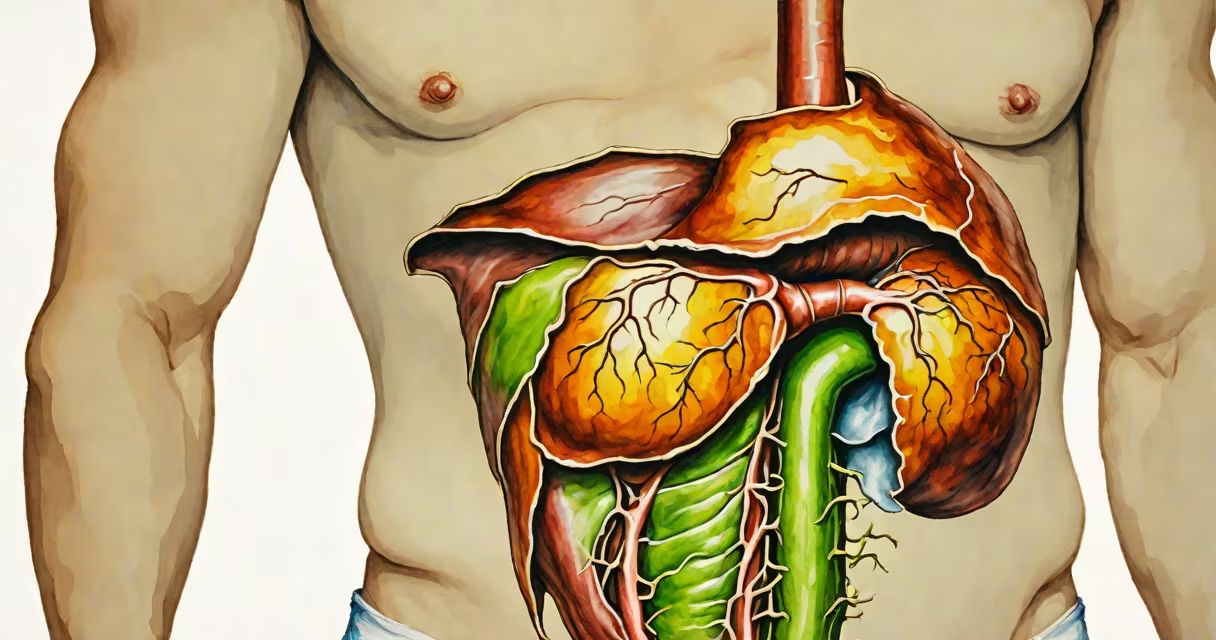
The gallbladder is a small, pear-shaped organ located under the liver on the right side of the abdomen, tucked beneath the lower edge of the ribcage. It stores and concentrates bile produced by the liver and releases it into the small intestine during digestion to help break down fats.
When food enters the small intestine, especially fatty meals, the gallbladder contracts and pushes stored bile through the common bile duct into the duodenum. This process aids in fat emulsification and absorption. The gallbladder itself does not produce bile-it only stores and concentrates it, which can become up to ten times more potent than freshly made bile.
For most people, the gallbladder is not essential for survival. After removal, bile flows continuously from the liver into the intestines rather than being stored. Many individuals adapt well to life without it, though some report changes in digestion, such as increased bowel movements after eating fatty foods.
The gallbladder functions as a reservoir and release mechanism for bile. Bile is synthesized by the liver at a rate of about 500-1000 mL per day. When not needed, bile drains into the gallbladder via the hepatic duct. During meals, particularly those high in fat, hormones like cholecystokinin trigger the gallbladder to contract and empty its contents into the small intestine through the cystic duct and then the common bile duct.
Without proper gallbladder function, fat digestion becomes less efficient. This can lead to symptoms like bloating, diarrhea, and discomfort after eating fatty meals. These issues often appear when the gallbladder fails to empty properly due to gallstones blocking the outflow.
A 2020 study published in Journal of Clinical Gastroenterology found that 65% of patients who underwent cholecystectomy reported improved quality of life within six months, especially those with symptomatic gallstones. However, 15% experienced persistent digestive issues, underscoring that while the organ is not important, its absence can affect some individuals' daily comfort.
Many people assume the gallbladder is located near the stomach or left side of the abdomen. This is incorrect. The gallbladder lies in the right upper quadrant (RUQ) of the abdomen, directly under the liver. Pain in this area-especially after eating-can indicate gallbladder disease.
Another frequent error is equating gallbladder pain with heart attack symptoms. While both can cause upper abdominal or chest pain, gallbladder-related pain typically occurs after meals, especially fatty ones, and may radiate to the right shoulder or between the shoulder blades. Heart attack pain tends to be more constant, often accompanied by shortness of breath, sweating, or jaw pain.
Some confuse gallbladder issues with pancreatitis. Both involve the biliary system and can present with severe upper abdominal pain. But pancreatitis pain usually centers in the upper middle abdomen and worsens after eating, whereas gallbladder pain is more localized to the right side and often follows a meal.
Gallbladder problems fall into several categories based on their underlying cause:
| Type | Description | Prevalence |
|---|---|---|
| Gallstones | Hard deposits formed from cholesterol or bilirubin. Most common cause of gallbladder disease. | Approximately 10-15% of adults in the U.S. have gallstones; 1-4% develop symptoms annually. |
| Cholecystitis | Inflammation of the gallbladder, often due to blocked ducts from stones. | Acute cholecystitis affects ~1 in 100 adults per year. |
| Biliary dyskinesia | Normal anatomy but poor gallbladder contraction; diagnosed via HIDA scan. | Accounts for ~10% of gallbladder surgeries despite normal ultrasound results. |
One non-obvious fact: not all gallstones cause symptoms. Up to 80% of people with gallstones remain asymptomatic. A 2019 review in Annals of Internal Medicine concluded that routine screening for gallstones in asymptomatic individuals offers no benefit and may lead to unnecessary surgery.
Consider a 45-year-old woman who experiences sharp pain in her right upper abdomen after eating fried chicken. The pain lasts 30 minutes and radiates to her right shoulder. She has no fever, vomiting, or jaundice. An ultrasound shows multiple gallstones and a thickened gallbladder wall. Her doctor diagnoses acute cholecystitis and recommends laparoscopic cholecystectomy.
This case illustrates how location and timing of pain help pinpoint the gallbladder as the source. The right upper quadrant pain after a fatty meal, combined with imaging findings, confirms the diagnosis. Without imaging, misdiagnosis as gastritis or muscle strain is common.
I once had my gallbladder removed after experiencing recurrent episodes of RUQ pain. Within weeks, I noticed that large portions of fatty food caused loose stools. Over time, I adjusted by reducing saturated fat intake and increasing fiber. My energy levels remained stable, and I no longer experienced sudden pain.
After surgery, bile flows continuously into the intestine. This means the body lacks the ability to store bile for release during meals. As a result, fat digestion becomes less efficient unless dietary habits are modified.
Knowing where the gallbladder is located-under the liver, on the right side-helps interpret symptoms and seek timely care. Persistent pain in the right upper abdomen after eating is a red flag. Early diagnosis prevents complications like infection or bile duct obstruction.