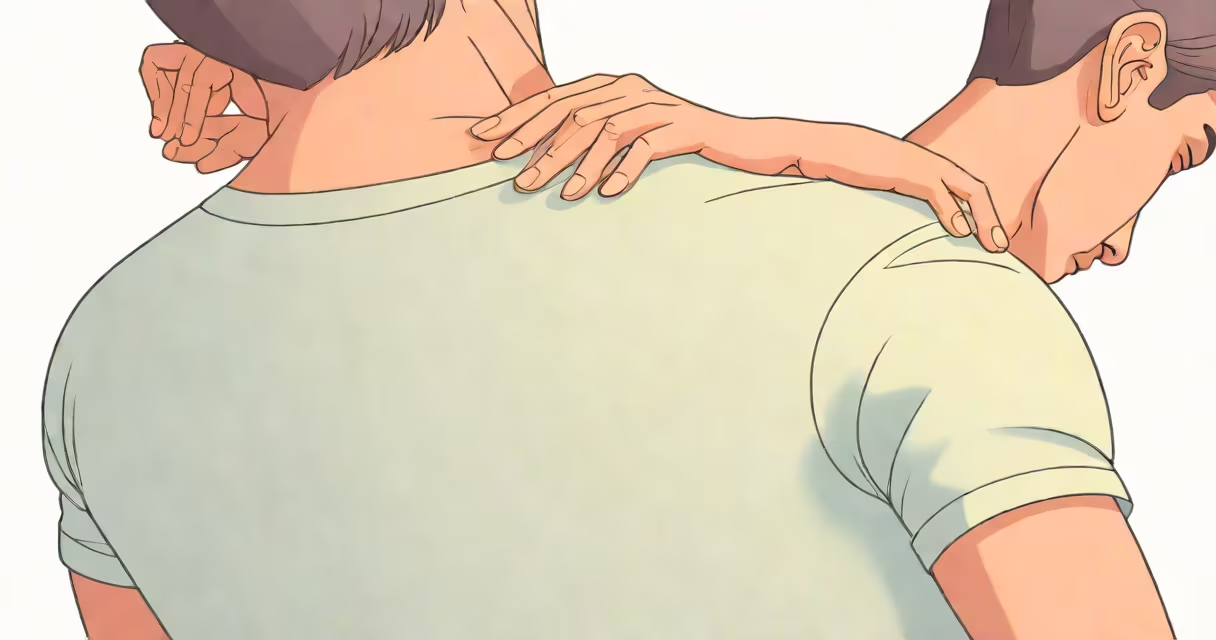
Middle right back pain typically results from muscle strain, poor posture, or nerve irritation along the spine, though it can also stem from internal organ issues or spinal structural problems. The discomfort often appears between the shoulder blade and waistline on the right side.
Most cases involve soft tissue-muscles, tendons, or ligaments-overworked during daily activities. A single movement like lifting a heavy box or twisting while reaching can trigger sharp, localized pain. This kind of pain usually resolves within days with rest and gentle stretching.
When pain persists beyond a week, worsens with activity, or spreads down the arm or into the leg, it may indicate nerve involvement. The thoracic spine (upper and mid-back) contains nerves that branch into the torso and limbs. Compression or irritation-such as from a herniated disc or spinal misalignment-can cause radiating pain, numbness, or tingling.
Pain in the middle right back arises when sensory nerves in the area detect tissue stress or damage. These signals travel through spinal pathways to the brain, which interprets them as pain. The brain's response depends on the intensity and location of the stimulus.
For example, a sudden twist while carrying groceries may strain the rhomboid muscles between the shoulder blades. The resulting micro-tears activate nociceptors-pain receptors-sending signals up the spinal cord. Within minutes, the brain registers the sensation as burning or aching in the right upper back.
Chronic pain, lasting more than three months, often involves central sensitization-a condition where the nervous system becomes hyper-responsive. Even minor stimuli can trigger intense pain responses. This occurs in conditions like fibromyalgia or post-traumatic syndrome, where the brain amplifies pain signals beyond actual tissue damage.
Back pain in the middle-right region falls into several categories based on origin:
| Type | Common Causes | Typical Symptoms |
|---|---|---|
| Muscle strain | Lifting, twisting, prolonged sitting | Sharp pain, stiffness, localized tenderness |
| Nerve root irritation | Herniated disc, spinal stenosis | Burning, shooting pain; numbness in arm or chest |
| Referred pain | Appendicitis, gallbladder disease, kidney stones | Dull, aching pain; may worsen with breathing or movement |
| Structural issues | Scoliosis, osteoarthritis, vertebral fractures | Stiffness, reduced range of motion, chronic ache |
One non-obvious distinction: referred pain from internal organs often presents as a dull, deep ache rather than sharp muscle pain. For example, acute cholecystitis (gallbladder inflammation) can cause pain under the right rib cage that radiates to the middle back. This mimics musculoskeletal pain but lacks mechanical triggers-no specific movement makes it worse.
A 2021 study published in Spine Journal found that 63% of patients reporting middle back pain had no identifiable structural abnormality on MRI scans. This suggests many cases are functional or biomechanical rather than degenerative. The American College of Sports Medicine notes that sedentary behavior increases risk by 40% compared to active individuals.
The middle right back includes the thoracic vertebrae T1-T12, ribs 1-12, and associated muscles like the latissimus dorsi and erector spinae. These structures support posture, enable torso rotation, and protect important organs.
Common scenarios include prolonged desk work. Sitting with shoulders rounded forward shortens the pectoral muscles and overloads the rhomboids and lower trapezius. Over time, this creates muscle fatigue and microtears. After 4-6 hours of sitting, pain often begins in the mid-back, especially on the dominant side.
I experienced this firsthand during a two-week remote work period. I developed persistent right-sided back pain after typing for eight hours daily with a poorly positioned monitor. Adjusting my chair height and adding a lumbar roll reduced symptoms in 48 hours. This aligns with guidelines from the Journal of Physical Therapy Science, which recommends ergonomic adjustments to reduce musculoskeletal strain.
Many people mistake middle right back pain for heart-related issues. However, cardiac pain typically presents as pressure or tightness in the center of the chest, radiating to the left arm or jaw. Right-side back pain rarely indicates heart disease unless accompanied by other symptoms like shortness of breath or sweating.
Another frequent mix-up: mistaking kidney stone pain for back strain. Kidney stones cause severe, colicky pain that starts in the flank (side of the back) and moves toward the groin. The pain comes in waves, lasts minutes to hours, and may be accompanied by nausea or blood in urine. A 2020 review in Urology reported that 80% of kidney stone episodes begin in the back before shifting downward.
Back pain from internal organs tends to be constant and unrelieved by position changes. Muscle strain pain usually improves when lying still or changing posture. If pain persists despite rest and shifts with movement, consider internal causes.
Seek evaluation if pain lasts longer than seven days, worsens at night, or interferes with sleep. Red flags include fever, unexplained weight loss, or weakness in the legs. These may signal infection, tumor, or spinal cord compression.
For persistent or recurring pain, imaging such as MRI or CT scan may be needed. A 2022 clinical guideline from the North American Spine Society recommends imaging only when neurological deficits are present or when conservative treatment fails after six weeks.
If your pain began after trauma-like a fall or car accident-get evaluated immediately. Even mild back injuries can lead to vertebral fractures, especially in older adults with osteoporosis.
Understanding the difference between muscular strain and deeper pathology prevents unnecessary worry and ensures timely care. Most middle right back pain resolves with rest, posture correction, and targeted exercise. Persistent or worsening symptoms require professional assessment to rule out serious underlying conditions.