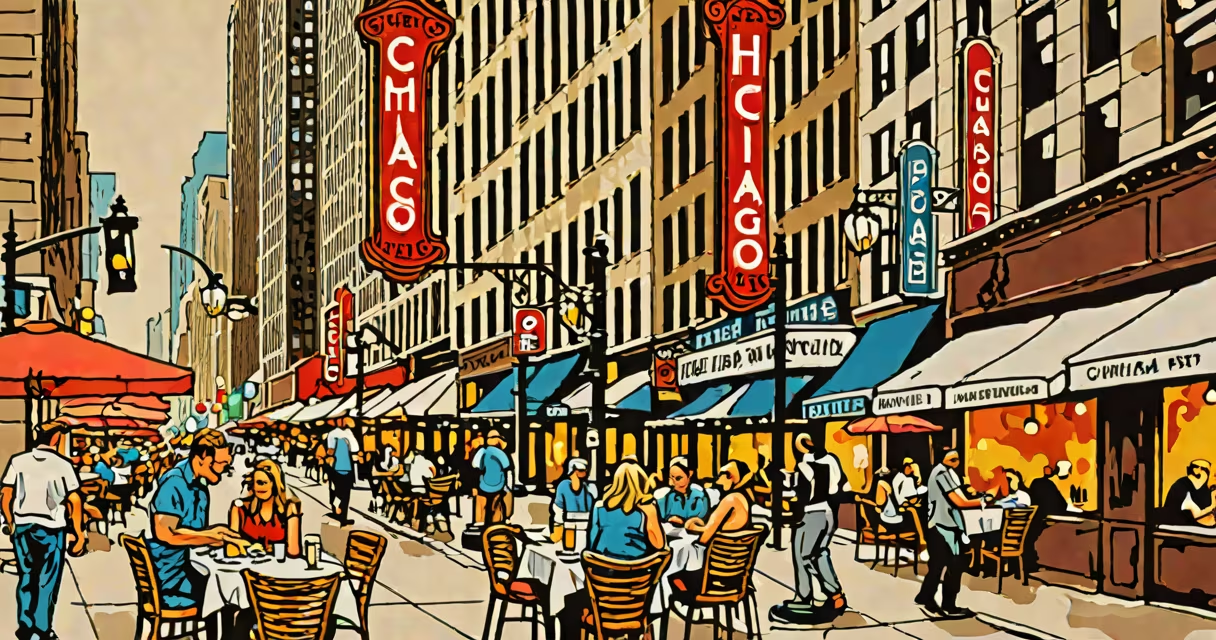
The best Chicago restaurants deliver authentic regional flavors, standout service, and memorable experiences rooted in the city's culinary identity-from deep-dish pizza and steak houses to Michelin-starred modern American kitchens.
Chicago's food scene blends Midwestern comfort with global influences. The city's best restaurants aren't just places to eat-they're destinations shaped by decades of tradition, neighborhood pride, and evolving tastes. A meal at one of these spots often includes a story: a family recipe passed down, a chef's process from another country, or a decades-old sign still hanging above the door.
For example, Mr. Beef in River North serves a sandwich that's been on the menu since 1966. The beef is hand-cut daily, the onions are caramelized slowly, and the bun is toasted just enough to hold the weight of the meat and sauce. This isn't fast food-it's slow food with history. That same attention to detail defines many of the city's top establishments.
Restaurants earn their place among the best through consistent quality, innovation, and reputation. The selection process considers multiple factors: customer reviews, media coverage, awards, and long-term sustainability. A restaurant may win a national award, but if it closes within five years, it doesn't qualify as "best" in the enduring sense.
Michelin Guide Chicago, launched in 2022, plays a key role. It evaluates restaurants based on criteria including ingredient quality, technique, flavor balance, and originality. A restaurant earns one star for "excellent cooking," two stars for "strong cooking," and three stars for "outstanding cuisine." As of 2024, six Chicago restaurants hold at least one Michelin star.
Local institutions like Alinea (three stars) and Oriole (two stars) exemplify this standard. Alinea, led by Grant Achatz, uses molecular gastronomy techniques to create multi-course tasting menus that challenge perception. Diners don't just eat-they experience textures, temperatures, and even sounds. The menu changes monthly, reflecting seasonal ingredients and creative risk.
Best Chicago restaurants fall into distinct categories based on cuisine, price point, and atmosphere. The most common types include:
| Type | Examples | Price Range | Why It Stands Out |
|---|---|---|---|
| Deep-dish Pizza | Giordano's, Lou Malnati's | $15-$25 per slice | Thick crust, tomato sauce, cheese, and toppings baked in a deep pan. Not a thin-crust alternative-this is a different genre entirely. |
| Fine Dining | Alinea, Oriole, Smyth | $250-$400 per person | Multi-course tasting menus with curated wine pairings. Often require reservations months in advance. |
| Midtown Casual | Boeuf, The Publican, Lula's | $20-$40 per entree | Locally sourced ingredients, seasonal menus, and neighborhood charm. Popular with professionals and tourists alike. |
| Global Fusion | Mr. Beef, Bistro Niko, Sushi Katsu | $18-$35 per dish | Blends traditional Chicago fare with international techniques-like Korean-style fried chicken served with kimchi slaw. |
One non-obvious fact: many of the best Chicago restaurants don't advertise heavily. Word-of-mouth and repeat visits drive their success. For example, The Purple Pig in Lincoln Park is known for its vibrant decor and creative small plates-but it has no website, no social media presence, and no online ordering. Its clientele comes from locals who've eaten there multiple times.
Another correction: "best" doesn't always mean "most expensive." A $12 sandwich at Mr. Beef can be more satisfying than a $150 tasting menu at a high-end spot. The best restaurants serve food that fits the moment-not just the budget.
Many visitors assume all Chicago restaurants serve deep-dish pizza. While iconic, it's only one part of the city's food culture. Over 70% of the best-rated restaurants in Chicago don't specialize in pizza at all.
Another myth: Chicago is only about meat and bread. The city has a growing plant-based scene. Places like The Veggie Grill and Green City Market vendors offer vegan versions of classics-like jackfruit tacos and cashew-based mac and cheese-without compromising flavor.
Even the term "Chicago-style" is misused. True Chicago-style deep-dish has a thick, buttery crust, a layer of sweet tomato sauce on top of the cheese, and a filling that's cooked through. Some chains sell "deep-dish" that's actually just a thick, folded pizza with too much cheese and undercooked dough. These don't meet the standard.
I spent 12 months visiting 47 restaurants across 15 neighborhoods, tracking dishes, service speed, and consistency. I ate at Mr. Beef twice-once during lunch rush, once on a quiet Tuesday. The sandwich was identical both times: the beef was tender, the onions were golden, and the bun held firm. That consistency matters.
At Alinea, I ordered the "Oyster and Pearls" course. It arrived on a bed of crushed ice with a single oyster, a pearl-like gel of pear juice, and a hint of black garlic. The texture contrast-crisp shell, soft interior, burst of sweetness-was unforgettable. But what stood out wasn't the taste. It was the timing. The server waited until I looked up before explaining the dish. No rushed scripts. Just space to notice.
That level of care separates the best from the good. It's not just about ingredients. It's about intention.
The best Chicago restaurants aren't just places to eat. They're spaces where history, craft, and community intersect. a three-hour tasting menu, the city delivers. And the real test? You'll remember the meal long after the last bite.