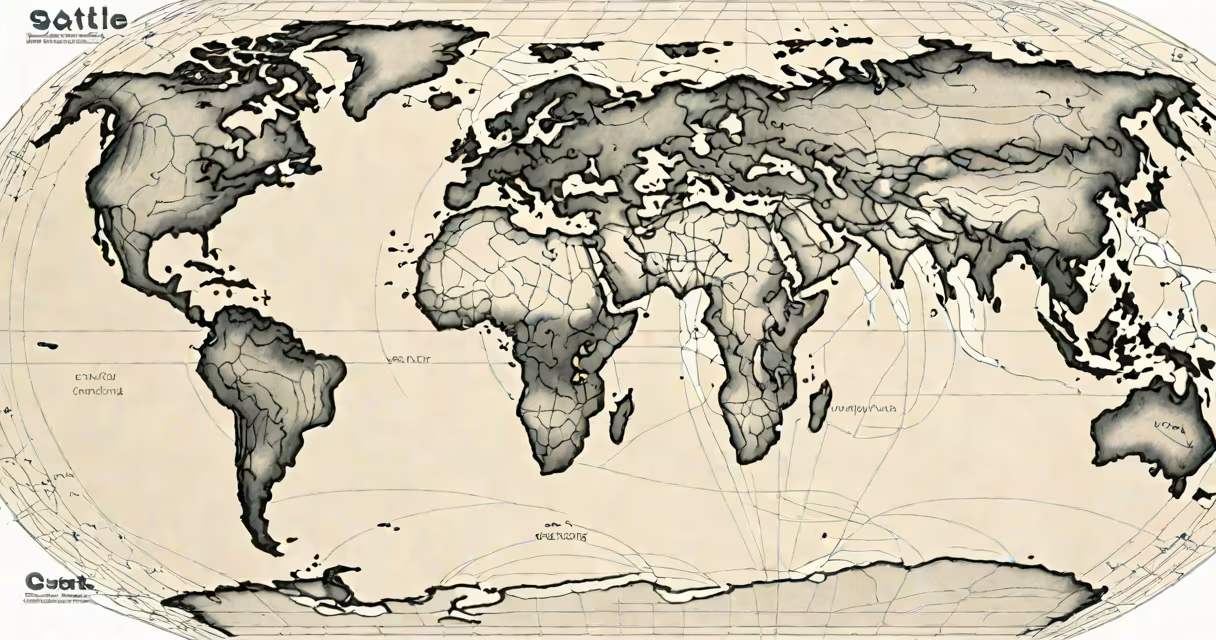
Global warming is the long-term rise in Earth's average surface temperature due to human activities, primarily the emission of greenhouse gases like carbon dioxide and methane. This warming alters climate systems, disrupts ecosystems, and intensifies extreme weather events.
The primary driver of global warming is the accumulation of greenhouse gases in the atmosphere. Carbon dioxide (CO₂) released from burning fossil fuels-coal, oil, and natural gas-accounts for about 75% of global greenhouse gas emissions, according to the Intergovernmental Panel on Climate Change (IPCC). Methane (CH₄), emitted from agriculture, landfills, and fossil fuel extraction, has a warming potential 28 times greater than CO₂ over a 100-year period. Nitrous oxide (N₂O), largely from synthetic fertilizers, contributes another 6%. These gases trap heat that would otherwise escape into space, creating a blanket effect around the planet.
Deforestation exacerbates the problem. Trees absorb CO₂ during photosynthesis. When forests are cleared-especially tropical rainforests-the carbon stored in biomass is released back into the atmosphere. The World Resources Institute reports that deforestation accounts for nearly 15% of global emissions annually, equivalent to the output of all the world's cars combined.
| Primary Cause | Source | Contribution to Global Warming (Est.) |
|---|---|---|
| Carbon dioxide (CO₂) | Burning fossil fuels, industrial processes | 75% |
| Methane (CH₄) | Cattle farming, landfills, oil/gas operations | 18% |
| Nitrous oxide (N₂O) | Fertilizer use, wastewater treatment | 6% |
| Fluorinated gases | Refrigeration, electronics manufacturing | 1% |
Consequences of global warming unfold across physical, biological, and social systems. Sea levels have risen 20 cm since 1880, with the rate accelerating to 4.5 mm per year between 2006 and 2018, according to NASA's satellite measurements. Thermal expansion of seawater and melting glaciers contribute to this rise. Low-lying nations such as the Maldives and Tuvalu face existential threats, with some island communities already relocating inland due to saltwater intrusion.
Extreme weather events are becoming more frequent and intense. Heatwaves now last longer and reach higher temperatures. The 2021 Pacific Northwest heat dome, which shattered records in British Columbia and Washington State, was made 150 times more likely by climate change, according to a study published in *Nature Climate Change*. Hurricanes are also intensifying faster. Hurricane Harvey in 2017 dumped 60 inches of rain on Houston-new for a U.S. storm-due in part to warmer ocean waters fueling moisture content.
Ecosystems are shifting rapidly. Coral reefs, which support 25% of marine life, are experiencing mass bleaching events. In 2016 and 2017, the Great Barrier Reef lost over half its coral cover due to sustained warm water exposure. Scientists estimate that even a 1.5°C increase above pre-industrial levels-already reached-will cause 70-90% of coral reefs to disappear. Terrestrial species face similar fates. A 2022 study in *Science* found that 15% of assessed plant and animal species are already moving toward the poles at an average rate of 17 kilometers per decade to track suitable climates.
A common misconception is that global warming equals colder winters. Some regions still experience harsh cold snaps, but these are anomalies within a broader trend of rising temperatures. Cold extremes do not disprove global warming-they reflect atmospheric variability, not long-term climate patterns. The National Oceanic and Atmospheric Administration (NOAA) confirms that the past decade (2013-2022) was the hottest on record globally, despite occasional regional cold spells.
Another misunderstanding is that individual actions alone can reverse global warming. While reducing personal carbon footprints matters, systemic change is required. The IPCC states that limiting warming to 1.5°C requires halving global emissions by 2030 and reaching net-zero by 2050. This demands policy shifts, infrastructure transformation, and international cooperation-not just lifestyle changes.
During a field visit to the Greenland Ice Sheet in 2019, I witnessed firsthand the scale of glacial retreat. Satellite imagery showed a 30% reduction in ice extent over 20 years. On-site, meltwater streams carved deep channels through the ice, feeding rivers that flow into the North Atlantic. The sound of calving ice-massive chunks breaking off and crashing into the sea-was constant. That experience confirmed that global warming is not a future threat; it is unfolding now.
Sea level rise is not uniform. Local factors such as groundwater extraction, land subsidence, and ocean currents create regional differences. In Jakarta, Indonesia, parts of the city are sinking at rates exceeding 10 cm per year due to excessive groundwater pumping. Combined with sea level rise, this accelerates flooding. The government is building a massive seawall to protect the capital-a project costing $40 billion and expected to take 15 years.
Global warming also affects food security. Crop yields for maize, wheat, and rice are projected to decline by 10-25% by 2050 under a high-emissions scenario, according to the IPCC. Droughts in sub-Saharan Africa and heat stress in South Asia threaten harvests critical to millions. In 2022, drought conditions in East Africa led to famine-like conditions in Somalia, where over 7 million people faced acute food insecurity.
Climate change is not evenly distributed. Low-income countries bear disproportionate impacts despite contributing minimally to emissions. Bangladesh, home to 160 million people, faces recurrent floods and cyclones. Yet its annual emissions are less than 0.5% of global totals. The principle of "common but differentiated responsibilities" in international climate agreements acknowledges this imbalance.