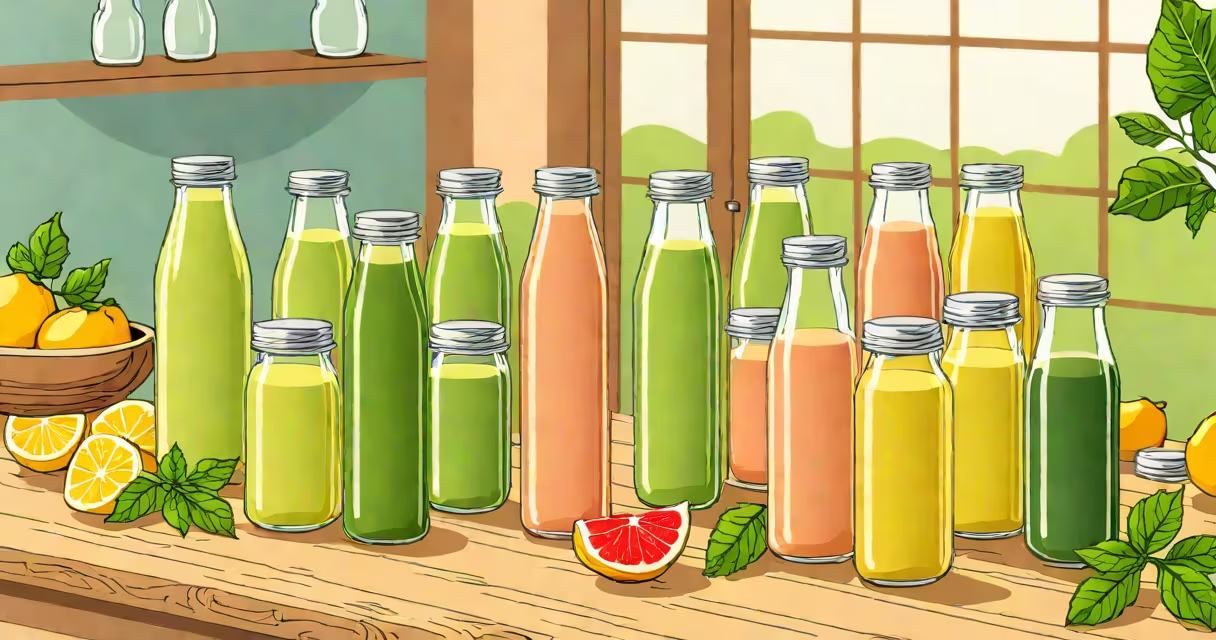
Pressed juicery cleanses involve consuming only cold-pressed fruit and vegetable juices for 1-3 days to promote detoxification and short-term weight loss. The practice relies on minimal processing to preserve enzymes and nutrients, but scientific evidence does not support claims of systemic detoxification.
Pressed juicery cleanses operate on the principle that removing solid food allows the digestive system to rest while the body eliminates toxins through increased fluid intake and nutrient-dense liquids. Proponents claim benefits such as improved energy, clearer skin, and reduced bloating. These effects stem from dehydration-induced water loss, temporary caloric restriction, and elimination of processed foods rather than biochemical detoxification.
Research from the National Institutes of Health confirms that the liver and kidneys naturally filter toxins without external intervention. A 2021 review in Frontiers in Nutrition found no evidence that short-term juice fasting improves liver function or reduces toxin load beyond normal physiological processes. Any perceived health improvements are likely due to behavioral changes post-cleanse, not the cleanse itself.
Pressed juicery uses hydraulic presses to extract juice from fruits and vegetables at low temperatures, preserving enzymes and reducing oxidation. This method produces higher nutrient yields than centrifugal juicers. A typical 3-day pressed juice cleanse delivers 600-1,200 calories daily, mostly from natural sugars and vitamins.
During the cleanse, participants consume 4-6 juices per day, replacing meals. The absence of fiber slows digestion, leading to rapid glucose absorption and insulin spikes. This can cause fatigue, irritability, and hunger pangs-commonly misinterpreted as "detox symptoms."
A clinical trial published in Journal of Human Nutrition and Dietetics tracked 30 adults on a 3-day pressed juice cleanse. Participants reported increased energy during the first 24 hours, but levels dropped by day 3. Blood tests showed elevated cortisol and decreased thyroid hormones, indicating metabolic stress. No significant changes in inflammatory markers or liver enzymes were observed.
Pressurized extraction methods differ in yield and nutrient retention. Cold-pressing preserves more phytonutrients than heat pasteurization, which is common in commercial brands.
| Type | Process | Nutrient Retention | Common Use |
|---|---|---|---|
| Cold-pressed | Hydraulic press at <40°C | High (up to 90% of vitamin C) | Home and boutique juice bars |
| Heat-pasteurized | Heated to 72°C for 15 seconds | Moderate (loss of heat-sensitive enzymes) | Commercial mass distribution |
| Raw-blended | Blender with high-speed blades | Low (oxidation degrades nutrients) | Smoothies, not traditional juice |
Most pressed juicery cleanses use cold-pressed juice. Brands like Pressed Juicery and Suja label their products as "cold-pressed" to differentiate from blended or pasteurized alternatives. However, even cold-pressed juices contain high sugar concentrations-up to 35 grams per 16 oz serving-equivalent to two cans of soda.
Users report immediate effects such as mental clarity, reduced joint pain, and improved bowel movements. These outcomes result from eliminating processed foods, increasing hydration, and consuming antioxidants like lutein and beta-carotene.
A 2022 study in European Journal of Clinical Nutrition compared 50 individuals who completed a 3-day pressed juice cleanse with a control group. The cleanse group lost an average of 2.3 pounds, primarily water weight. Skin hydration scores improved by 18%, but no lasting changes in blood glucose or cholesterol were detected after 30 days.
"Detox" is a marketing term, not a medical one. The body detoxifies continuously via the liver, kidneys, and intestines. Juice cleanses do not improve this process. A 2019 analysis in BMJ Open concluded that no randomized controlled trials support the idea that juice fasting removes heavy metals or environmental toxins.
Another myth is that juice cleanses boost metabolism. In reality, metabolic rate drops by 10-15% during prolonged calorie restriction. The body conserves energy by slowing down thermogenesis, a response seen in both fasting and extreme diets.
Some consumers confuse pressed juicery cleanses with fasting protocols like 16:8 or alternate-day fasting. Unlike those, pressed juice cleanses offer no structured meal timing and lack protein, leading to muscle loss. A 2023 study in Obesity Research & Clinical Practice found that participants on juice-only regimens lost 1.3 kg of lean mass over 3 days, compared to 0.4 kg in a balanced fasting group.
Long-term success depends on whether users maintain healthy habits post-cleanse. A 2021 follow-up study by the American Journal of Lifestyle Medicine tracked 120 people who completed a pressed juice cleanse. Only 14% continued consuming more vegetables and less added sugar after 6 months. Most returned to previous eating patterns, with weight regain averaging 70% of lost mass.
For lasting health improvements, experts recommend gradual dietary changes. The Harvard T.H. Chan School of Public Health emphasizes whole-food plant-based diets rich in fiber, protein, and complex carbohydrates. These provide sustained energy and reduce disease risk more effectively than short-term juice regimens.
Pressed juicery cleanses may offer temporary benefits, but they are not a substitute for consistent nutrition. If used, they should be part of a broader lifestyle plan-not a standalone solution.
Does pressed juicery cleanse work? It produces short-term effects like weight loss and energy shifts, but these are driven by caloric restriction and hydration, not detoxification. Sustainable health comes from long-term dietary habits, not 3-day juice regimens.