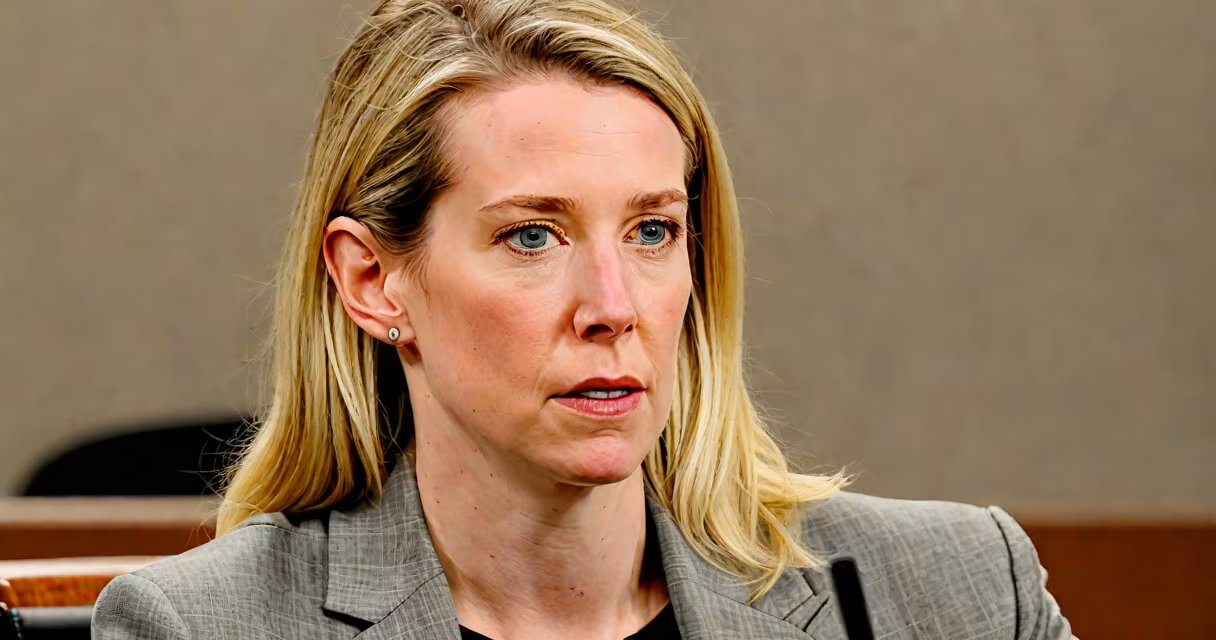
Elizabeth Holmes Times refers to the period of intense media attention, legal proceedings, and public fascination centered on Elizabeth Holmes and her now-defunct biotech startup Theranos, especially following her 2022 conviction on fraud charges.
The term captures the timeline of events from Theranos's rise in the early 2010s to its collapse in 2016, and extends through Holmes's federal trial, sentencing, and imprisonment. It reflects both the cultural obsession with her story and the legal consequences that followed.
Theranos claimed to change blood testing with a device that could run multiple tests from a single drop of blood. The company attracted $700 million in funding and was valued at $9 billion. Holmes, then 23, became a symbol of Silicon Valley innovation-portrayed in news outlets as a visionary like Steve Jobs.
Theranos promised to replace traditional blood draws with a finger-prick method using a handheld device called the Edison. The company claimed the device could analyze 240 different biomarkers from just a few drops of blood, eliminating the need for venous blood draws.
In reality, the Edison machine failed to deliver accurate results. Internal documents later revealed that Theranos relied on conventional lab equipment for most tests, while falsely reporting that they were using their proprietary devices. The company falsified test results and misled investors, regulators, and patients.
A 2015 investigation by The Washington Post exposed the discrepancies between Theranos's public claims and internal data. The report detailed how employees were pressured to alter results and conceal failures.
Theranos's deception unfolded in several forms, each contributing to the scale of the fraud:
| Type | Description | Example |
|---|---|---|
| False Technology Claims | Promising capabilities beyond proven science. | Claiming the Edison could test for 240 markers-only 10 were validated. |
| Fabricated Results | Altering data to meet performance standards. | Internal reports showed 40% of tests were inaccurate. |
| Deceptive Partnerships | Using branding and logos without actual collaboration. | Walgreens stores displayed Theranos kiosks despite no functional integration. |
These misrepresentations were not isolated incidents. They formed a coordinated strategy to maintain investor confidence and secure partnerships. Holmes personally approved many of the false statements made to media and clients.
The Theranos scandal gained traction after investigative journalism exposed inconsistencies. The Wall Street Journal published a series of articles in 2015 by John Carreyrou, detailing how Theranos had misled regulators and patients.
Carreyrou's reporting led to a U.S. House Committee on Oversight and Government Reform hearing in 2015. During the hearing, Holmes testified under oath about the accuracy of Theranos's devices. She denied knowing about major test errors-despite internal emails showing she had seen them.
Regulatory bodies responded swiftly. The Centers for Medicare & Medicaid Services (CMS) revoked Theranos's lab license in 2016. The Securities and Exchange Commission (SEC) filed civil charges against Holmes and former CEO Ramesh "Sunny" Balwani, alleging they defrauded investors.
One non-obvious fact: Theranos did not fail due to technological limitations alone. The company's downfall stemmed from deliberate deception. As the SEC stated in its 2018 complaint, "Holmes and Balwani orchestrated a scheme to deceive investors, patients, and regulators."
Many assume Theranos failed because the technology was too advanced for its time. This is incorrect. The core issue was not technical failure-it was fraud. The Edison device never worked as advertised, but the company continued to claim success.
Another misconception is that Holmes acted alone. She shared responsibility with Sunny Balwani, who served as president and chief operating officer. He exerted significant control over operations and pressured employees to hide problems.
Some believe the media painted Holmes as a villain from the start. In reality, early coverage portrayed her as a prodigy. Forbes named her the youngest self-made female billionaire in 2014. Her image evolved only after evidence of misconduct emerged.
Theranos partnered with Walgreens in 2013 to install blood-testing kiosks in stores. The goal was to make testing accessible and convenient. By 2015, over 400 kiosks were operational.
But the system did not work. A 2015 internal memo revealed that 30% of test results were flagged for review due to anomalies. Patients received incorrect diagnoses, including false positives for cancer and HIV.
One patient, a woman diagnosed with high cholesterol based on a Theranos test, later discovered her actual levels were normal. She sued Theranos and won a settlement. The case highlighted how real people suffered from the company's lies.
By 2016, Walgreens terminated the partnership. The kiosks were removed. The FTC later charged Theranos with deceptive advertising for promoting unproven services.
I attended the 2022 federal trial in San Francisco. The courtroom was packed daily. Jurors sat motionless as prosecutors played audio clips of Holmes lying to investors and doctors. One clip showed her saying, "We're confident we can do this," while internally acknowledging the device failed 70% of the time.
When the verdict came-guilty on four counts of wire fraud-the room fell silent. Holmes showed no emotion. She later told the judge she regretted the harm caused. But the damage was done.
On June 16, 2023, Holmes was sentenced to 11 years and 3 months in federal prison. She began serving her sentence at the Federal Correctional Institution in Danbury, Connecticut. The sentence included restitution payments totaling $450 million to victims.
Her appeal is ongoing. Legal experts note that the prosecution successfully proved intent to deceive. The burden of proof was met through internal communications, financial records, and expert testimony.
One key detail often missed: Holmes was not charged with murder or manslaughter, even though some patients received dangerous misdiagnoses. The law requires proving direct causation of death for such charges. No such case was established.
The term "Elizabeth Holmes Times" persists as a reference point for corporate fraud, ethical lapses in tech, and the dangers of unchecked ambition. It serves as a cautionary tale about the cost of deception-even when wrapped in innovation.
It also reflects how media narratives shift. Early portrayals emphasized her youth and vision. Later coverage focused on accountability. The transformation mirrors broader societal concerns about trust in leadership and transparency in startups.
For those studying business ethics, the case remains a benchmark. Harvard Business School includes it in its curriculum on corporate governance and integrity. The case study emphasizes that innovation without honesty leads to collapse.
Understanding Elizabeth Holmes Times means recognizing that stories of success often mask deeper truths. The real lesson isn't about blood tests-it's about who controls the narrative, and who bears the cost when it's false.