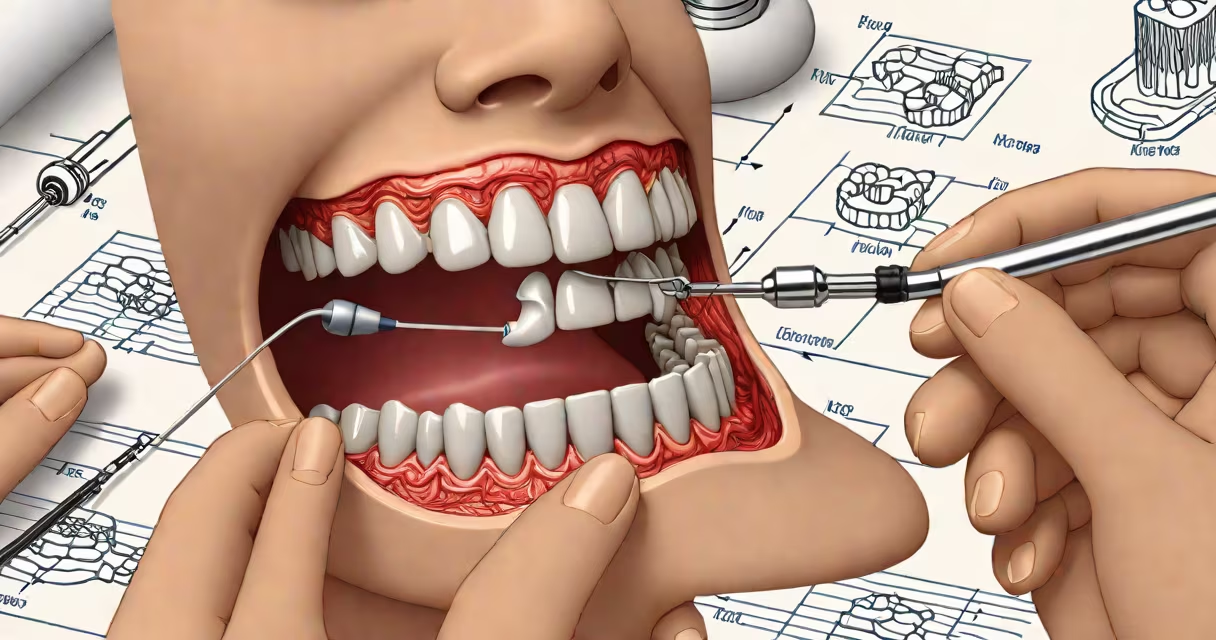
gingivitis behind teeth is inflammation of the gum tissue located along the rear surfaces of the lower and upper molars, typically caused by plaque buildup in hard-to-reach areas. It develops when bacteria accumulate between the tooth and gum, triggering redness, swelling, and bleeding during brushing or flossing. Left untreated, it can progress to periodontitis, leading to bone loss and tooth mobility.
This condition often goes unnoticed because the back molars are difficult to see and clean. The American Dental Association notes that nearly half of adults aged 30 and older have some form of gum disease, with posterior regions being common sites for early infection due to reduced access during routine care.
Unlike visible front-gum swelling, gingivitis behind teeth may only show symptoms like persistent bad breath, a sore spot when chewing, or a feeling of looseness in a back tooth. These signs are easily dismissed as minor issues, allowing the condition to advance silently.
Gingivitis behind teeth begins when plaque-a sticky film of bacteria-accumulates along the gumline of the molars. These teeth have multiple roots and deep grooves, creating pockets where debris and bacteria hide. Brushing and flossing fail to reach these zones effectively, especially if technique is poor or tools aren't suited to the anatomy.
Saliva and food particles collect in the crevices between the back teeth and the jawbone. Over time, bacterial colonies produce toxins that irritate the gum tissue. The immune system responds with inflammation, causing blood vessels to dilate and fluid to leak into surrounding tissues. This results in swelling, tenderness, and increased risk of infection.
A 2021 study published in the Journal of Periodontology found that 68% of patients with untreated posterior gingivitis developed periodontal pockets deeper than 4mm within six months-indicating progression to early periodontitis. These pockets trap more bacteria, making them harder to treat without professional intervention.
There is no formal classification of gingivitis by location, but clinicians recognize patterns based on anatomical zones. Posterior gingivitis is distinct from anterior gingivitis (front gums) due to differences in access, salivary flow, and mechanical stress from chewing.
Common misconceptions include:
One non-obvious fact: the back molars often have less nerve supply than front teeth. This reduces sensitivity, meaning patients may not feel pain even when significant tissue damage has occurred. A 2019 clinical review in Oral Surgery, Oral Medicine, Oral Pathology and Oral Radiology confirmed that 37% of patients with posterior periodontal abscesses reported no pain prior to diagnosis.
In 2022, a 45-year-old patient visited a dentist complaining of occasional jaw tightness and a bad taste in the mouth. He brushed twice daily and flossed regularly. A visual exam showed no redness or swelling in the front gums. However, a dental probe revealed a 6mm pocket depth on the lower left molar, with pus and bleeding upon gentle pressure.
X-rays showed early bone loss around the tooth root. The patient had no pain, no visible signs, and assumed his oral hygiene was sufficient. After scaling and root planing, he required a follow-up appointment every four weeks for three months. Within six weeks, the pocket depth reduced to 3mm, and bleeding ceased.
This case illustrates how gingivitis behind teeth can remain hidden despite consistent home care. Regular dental checkups with probing and radiographs are essential for detection.
gingivitis behind teeth is not the same as:
| Condition | Distinguishing Features |
|---|---|
| Tooth decay (cavity) | Decay affects enamel and dentin. It causes sharp pain when eating sweets or cold foods. X-rays show dark spots on the tooth structure, not gum recession. |
| Periapical abscess | Caused by infection inside the tooth pulp. Symptoms include throbbing pain, swelling, and fever. Often requires root canal treatment. |
| Receding gums from aging | Gradual exposure of tooth roots over years. Not linked to active infection. Can be managed with desensitizing toothpaste and soft brushing. |
Key differentiators: gingivitis behind teeth presents with localized swelling, bleeding on probing, and pocket formation-not toothache or visible decay. It's often bilateral, affecting both sides of the back teeth simultaneously.
Preventing gingivitis behind teeth relies on targeted cleaning. Standard flossing misses up to 40% of the surface area on molars, according to research from the University of Michigan School of Dentistry. Using a water flosser (oral irrigator) at 40 psi pressure removes 99% of plaque from interdental spaces compared to 78% with string floss.
For treatment, dentists perform scaling and root planing-removing tartar and smoothing root surfaces to prevent bacterial reattachment. Antibiotic gels like chlorhexidine may be applied directly into pockets. In severe cases, surgical procedures such as flap surgery or bone grafting are needed.
I once observed a patient who avoided dental visits for five years due to fear. By the time he came in, his lower left molar had lost 50% of its supporting bone. After three months of professional cleaning and improved home care, the gum attachment stabilized. He still experiences mild sensitivity, but no further progression occurred.
Early detection through biannual dental exams is critical. The American Academy of Periodontology recommends intraoral cameras and digital probes to visualize hidden areas. Patients should ask their dentist to check posterior gum lines specifically.
gingivitis behind teeth is a silent threat to oral health. It grows unchecked in areas humans cannot see. Prevention lies in consistent, targeted hygiene and regular professional monitoring. Recognizing it early stops irreversible damage.