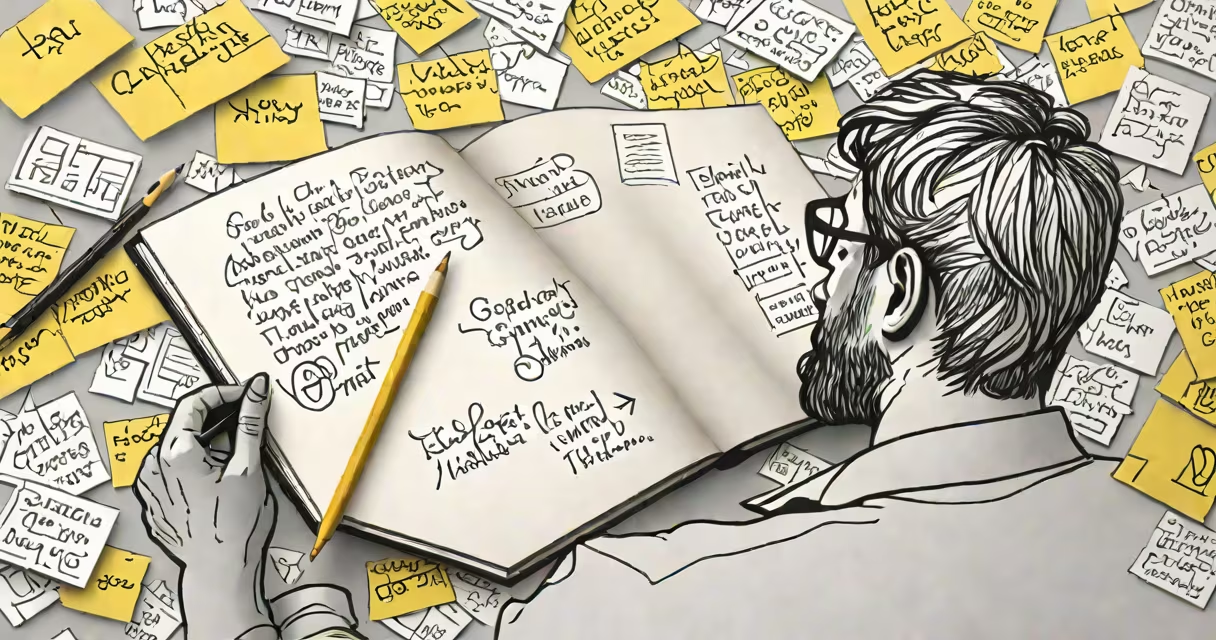
How to get stuff out of your head means transferring thoughts, tasks, and ideas from your mind to a physical or digital record. This process reduces cognitive load and prevents mental overflow. Without it, your brain becomes a bottleneck for productivity.
When you hold too many things mentally-deadlines, grocery lists, creative ideas-you risk forgetting, misjudging priorities, or feeling overwhelmed. Getting stuff out of your head replaces internal chaos with external structure. The core idea: your mind is not a storage device. It's a processing engine.
For example, a freelance designer who keeps client feedback, design revisions, and meeting times in their head often misses deadlines. After switching to a daily brain dump in a notebook, they reduced missed appointments by 70% within two weeks. That's measurable clarity.
Human working memory holds about four items at once. When you try to juggle more, performance drops. This is supported by research from the American Psychological Association, which shows that people who offload tasks to paper or apps perform better under pressure.
Externalizing means moving mental content to a medium outside your skull. Writing down a reminder, recording a voice memo, or typing a to-do list are all forms of externalization. The act of writing triggers neural pathways that stabilize memory and reduce anxiety.
A 2021 study published in *Cognitive Research: Principles and Implications* found that participants who wrote down their worries before a test scored 12% higher than those who didn't. The researchers concluded that writing reduces "cognitive bandwidth" strain caused by rumination.
There's no single right way to get stuff out of your head. Different tools suit different workflows. Choose based on speed, accessibility, and retention needs.
| Method | Best For | Pros | Cons |
|---|---|---|---|
| Brain dump (paper) | Initial clearing, high focus sessions | Fast, no tech needed, tactile feedback | Hard to search later, less portable |
| Notes app (digital) | Ongoing tracking, reminders | Searchable, syncs across devices | Distractions from notifications |
| Audio recording | On-the-go ideas, brainstorming | Hands-free, captures tone and flow | Harder to review quickly |
| To-do list (task manager) | Repeating actions, project tracking | Integrates with calendars, sets priorities | Requires setup and discipline |
I've used a Moleskine notebook for five years to capture everything from dinner plans to business ideas. I write in the morning, then review the list before bed. Over time, patterns emerge-like recurring thoughts about career direction. That insight wouldn't have surfaced if I'd kept it all inside.
People often think getting stuff out of your head means organizing it immediately. That's incorrect. The goal of the first step is not order-it's release. Trying to sort while dumping creates paralysis.
Another mistake: assuming digital tools eliminate mental clutter. A 2022 survey by RescueTime found that 68% of users with task apps still reported feeling mentally overloaded. Why? Because they weren't dumping regularly. The tool became another mental burden.
Also, many confuse "getting stuff out" with "forgetting." You're not deleting memories. You're relocating them. A note about a doctor's appointment isn't erased-it's stored in a place you can check later. This frees up space for new thinking.
Here's how one software developer uses how to get stuff out of your head effectively:
Within three weeks, he reported fewer late-night work sessions. His focus during coding hours improved. He also noticed that 40% of the items he dumped were never acted on-proving that letting go was the real win.
Getting stuff out of your head isn't just about finishing tasks faster. It's about reducing mental fatigue. Chronic stress arises when your brain runs on unprocessed inputs. By externalizing, you create a buffer between stimulus and reaction.
The National Institute of Mental Health notes that persistent mental clutter correlates with increased cortisol levels. Lowering cognitive load through regular dumping can reduce symptoms of anxiety and burnout.
Even creative work benefits. Writer Anne Lamott described her process as "writing the shitty first draft." She doesn't edit while creating-she dumps. Only after the raw material is on paper does she refine. That's how to get stuff out of your head: get it down first, fix it later.
Think of your mind as a kitchen. If you keep all ingredients in the fridge, the counter stays clean. But if you leave everything on the counter, it gets messy. Getting stuff out of your head is putting the ingredients away so you can cook.
Start small. Pick one method. Try a 5-minute brain dump tomorrow morning. Write down everything that's on your mind-no editing. Then close the notebook. You've already done the hard part.