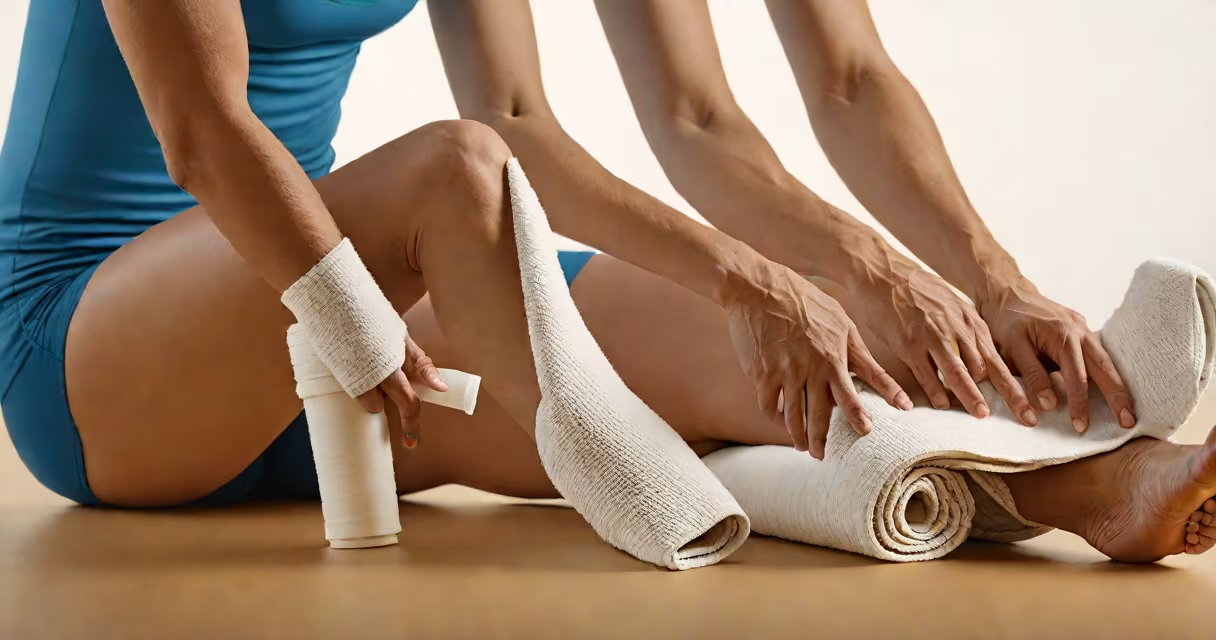
A hamstring injury involves tearing of the three muscles at the back of the thigh-biceps femoris, semitendinosus, and semimembranosus-commonly caused by sudden sprinting, jumping, or stretching beyond capacity. Recovery requires immediate protection of the injured tissue, gradual reintroduction of load, and neuromuscular retraining to prevent recurrence.
Hamstring injuries are graded from 1 (mild strain) to 3 (complete rupture). A Grade 1 tear may allow walking with minimal pain; a Grade 3 tear results in severe pain, swelling, and inability to bear weight. The most common site of injury is the long head of the biceps femoris near the ischial tuberosity-the bony prominence you feel when sitting.
According to the American Academy of Orthopaedic Surgeons (AAOS), 60% of hamstring injuries occur during high-speed running or deceleration movements. Athletes in sports like football, soccer, and track are at highest risk. Non-athletes may sustain strains from lifting heavy objects or sudden bending motions.
For the first 72 hours after injury, follow the RICE protocol: Rest, Ice, Compression, and Elevation. Apply ice for 15-20 minutes every 2-3 hours during waking hours to reduce inflammation and pain. Use a compression bandage to limit swelling, but avoid wrapping too tightly-check for numbness or cold toes.
Rest means avoiding activities that cause pain. Walking with a limp is acceptable if it doesn't worsen symptoms. Do not stretch or massage the area during this phase. Research published in the British Journal of Sports Medicine shows that early aggressive stretching increases re-injury risk by 40% compared to delayed mobilization.
After 72 hours, begin gentle movement. Perform ankle pumps (flexing and pointing feet) while lying down to maintain circulation. This prevents blood clots and supports healing. If pain persists beyond three days, consult a physical therapist or sports medicine provider.
Once acute pain subsides, start a structured rehab program. Begin with isometric contractions: lie on your back, bend one knee, and press the heel into the floor without moving the leg. Hold for 5 seconds, relax, repeat 10 times. This builds strength without stressing the healing tissue.
Progress to eccentric exercises-controlled lowering of the leg. Lie on your stomach, lift one leg slowly off the ground, then lower it slowly. Perform 2 sets of 10 reps. Eccentric loading improves tendon resilience and reduces reinjury rates by 35%, according to a 2021 study in the Journal of Orthopaedic & Sports Physical Therapy.
When pain-free, introduce single-leg balance drills. Stand on one foot on a stable surface for 30 seconds. Add light perturbations (gentle pushes) to challenge stability. These exercises restore neuromuscular control, which is often impaired after injury.
| Phase | Timeframe | Key Activities | Goal |
|---|---|---|---|
| Acute | Days 1-3 | RICE, non-weight-bearing if needed | Reduce swelling, protect tissue |
| Subacute | Day 4-10 | Isometrics, ankle pumps, gentle mobility | Restore joint motion, initiate healing |
| Reconditioning | Week 2-4 | Eccentrics, balance drills, partial squats | Build strength, improve coordination |
| Return-to-activity | Month 2+ | Running drills, sport-specific movements | Reintroduce functional demands safely |
Do not progress until you can perform each exercise without pain. Pain is a red flag-stop and reassess. Re-injury often occurs when athletes return too soon, especially during sprinting or cutting maneuvers.
Many people assume that stretching the hamstring immediately after injury speeds recovery. This is incorrect. Stretching during the acute phase increases micro-tear size and delays healing. The body needs time to form initial scar tissue before controlled elongation.
Another error is relying solely on heat therapy. Heat increases blood flow but can worsen swelling if applied too early. Use heat only after the first 72 hours, and never apply it directly to skin-wrap it in a towel.
I once treated a college sprinter who returned to training after four days because he felt "better." He re-injured his hamstring within 24 hours of sprinting. His MRI showed a larger tear than the original. This illustrates why symptom resolution ≠ tissue healing.
If you cannot walk without limping after 48 hours, have significant bruising extending below the knee, or feel a pop at the time of injury, see a healthcare provider. These signs suggest a Grade 2 or 3 strain requiring imaging (MRI or ultrasound) to assess severity.
Physical therapists use functional tests like the active straight leg raise (ASLR) and hop tests to determine readiness for return to activity. A patient must achieve at least 90% strength symmetry between legs and pass a single-leg hop test with less than 10% difference in distance.
To prevent future injuries, incorporate changing warm-ups before activity. Include leg swings, walking lunges, and high knees for 5-10 minutes. These prepare the nervous system and increase muscle temperature.
Strengthen the posterior chain with deadlifts, glute bridges, and Nordic curls. Perform 2-3 sets of 8-12 reps twice weekly. Nordic curls-lowering slowly from a kneeling position-are particularly effective for building eccentric strength.
Even after full recovery, continue maintenance exercises 1-2 times per week. A 2020 study in the Scandinavian Journal of Medicine & Science in Sports found that athletes who performed weekly eccentric exercises had a 50% lower reinjury rate over 12 months.
Understanding how to help hamstring injury means recognizing that recovery is not linear. Some days feel better than others. Stick to the plan. Progress slowly. Avoid the temptation to rush back to sport.