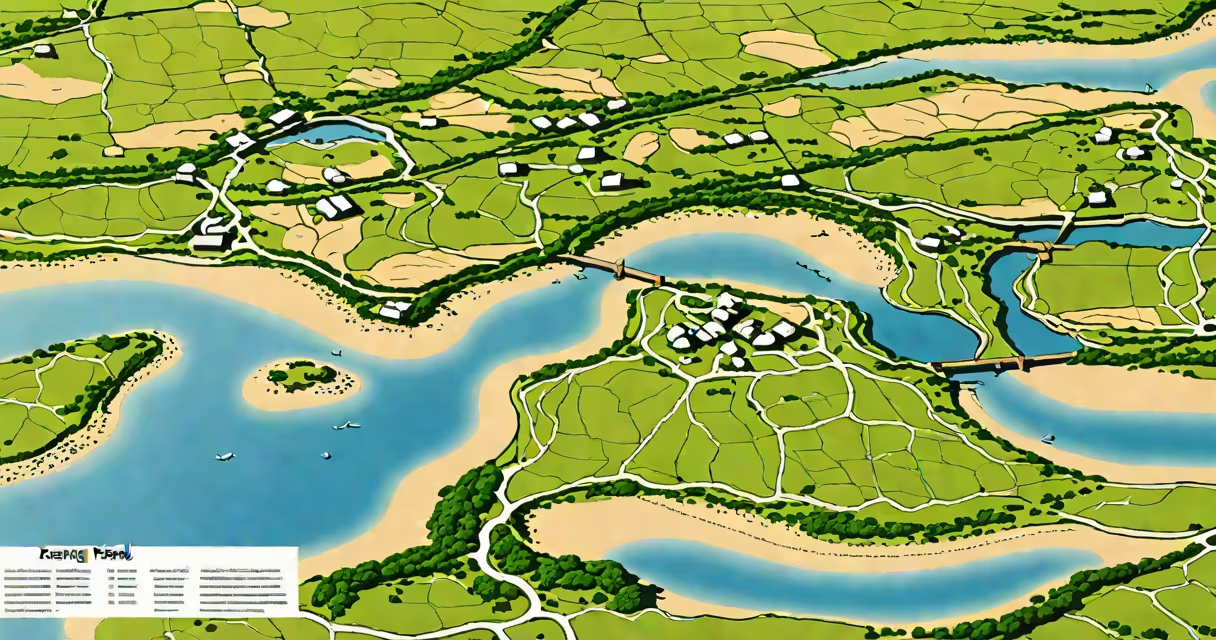
Kenfig Nature Reserve is a 260-acre protected area in South Wales encompassing coastal dunes, salt marshes, and heathland, managed by the Royal Society for the Protection of Birds (RSPB) since 1950. It supports nationally rare birds, plants, and insects, including the natterjack toad and the fen orchid.
The reserve lies along the Gower Peninsula coast, 10 miles west of Bridgend. Its field formed over 10,000 years through shifting sands and tidal influence. Dunes stabilize slowly as marram grass and other pioneer species take root. Salt marshes develop behind them, creating a mosaic of habitats. The reserve's core function is habitat conservation and species recovery, particularly for those dependent on changing coastal systems.
Access is via public footpaths from Kenfig Hill and the nearby village of Kenfig. Parking is limited; visitors are encouraged to arrive early and walk from the A48. The site hosts guided walks monthly during breeding season (March-July), led by RSPB volunteers. All trails are marked with wayfinding signs and interpretive panels detailing local ecology.
Kenfig's ecosystems operate through natural succession and human intervention. Dunes form when wind deposits sand from the shoreline. Marram grass (Ammophila arenaria) traps sand, stabilizing dunes. As vegetation grows, soil develops, allowing shrubs and trees to colonize. This process takes decades, but storms and sea level rise can reverse it rapidly.
RSPB manages this dynamism through targeted actions. Grazing by ponies and cattle prevents scrub encroachment. Controlled burns remove invasive species like bramble. Water levels in marsh areas are regulated using sluices to maintain optimal conditions for wading birds. These measures aim to preserve ecological balance rather than restore a static past.
A 2022 monitoring report by Natural Resources Wales confirmed that 17 species listed under the UK Biodiversity Action Plan occur here, including the great crested newt and the small blue butterfly. The reserve's management plan prioritizes habitat connectivity, ensuring species can migrate between dunes, marshes, and heathland zones.
Kenfig comprises four primary habitat types: mobile dunes, stabilized dunes, salt marshes, and lowland heath. Each supports distinct communities.
| Habitat | Key Features | Notable Species |
|---|---|---|
| Mobile dunes | Unstable sand, high wind exposure | Natterjack toad, silver-studded blue butterfly |
| Stabilized dunes | Vegetation cover, soil development | Fen orchid, common lizards |
| Salt marshes | Tidal flooding, halophytic plants | Avocet, redshank, sea lavender |
| Lowland heath | Acidic soils, ericaceous shrubs | European nightjar, Dartford warbler |
One non-obvious fact: the fen orchid (Liparis loeselii) thrives here despite being classified as vulnerable in the UK. Its survival relies on precise moisture levels and minimal grazing. The reserve maintains these conditions through seasonal fencing and controlled access.
During spring migration, up to 150 avocets may gather in the marshes. Their black-and-white plumage contrasts sharply with the pale sand. In summer, the natterjack toad's distinctive call echoes across the dunes-a high-pitched "wheep" heard only at dusk.
Kenfig serves as a model for coastal conservation in temperate Europe. It is designated a Site of Special Scientific Interest (SSSI) and part of the Natura 2000 network. These designations require regular ecological assessments and limit development.
Public use is permitted within designated zones. Walking paths follow the RSPB's "Leave No Trace" principles. Litter bins are placed at trailheads, and signage warns against disturbing nests or picking rare plants. Dogs must be kept on leads near breeding areas.
I visited in May 2023 during a guided tour focused on bird behavior. We observed a pair of pied flycatchers nesting in a dead oak. The male sang continuously, defending territory. The female stayed hidden, incubating eggs. This observation underscored how sensitive species depend on undisturbed habitats-human presence, even passive, can disrupt breeding cycles.
Kenfig Nature Reserve is often mistaken for Kenfig Castle, a 13th-century ruin located 2 miles inland. The castle sits atop a hill overlooking the reserve but is not part of it. Visitors sometimes enter the reserve from the castle grounds, leading to confusion about boundaries.
Another misconception: Kenfig is not a national park. It is a local nature reserve managed by the RSPB under a lease agreement with the Welsh Government. National parks have different legal powers, including land acquisition authority and stricter planning controls.
Some assume the dunes are static. In reality, they shift up to 3 meters per year. Storm surges in winter can reshape entire dune fields. This movement is normal and essential for maintaining biodiversity. Stabilizing dunes too quickly can reduce habitat diversity.
Finally, the reserve is not open year-round. Winter closures occur from December to February due to nesting seabirds and storm damage. The RSPB website updates closure dates weekly. Checking before visiting avoids disappointment.