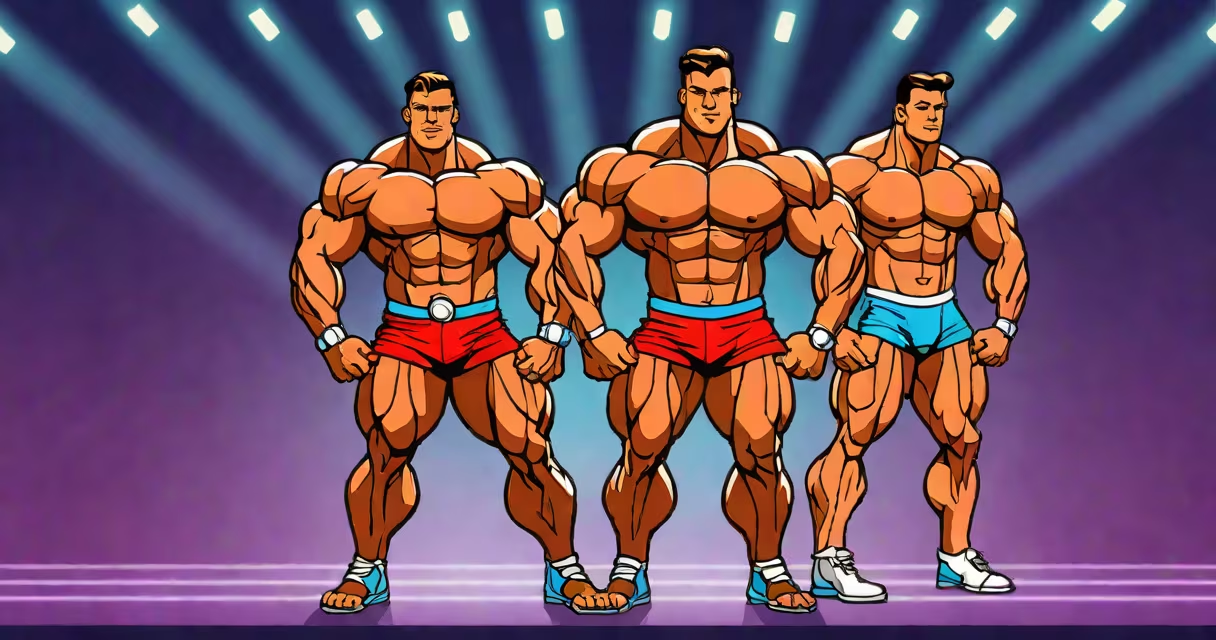
A male fitness bodybuilder is a competitive athlete who develops extreme muscle mass, low body fat, and precise muscular symmetry to perform on stage in front of judges. Their physique is shaped through years of disciplined training, strict nutrition, and strategic contest preparation.
These athletes compete in divisions such as Men's Fitness, Men's Physique, and Classic Physique under organizations like the International Federation of Bodybuilding & Fitness (IFBB Pro League). Unlike general strength athletes or recreational lifters, their primary goal is visual presentation-not maximal strength or endurance.
The term "fitness" in this context refers to a specific category within bodybuilding competitions. It emphasizes proportion, balance, and aesthetic appeal rather than sheer size. Competitors are judged on appearance, posing routine execution, and stage presence.
Male fitness bodybuilders train for months leading up to contests. They follow structured phases: off-season development, pre-contest conditioning, and peak week preparation. During the off-season, focus is on building muscle mass through progressive overload and high-volume resistance training.
As the competition date nears, they enter a cutting phase. This involves reducing calorie intake while maintaining protein consumption to preserve muscle while shedding fat. Training shifts toward higher frequency, lower volume, and increased cardio to improve muscle definition.
Peak week-the final seven days before the show-is critical. Athletes manipulate water and sodium levels to maximize muscle fullness and vascularity. They may use techniques like carb loading and sodium cycling to make muscles appear swollen and sharp under stage lighting.
Training routines typically include 5-6 days of weightlifting per week. Exercises focus on isolation movements (e.g., leg extensions, cable flyes) and compound lifts (e.g., deadlifts, bench press) to build balanced muscle groups. Volume averages 12-20 sets per muscle group weekly.
Nutrition is equally precise. A typical daily intake during contest prep includes:
Supplements like creatine monohydrate, whey protein, and branched-chain amino acids are common. Some athletes use thermogenic agents or diuretics in the final week, though these carry health risks and are banned in many federations.
Competitive male fitness bodybuilders fall into distinct categories based on judging criteria. The most common are:
| Category | Focus | Typical Height/Weight Range | Example Competitor |
|---|---|---|---|
| Men's Fitness | Balance, symmetry, stage presence | 175-185 cm, 85-95 kg | Chris Bumstead (2019-2022 Mr. Olympia winner) |
| Men's Physique | Lean muscle, proportionality, posing | 178-188 cm, 80-90 kg | Brandon Curry (2016 Arnold Classic winner) |
| Classic Physique | Classic proportions, less extreme leanness | 175-185 cm, 85-95 kg | Shawn Rhoden (2018 Mr. Olympia runner-up) |
Each division has different scoring rubrics. For example, Men's Fitness emphasizes posing routine quality and presentation, while Classic Physique prioritizes natural proportions and historical aesthetics.
Male fitness bodybuilders appear in national and international events such as the Arnold Classic, Mr. Olympia, and the IFBB Pro League shows. These events draw tens of thousands of live attendees and millions of viewers online.
They serve as role models for those pursuing long-term physical transformation. Their discipline, consistency, and attention to detail inspire individuals to adopt healthier lifestyles-even if they don't compete.
However, the lifestyle is not without risk. Studies show that prolonged low body fat (<6%) can impair hormone function, reduce bone density, and increase injury risk. The National Institutes of Health notes that extreme dieting during contest prep may lead to metabolic adaptation and rebound weight gain post-competition.
Many assume male fitness bodybuilders are naturally gifted or rely solely on steroids. While some do use performance-enhancing drugs, research from the Journal of the International Society of Sports Nutrition confirms that elite competitors spend over 10 hours per week training and 2-3 hours daily managing meals and recovery.
Another myth is that they lack strength. In reality, many have personal records in squats, deadlifts, and bench presses exceeding 200 kg. Their strength supports their ability to perform heavy lifts consistently throughout the year.
One non-obvious fact: the posing routine is not just performance-it's a judged component. Judges evaluate form, timing, and muscle control during poses like the front double biceps and side chest. A poorly executed routine can cost points even with a strong physique.
Consider Alex Rivera, a 183 cm, 88 kg male fitness bodybuilder preparing for the 2023 NPC Nationals. His 12-week prep plan included:
Four weeks out, he began carb cycling: 300 g carbs on training days, 100 g on rest days. On peak week, he increased sodium intake to 4,000 mg/day and consumed 500 ml of water every hour to retain fluid in muscles.
At the event, his score was 98.4 out of 100-a result of consistent training, precise nutrition, and flawless posing.
I once attended a regional bodybuilding show in Las Vegas. The energy in the room shifted when the male fitness athletes entered. Their skin glistened under stage lights, veins stood out, and their muscles contracted with precision during each pose. One competitor, wearing only black trunks, held a side pose for 12 seconds-muscles frozen, breathing controlled. The silence was absolute. That moment confirmed: this isn't just about size. It's about artistry, control, and years of sacrifice.
Male fitness bodybuilder is often confused with general gym enthusiasts or powerlifters. Powerlifters prioritize maximal strength in squat, bench, and deadlift. They do not aim for low body fat or stage presentation. Gym-goers may train for appearance but lack the structure, competition timeline, and nutritional rigor required for contest readiness.
Also, the term "bodybuilder" does not imply steroid use. While some athletes use exogenous testosterone or other compounds, others achieve competition-ready physiques through natural methods. The IFBB requires drug testing, and positive results result in disqualification and bans.
Male fitness bodybuilder represents a high-performance athletic pursuit grounded in science, discipline, and visual artistry. Success demands more than lifting weights-it requires meticulous planning, psychological resilience, and long-term commitment. Understanding this reveals why the title is earned, not claimed.