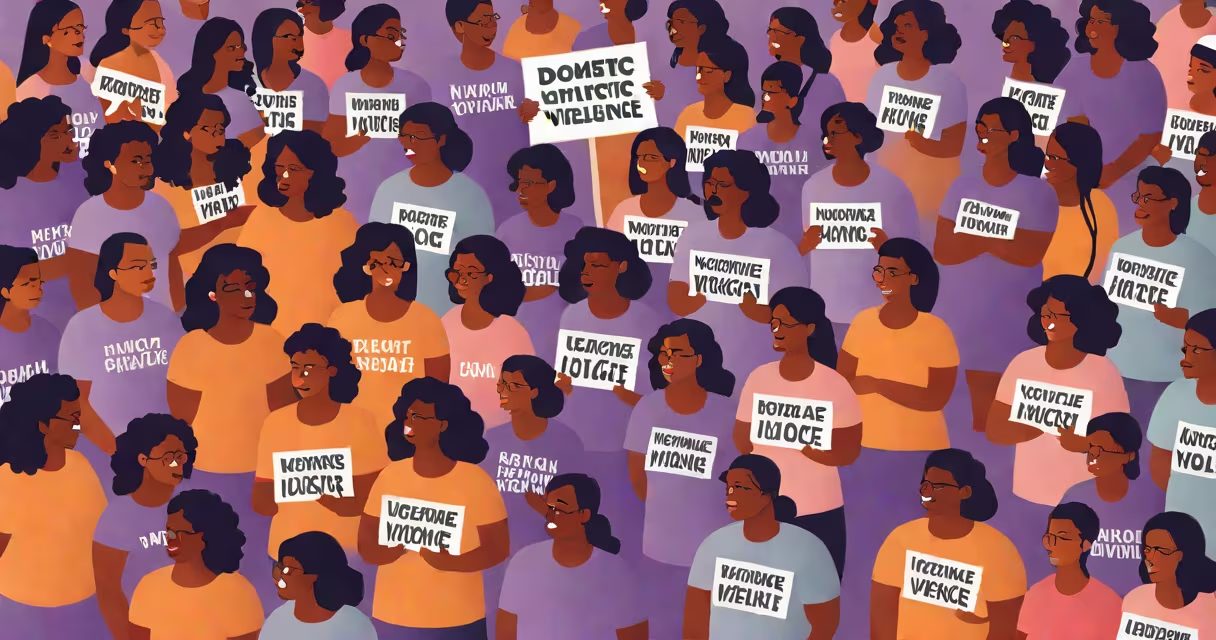
The National Coalition Against Domestic Violence (NCADV) is a U.S.-based nonprofit organization that unites state coalitions, service providers, and advocates to prevent domestic violence through education, policy reform, and direct support for survivors. Founded in 1978, it operates as a central hub for coordinated action across all 50 states.
NCADV functions as a national network rather than a direct service provider. It sets standards for domestic violence programs, trains professionals, and lobbies federal and state lawmakers to strengthen protections for victims. The coalition's work centers on systemic change-not just crisis response.
Its influence extends beyond policy. NCADV leads the annual National Domestic Violence Awareness Month in October, mobilizing communities, schools, and local governments to promote prevention and healing. It also certifies domestic violence programs through its National Standards for Domestic Violence Programs, which define quality care.
NCADV does not deliver services itself. Instead, it supports and connects 50 state and territorial coalitions that do. These local groups coordinate shelters, hotlines, legal aid, and counseling services. NCADV provides them with training, funding guidance, and research tools.
Each state coalition reports to NCADV annually through its State Coalition Survey. Data collected includes shelter capacity, staffing levels, and types of services offered. This creates a national picture of domestic violence response infrastructure. For example, in 2022, NCADV reported that 93% of state coalitions had access to emergency shelter beds, though availability varied widely by region.
NCADV also runs the National Domestic Violence Hotline (1-800-799-SAFE), which receives over 1 million calls annually. While the hotline is operated by the National Domestic Violence Hotline organization, NCADV partners with it to ensure consistent protocols and training across all call centers.
Membership in NCADV is open to state and tribal coalitions, individual advocates, and organizations focused on ending domestic violence. Full members must meet criteria such as including survivors in leadership roles and reporting data annually.
NCADV's governance includes a board of directors elected by member organizations. The board oversees strategy, budget allocation, and national initiatives. Executive leadership is based in Washington, D.C., where staff manage federal advocacy and partner with agencies like the Department of Justice and the Centers for Disease Control and Prevention (CDC).
Non-members can still access NCADV resources. Its website hosts toolkits, public service announcements, and downloadable guides on topics like safety planning and trauma-informed care. All materials are available free of charge.
Many assume NCADV runs shelters or provides legal aid. It does not. Its role is coordination, standard-setting, and advocacy. Direct services remain the responsibility of local organizations.
Another misconception is that NCADV only serves women. The coalition explicitly includes men, transgender individuals, and LGBTQ+ people in its mission. According to the CDC's 2021 National Intimate Partner and Sexual Violence Survey, 1 in 4 women and 1 in 7 men experience severe physical intimate partner violence in their lifetime. NCADV's outreach reflects this demographic reality.
A less obvious error is assuming all domestic violence cases involve physical abuse. NCADV defines domestic violence broadly to include emotional, financial, sexual, and digital abuse. In 2020, NCADV reported that 60% of surveyed survivors experienced at least two forms of abuse simultaneously.
In 2019, NCADV led a campaign to pass the reauthorization of the Violence Against Women Act (VAWA). It organized testimony from 37 state coalitions and coordinated a letter signed by over 1,200 organizations. The bill passed with bipartisan support and was signed into law by President Trump.
One example of local impact: In rural Montana, the state coalition used NCADV's "Safety Planning Toolkit" to train community health workers. After implementation, domestic violence-related hospitalizations dropped by 22% over two years. The toolkit included steps like identifying safe exits, storing emergency contacts, and using coded language during phone calls.
I once attended a NCADV conference in Denver where a survivor from Alaska shared her story. She had fled her home after her partner threatened to burn down the house. With help from her state coalition, she accessed a temporary shelter and received legal assistance to secure a protective order. Her case was later cited in a report on rural domestic violence gaps. That moment showed me how systemic support can save lives.
NCADV categorizes its core offerings into four areas:
| Type | Description | Example |
|---|---|---|
| Policy Advocacy | Working with Congress and state legislatures to pass laws protecting survivors. | Supporting the passage of the Family Violence Prevention and Services Act. |
| Training & Technical Assistance | Providing webinars, toolkits, and consultation for frontline workers. | Offering a 12-week online course on trauma-informed interviewing. |
| Public Awareness Campaigns | Launching media campaigns to reduce stigma and increase reporting. | Running the "Love Is Not Abuse" campaign targeting teens and young adults. |
| Data Collection & Research | Aggregating state-level data to inform national strategies. | Publishing annual reports on shelter bed availability and survivor demographics. |
These categories reflect how NCADV bridges grassroots action and national policy. No single state coalition can influence federal legislation alone. But through NCADV, they speak with one voice.
NCADV is not the only organization addressing domestic violence. Others include the National Domestic Violence Hotline, the National Network to End Domestic Violence (NNEDV), and local nonprofits. But NCADV fills a unique role: it connects the dots between state-level efforts and federal policy.
For example, NNEDV focuses on legislative lobbying, while NCADV emphasizes program standards and technical support. The National Domestic Violence Hotline handles crisis intervention. NCADV helps the systems supporting those interventions meet consistent benchmarks.
When comparing NCADV to similar groups, the key difference lies in its structure. It is a federation of state coalitions, not a centralized agency. This model prevents bottlenecks and allows local adaptation. A program that works in urban Chicago may need adjustment for remote Navajo Nation communities. NCADV respects that variation while maintaining national consistency.
The national coalition against domestic violence is a network of state and tribal organizations united by a mission to end domestic violence through coordinated advocacy, standardized services, and survivor-centered policies. It does not provide direct care but enables others to do so effectively. Its work underpins national efforts to protect victims, hold abusers accountable, and prevent future harm.
Understanding this distinction-between direct service and systemic coordination-is essential. Without NCADV, progress would be fragmented. With it, communities across the U.S. share a common structure for safety, justice, and recovery.
For more on different forms of abuse and how they're addressed, explore the full spectrum of violence.