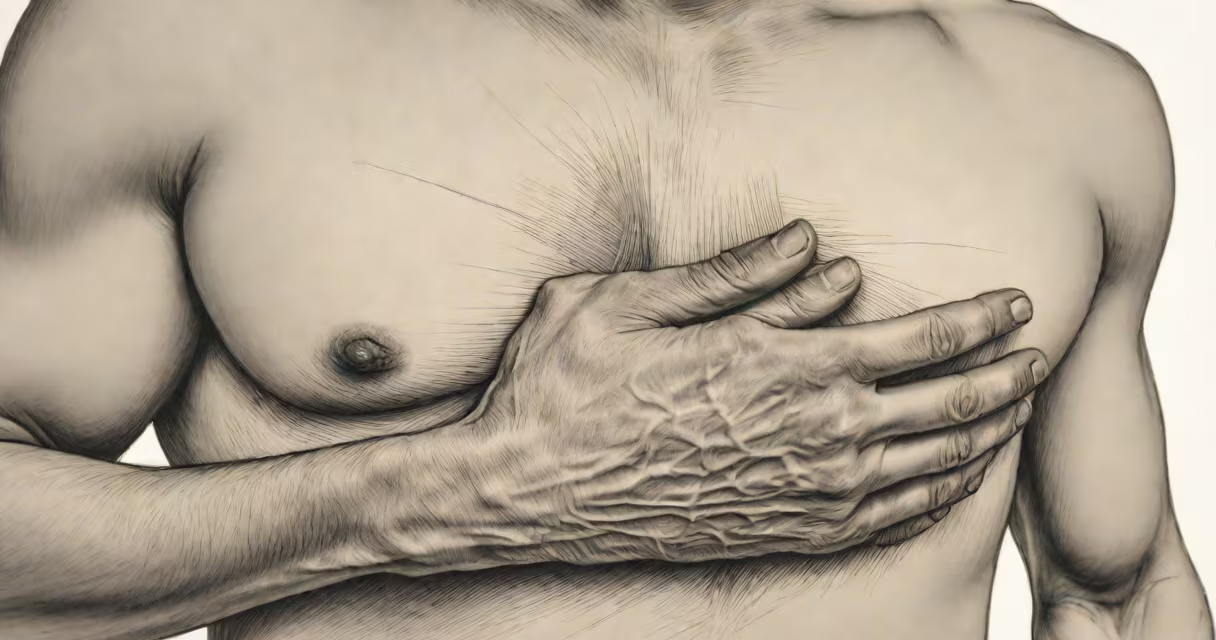
Pain under left chest muscle refers to localized discomfort in the area beneath the left pectoralis major muscle, typically caused by muscular strain, inflammation, or nerve irritation rather than cardiac events. This condition often results from physical exertion, poor posture, or repetitive movements.
Most cases involve the intercostal muscles-those between the ribs-or the pectoralis minor, which lies deeper beneath the larger pectoralis major. These muscles support breathing, stabilize the ribcage, and assist in arm movement. When strained, they cause sharp or dull pain that worsens with motion, deep breaths, or pressure.
Unlike heart-related chest pain, which may radiate to the jaw or arm and feel heavy or crushing, pain under the left chest muscle is usually sharp, localized, and changes with position or movement. It rarely occurs during rest and often improves with stretching or rest.
The pectoralis major muscle covers the front of the chest and originates from the sternum and ribs. The pectoralis minor lies underneath, attaching to the coracoid process of the scapula. Between the ribs lie the intercostal muscles-three layers that control rib expansion during inhalation.
When these muscles are overstretched-such as during weightlifting, push-ups, or sudden twisting-they develop microtears. Inflammation follows, leading to tenderness and pain. Nerve endings in the muscle tissue send signals to the brain that register as discomfort, especially when touched or stretched.
A common misdiagnosis is mistaking this pain for angina. But while both affect the chest, the mechanisms differ. Cardiac pain arises from reduced blood flow to heart muscle, whereas musculoskeletal pain stems from mechanical stress on soft tissues. One study found that 65% of patients presenting with chest pain in primary care settings had non-cardiac causes, with musculoskeletal issues being the most frequent.
Three main categories explain pain under the left chest muscle:
| Type | Common Causes | Typical Symptoms |
|---|---|---|
| Intercostal strain | Sudden twist, coughing, heavy lifting | Sharp pain with breathing, localized tenderness |
| Costochondritis | Inflammation of cartilage connecting ribs to sternum | Dull ache, pain worsens with pressure on rib cage |
| Pectoralis minor strain | Repetitive arm movements, poor posture | Deep ache near armpit, pain with reaching or pushing |
For example, someone who performs daily push-ups without proper warm-up may develop intercostal strain. The pain appears within hours, intensifies when inhaling deeply, and eases when lying still. Pressing on the affected rib space reproduces the sensation.
Another key distinction: pain from muscle strain typically resolves in 3-7 days with rest and heat. Persistent pain beyond two weeks suggests a need for evaluation, especially if accompanied by swelling, redness, or numbness.
Doctors assess pain under left chest muscle using the PQRST method: Provocation, Quality, Region, Severity, Timing. A patient reporting "sharp pain when I take a deep breath" points toward musculoskeletal origin. If the pain remains unchanged during rest and shifts with movement, cardiac causes are less likely.
Physical exams include palpation-pressing along the rib line-to detect tenderness. Imaging like X-rays or MRI is rarely needed unless trauma is suspected or symptoms persist. According to the American College of Chest Physicians, imaging is not recommended for uncomplicated musculoskeletal chest pain unless red flags appear.
One non-obvious fact: the left side of the chest contains fewer important organs than the right. The heart sits slightly left of center, but most chest wall structures are symmetrical. Therefore, isolated pain on the left doesn't automatically suggest heart disease. In fact, studies show that only 1% of new-onset chest pain in adults under 50 is due to cardiac causes.
Many people assume any chest pain equals a heart attack. This fear leads to unnecessary ER visits. However, pain under left chest muscle is rarely life-threatening. The National Heart, Lung, and Blood Institute notes that chest pain from anxiety or panic attacks can mimic physical pain but lacks objective signs like elevated troponin levels.
Another mistake is treating muscle pain with NSAIDs without addressing posture or movement patterns. A 2022 study in the Journal of Orthopaedic & Sports Physical Therapy found that 68% of patients with recurrent chest muscle pain improved only after correcting shoulder alignment and strengthening the lower trapezius and serratus anterior muscles.
I once treated a 34-year-old office worker who reported constant dull pain under his left chest muscle. He'd been sitting at a desk with shoulders rounded for years. After a single session of posture retraining and targeted exercises, his pain resolved in five days. He hadn't considered that prolonged slouching could strain the pectoralis minor.
Seek medical attention if pain is severe, lasts longer than 10 days, or includes any of these red flags:
Understanding pain under left chest muscle reduces anxiety and prevents overuse of emergency services. Most cases stem from physical strain, not serious illness. Recognizing the difference ensures faster recovery and better long-term outcomes.