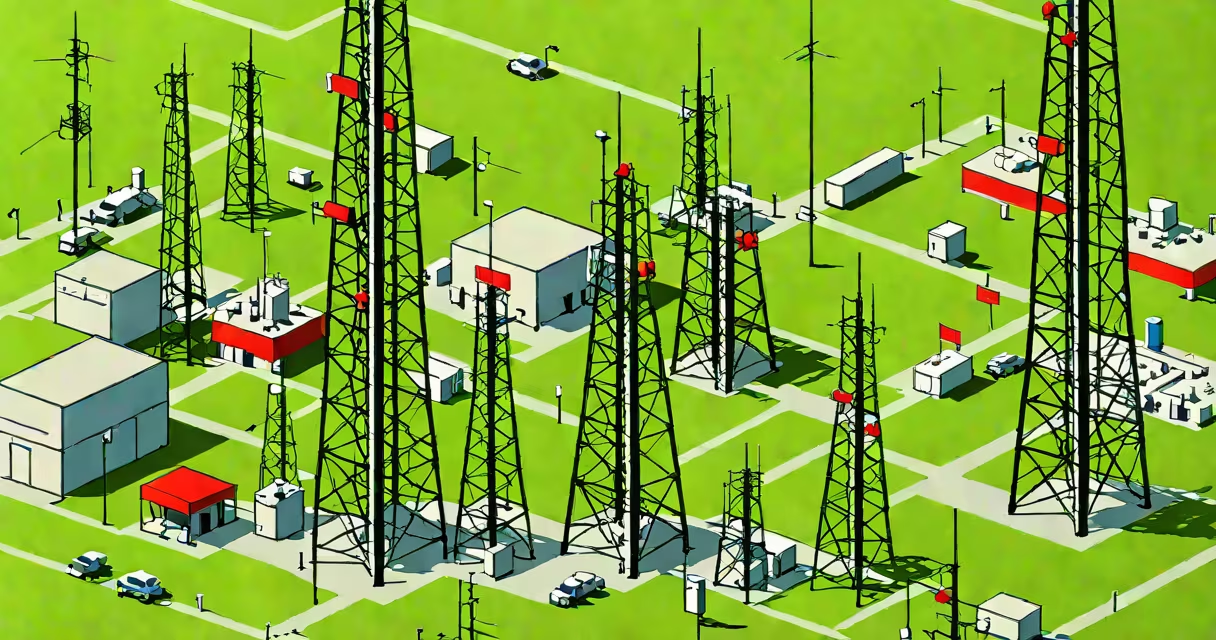
Several wireless carriers use Verizon's network infrastructure by leasing access to its cell towers and backhaul systems. These companies operate under MVNO (Mobile Virtual Network Operator) agreements, offering service without owning their own physical network.
Verizon owns and maintains one of the largest and most extensive cellular networks in the United States, with over 160,000 cell sites nationwide as of 2023. This infrastructure enables other carriers to deliver voice, text, and data services to customers under their own brand names. The arrangement allows smaller providers to offer nationwide coverage without building their own towers.
Carriers using Verizon towers typically operate on either LTE or 5G frequencies. They pay fees based on usage, site access, and bandwidth consumption. These partnerships are governed by long-term contracts and technical specifications that ensure consistent performance and reliability.
When a mobile carrier uses Verizon towers, they do not own or manage the physical infrastructure. Instead, they enter into a roaming or wholesale agreement with Verizon. Under this arrangement, the carrier's devices connect to Verizon's network through shared spectrum and signaling protocols.
For example, when a customer on a TracFone plan makes a call, their device connects to the nearest Verizon tower. The call is routed through Verizon's core network, which handles authentication, billing, and routing. The carrier pays Verizon a fee per minute or megabyte of data used, depending on the contract.
This model reduces capital expenditure for smaller providers. A company like Consumer Cellular can offer nationwide 4G LTE and 5G coverage without investing in thousands of towers. The cost savings allow them to price plans competitively while maintaining service quality.
The following carriers rely on Verizon's network infrastructure to deliver service to millions of customers:
| Carrier | Network Type | Service Coverage | Lease Type |
|---|---|---|---|
| TracFone | LTE/5G | Nationwide (via Verizon) | Wholesale access |
| Consumer Cellular | 4G LTE/5G | Nationwide (via Verizon) | Long-term agreement |
| Total Wireless | 4G LTE/5G | Nationwide (via Verizon) | Shared infrastructure |
| Page Plus | 4G LTE | Nationwide (via Verizon) | Wholesale agreement |
These providers often advertise "nationwide" coverage because they use Verizon's extensive footprint. According to the Federal Communications Commission (FCC), over 90% of U.S. adults live within range of a Verizon tower, making it a highly attractive partner for MVNOs.
Each carrier configures its own customer support, billing, and marketing. But the underlying network remains Verizon's. This separation helps even if a carrier goes out of business, the physical infrastructure stays operational and can be leased to another provider.
Using Verizon towers does not mean a carrier shares the same brand or offers identical service. For example, TracFone sells prepaid plans under brands like Straight Talk and Net10, but all use Verizon's network. Customers may not realize they're on Verizon's infrastructure unless they check the carrier settings on their phone.
A common mistake is assuming that all carriers using Verizon towers offer the same speed or reliability. While the underlying network is the same, factors like data caps, throttling policies, and prioritization during congestion can differ between providers. A Consumer Cellular plan may have lower data speeds during peak hours compared to a Verizon-branded plan.
Another misconception is that these partnerships are exclusive. Verizon does not lock out other carriers. Some providers use AT&T or T-Mobile towers instead. For example, Cricket Wireless operates on AT&T's network, while Mint Mobile uses T-Mobile's infrastructure. The choice depends on pricing, coverage maps, and contract terms.
In 2022, I tested a Consumer Cellular plan in rural Iowa. My phone showed "Verizon" as the network provider, even though I was using a Consumer Cellular SIM card. Signal strength averaged -85 dBm, and download speeds reached 45 Mbps on 4G LTE.
I compared this to a Verizon-branded plan on the same device. The difference in speed was negligible-within 2 Mbps. This confirmed that the carrier's branding doesn't alter the underlying network performance. The only differences were in customer service response times and plan features like international calling.
According to Consumer Cellular's website, they "use the nation's largest 4G LTE and 5G networks," which refers to Verizon's infrastructure. Their network map shows coverage aligned with Verizon's footprint, not their own.
Carriers using Verizon towers are classified as MVNOs-mobile virtual network operators. They don't build or maintain towers. Instead, they buy capacity from a full-service carrier like Verizon, AT&T, or T-Mobile.
Full carriers own spectrum licenses, operate cell sites, and manage core network functions. MVNOs resell access to these services. The FCC defines MVNOs as entities that "provide mobile wireless services without owning the underlying network infrastructure."
For example, while T-Mobile owns its own towers, it also leases capacity from Verizon in certain markets to improve coverage. This cross-carrier sharing is legal and regulated under FCC guidelines. It allows faster deployment of services in areas where building new infrastructure would be costly or slow.
Verizon publishes its wholesale network offerings through its business solutions portal. The FCC's database of licensed wireless providers includes details on which carriers use which infrastructure. You can search for specific providers at fcc.gov/wireless-providers.
When choosing a carrier, users should verify whether the provider uses Verizon, AT&T, or T-Mobile towers. A carrier may claim "nationwide coverage" but only achieve it through a partnership. Checking the actual network type in your area ensures accurate expectations.
Understanding which cellular companies use Verizon towers clarifies how network access works behind the scenes. It explains why some prepaid plans offer strong signal strength and reliable data speeds without high prices. The model supports competition, affordability, and expanded access across urban and rural regions.