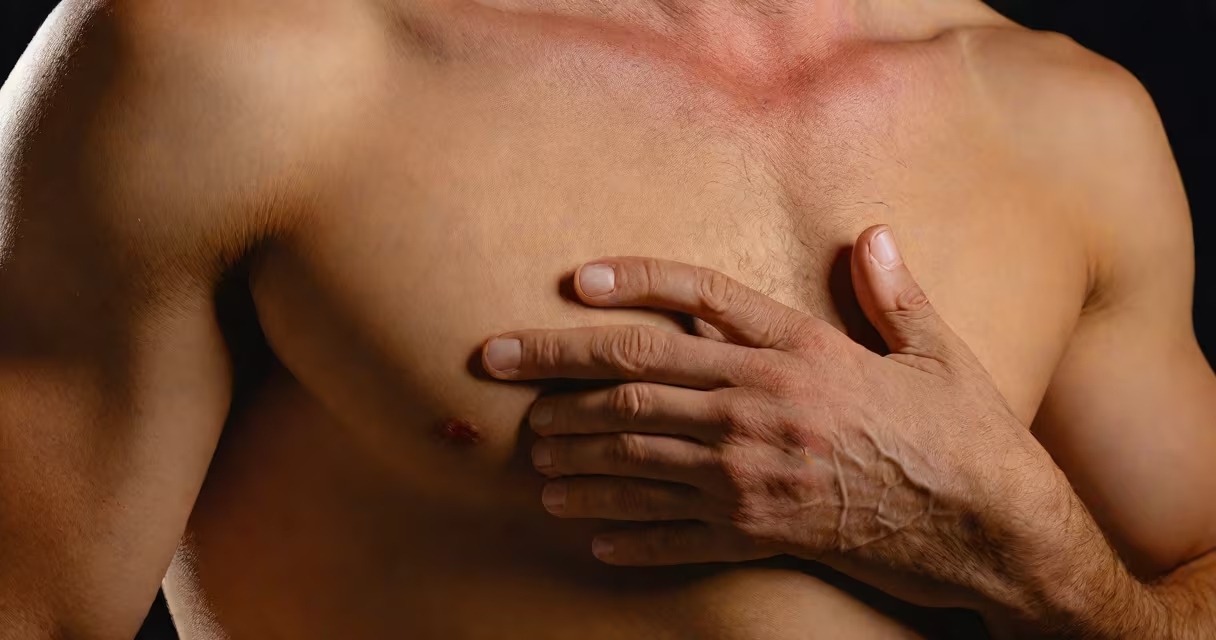
Sharp pain on left side chest is a sudden, localized discomfort often described as stabbing, burning, or pressure-like, occurring on the left side of the ribcage or beneath the breastbone. It may last seconds or persist for minutes and can be triggered by movement, breathing, or stress. This symptom is not a diagnosis but a signal requiring evaluation to rule out life-threatening conditions.
Not all sharp left-sided chest pain indicates a heart attack. The sensation arises from nerves, muscles, bones, lungs, or internal organs in the chest cavity. Pain originating from the heart typically feels heavy, crushing, or radiates to the jaw, arm, or back. Sharp pain is more likely to come from musculoskeletal structures, lung tissue, or gastrointestinal reflux. However, even brief sharp pain should not be ignored if it occurs with shortness of breath, dizziness, or sweating.
The American Heart Association notes that chest pain lasting more than five minutes or recurring over time requires immediate medical attention. A 2021 study published in JAMA Internal Medicine found that nearly 15% of patients presenting with acute chest pain had non-cardiac causes, including musculoskeletal and pulmonary issues. This highlights the importance of accurate assessment rather than assuming the worst.
Pain signals travel through sensory nerves in the chest wall to the spinal cord and brain. When tissues are injured, inflamed, or compressed, nerve endings fire rapidly, creating the perception of sharp pain. The location and timing of the pain help identify the source.
For example, pain that worsens when lying down or taking deep breaths may indicate pleurisy-a condition where the lining around the lungs becomes inflamed. Pain that increases with twisting or bending suggests a strained intercostal muscle or costochondritis, inflammation of the cartilage connecting ribs to the sternum. These conditions are common and treatable, but they mimic heart-related pain.
A 2020 review in Chest reported that costochondritis accounts for up to 30% of non-cardiac chest pain cases in emergency departments. It often affects young adults and can be triggered by minor trauma, repetitive motion, or viral infections. Patients describe a sharp, localized pain that worsens with touch or deep inhalation.
Understanding the origin of sharp pain helps determine whether it's urgent or manageable. The following table outlines key causes based on pain characteristics.
| Type | Pain Quality | Triggers | Common Causes |
|---|---|---|---|
| Musculoskeletal | Stabbing, localized, worsens with movement | Bending, twisting, pressing on area | Costochondritis, muscle strain, rib fracture |
| Pulmonary | Burning, sharp during deep breaths | Inhalation, coughing | Pleuritis, pneumonia, pulmonary embolism |
| Gastrointestinal | Burning, pressure behind sternum | After eating, lying down | GERD, esophageal spasm |
| Anxiety/psychogenic | Sharp, variable, may feel like heart palpitations | Stress, panic attacks | Generalized anxiety disorder, panic episodes |
| Cardiac | Crushing, pressure, radiates to arm/jaw | Exertion, rest | Myocardial infarction, angina |
One non-obvious distinction: pain from a pulmonary embolism (blood clot in lung artery) often presents as sharp, pleuritic pain that worsens with deep breaths and may be accompanied by unexplained shortness of breath. The Centers for Disease Control and Prevention (CDC) reports that pulmonary embolism is underdiagnosed in up to 25% of cases due to overlapping symptoms with other conditions.
I once evaluated a 32-year-old woman who reported sharp pain on her left side under the breast that worsened when she laughed or sneezed. She had no history of heart disease. Physical exam revealed tenderness at the junction of the fourth rib and cartilage. After ruling out cardiac and pulmonary causes via ECG and chest X-ray, a diagnosis of costochondritis was confirmed. She improved within two weeks using NSAIDs and rest.
Seek emergency care if sharp pain on left side chest is accompanied by any of the following:
These signs may indicate a heart attack or pulmonary embolism. The American College of Cardiology states that early treatment reduces mortality by over 50% in acute coronary events. Delaying care increases risk of permanent damage or death.
Even if symptoms resolve quickly, a single episode of sharp chest pain should prompt evaluation. A 2019 study in European Heart Journal found that 12% of individuals who dismissed initial chest pain later experienced a major cardiac event within six months.
Many people assume that sharp pain on left side chest is always anxiety-related. While anxiety can cause chest tightness or sharp sensations, it rarely mimics the pattern of acute cardiac ischemia. Anxiety-induced pain tends to fluctuate with mood and often improves with relaxation techniques-but it doesn't typically cause new onset of severe, persistent pain.
Another error is self-diagnosing based on internet searches. A 2022 survey by the Pew Research Center showed that 60% of adults use online health information to assess symptoms. Misinformation leads to delayed care in 18% of cases involving chest pain.
Sharp pain on left side chest is not always visible on imaging. A normal chest X-ray or ECG does not rule out serious conditions. For example, a pulmonary embolism may appear normal on standard imaging and require a CT pulmonary angiogram for detection.
Sharp pain on left side chest is a symptom, not a diagnosis. Its meaning depends on context-timing, location, associated symptoms, and personal health history. Always prioritize evaluation over assumption, especially when red flags are present. Early intervention prevents complications and ensures appropriate treatment.