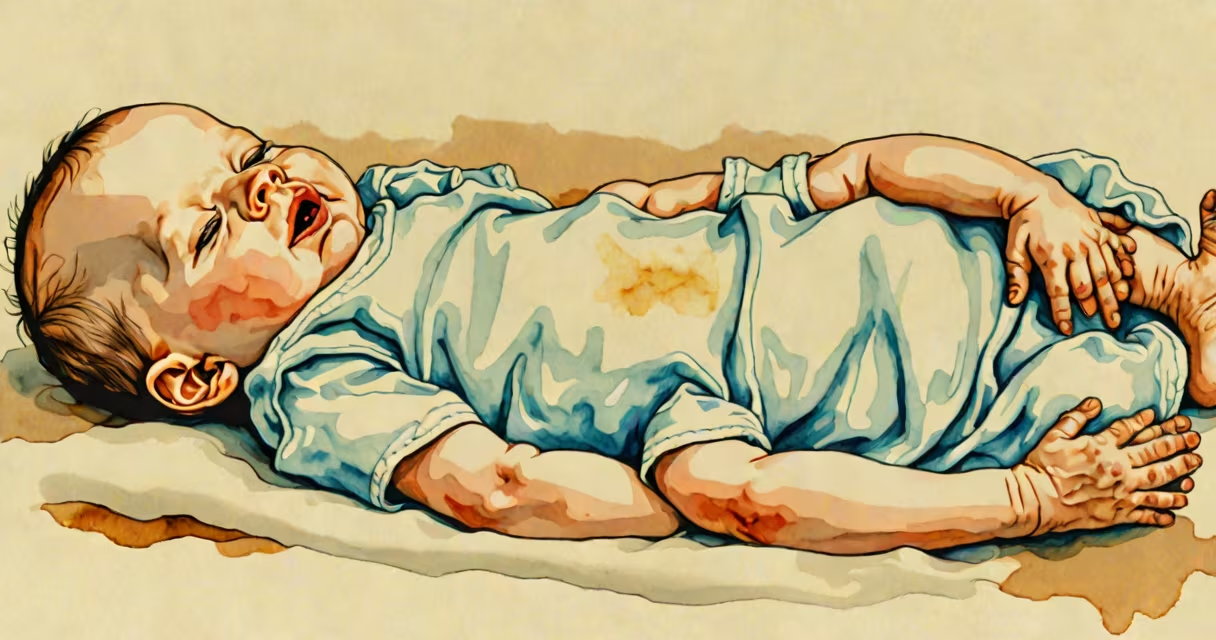
Signs of trapped gas in newborns include excessive crying, clenched fists, drawing legs toward the chest, bloating, and frequent burping or passing gas. These behaviors stem from immature digestive systems unable to process swallowed air or milk efficiently during feeding.
Newborns have underdeveloped gastrointestinal tracts. The muscles controlling digestion are weak, and the gut microbiome hasn't yet stabilized. This leads to air accumulation during feeding and inefficient breakdown of breast milk or formula. When gas builds up, pressure increases in the intestines, causing sharp, intermittent pain. Babies cannot verbalize discomfort, so they express it through physical cues.
According to the American Academy of Pediatrics (AAP), gas-related fussiness affects up to 25% of infants in the first three months. Most cases resolve by 3-4 months as the digestive system matures. Persistent symptoms beyond this window may indicate lactose intolerance or cow's milk protein sensitivity, requiring medical evaluation.
Trapped gas causes physical distress that appears as behavioral patterns. The most common sign is sudden, intense crying lasting minutes to hours, often occurring after feeding. Crying typically stops only after passing gas or being held in a position that relieves pressure.
Babies may arch their backs while crying, clench their fists, or pull their legs up tightly against the abdomen. These movements mimic the instinctive response to abdominal pressure. Parents often describe the baby "twisting" or "curling up." A distended belly may be visible, especially after feeding, though not always present.
Other signs include frequent burping, grunting, and restlessness during sleep. Some babies pass gas with a loud sound or smell. Not all newborns show the same symptoms-some cry quietly, others scream. The intensity varies based on individual pain tolerance and nervous system sensitivity.
Gas in newborns arises from two primary sources: swallowed air and bacterial fermentation. Swallowed air occurs during bottle feeding or breastfeeding if the latch is poor. Air enters the mouth and travels down the esophagus, accumulating in the stomach and small intestine.
Bacterial fermentation happens later in the digestive tract. Undigested carbohydrates in breast milk or formula reach the large intestine, where bacteria break them down into gases like hydrogen, methane, and carbon dioxide. This process produces flatulence and bloating.
| Type | Source | Timing | Common Triggers |
|---|---|---|---|
| Swallowed air | During feeding | Immediately after eating | Fast bottle flow, crying during feed, improper latching |
| Fermentation gas | Large intestine | 30-60 minutes post-feed | High-lactose formula, maternal diet (if breastfeeding) |
Some parents mistake gas pain for hunger. A baby who cries after feeding may be seeking comfort, not food. Overfeeding can worsen gas by overwhelming the digestive system. The AAP recommends feeding on cue rather than on a strict schedule to reduce overconsumption.
Parents often assume crying equals hunger or a dirty diaper. However, gas pain mimics these conditions. A baby may cry for 20 minutes after feeding, then stop when passed gas or held upright. This pattern repeats daily and can lead to frustration and exhaustion.
One key distinction: gas-related crying is often rhythmic and tied to feeding times. Hunger cries tend to build gradually and persist until fed. Gas pain usually starts abruptly and resolves with movement or positioning. A baby with trapped gas may calm quickly when placed on their tummy or lifted into a vertical hold.
A non-obvious fact: newborns can pass gas even when not visibly bloated. The gas may be trapped in the upper intestines, causing internal pressure without external swelling. This makes visual assessment unreliable. Always consider behavior and timing over appearance.
I once observed a newborn who cried for 45 minutes after every feed. The mother had tried changing formulas and increasing burping frequency. After adjusting the bottle angle and using a slow-flow nipple, the baby's crying reduced by 70% within 48 hours. The issue wasn't the formula-it was air intake during feeding.
To assess signs of trapped gas:
Seek care if the baby shows signs of dehydration (fewer wet diapers, dry mouth), blood in stool, or failure to gain weight. These indicate a condition beyond normal gas, such as cow's milk protein allergy or intestinal obstruction.
Red flags include persistent vomiting, fever, or lethargy. While gas pain rarely causes fever, infection can mimic gas symptoms. A doctor may recommend eliminating dairy from the mother's diet (if breastfeeding) or switching to a hypoallergenic formula.
According to the National Institute of Child Health and Human Development (NICHD), infant colic-defined as crying for more than three hours a day, three days a week, for three weeks-is linked to gas and digestive immaturity. Colic typically resolves by 3-4 months. If symptoms extend beyond this, further testing may be needed.