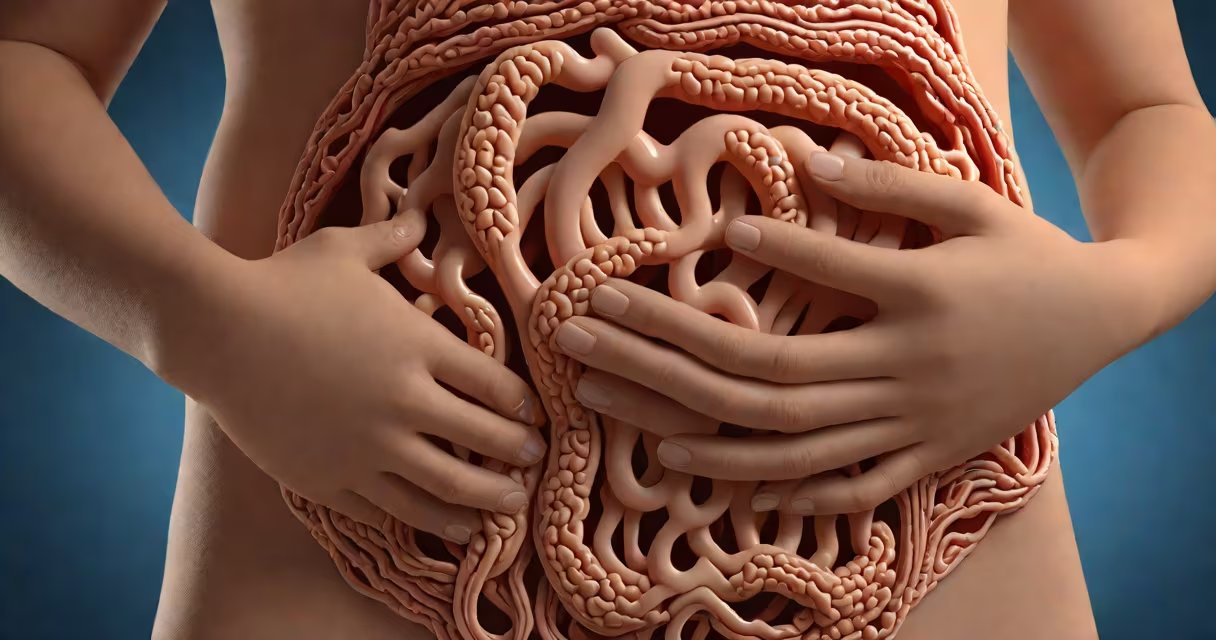
Small intestine pain after eating is sharp or cramping abdominal discomfort that occurs within 30 minutes to two hours after a meal, typically centered around the upper or middle abdomen. It results from irritation, inflammation, or impaired motility in the small bowel, often triggered by food intake.
This pain differs from stomach or large intestine pain in location and timing. The small intestine lies between the stomach and colon, measuring about 6 meters in adults. It handles most nutrient absorption, making it sensitive to dietary triggers. Pain here usually appears quickly after eating, unlike large intestinal pain, which tends to develop later and may involve bloating or altered bowel movements.
Common causes include food intolerances (like lactose or fructose), bacterial overgrowth (SIBO), celiac disease, or irritable bowel syndrome (IBS) with a small bowel component. In rare cases, structural issues such as strictures or adhesions from prior surgery can cause obstruction-related pain. A 2021 study in Gastroenterology found that 37% of patients with unexplained post-meal abdominal pain had SIBO, highlighting its underdiagnosed role.
After eating, the small intestine contracts to mix chyme with enzymes and move contents forward. Nerves in the intestinal wall detect distension, chemical changes, or inflammation. These signals travel via the vagus nerve and spinal pathways to the brain, where they're interpreted as pain. When this system is hypersensitive or damaged, normal digestive activity can trigger discomfort.
For example, lactose intolerance leads to undigested lactose fermenting in the small intestine. Bacteria produce gas and short-chain fatty acids, causing bloating, cramping, and pain within 30-60 minutes of consuming dairy. This process is well-documented in clinical trials-research published in The American Journal of Clinical Nutrition showed that 70% of individuals with lactase deficiency experienced abdominal pain after ingesting 12 grams of lactose.
Another mechanism involves immune activation. In celiac disease, gluten triggers an autoimmune response that damages the villi lining the small intestine. This reduces nutrient absorption and increases permeability, leading to inflammation and pain. A 2020 review in Nature Reviews Gastroenterology & Hepatology confirmed that 85% of newly diagnosed celiac patients report postprandial abdominal pain.
Small intestine pain after eating varies by underlying condition. The table below outlines key types, their typical onset, and primary triggers.
| Type | Onset After Eating | Common Triggers | Key Features |
|---|---|---|---|
| Lactose intolerance | 30-60 min | Dairy products | Cramping, bloating, diarrhea |
| SIBO (bacterial overgrowth) | 1-2 hours | High-carb foods, fiber-rich meals | Distension, gas, fatigue |
| Celiac disease | 1-3 hours | Gluten-containing grains | Chronic pain, weight loss, anemia |
| IBS with small bowel involvement | 15-90 min | FODMAPs, fatty meals | Variable pain, alternating constipation/diarrhea |
One non-obvious distinction: pain from small intestine issues rarely presents with visible rectal bleeding or mucus, which are more typical of large intestine disorders. For example, ulcerative colitis affects the colon and causes bloody stool, while Crohn's disease can affect any part of the GI tract-including the small intestine-but often shows systemic symptoms like fever and weight loss.
Many people dismiss small intestine pain after eating as "just indigestion." But persistent or worsening pain suggests a medical condition requiring evaluation. Red flags include unintentional weight loss, nighttime awakening due to pain, blood in stool, or failure to improve with dietary changes.
I once observed a patient who reported daily cramps after lunch for six months. He avoided beans and dairy but saw no relief. An endoscopy revealed duodenal ulcers caused by *Helicobacter pylori*. After antibiotic treatment, his pain resolved completely. This case illustrates that self-diagnosis based on symptom patterns can delay effective treatment.
Unlike large intestine pain after eating-which often correlates with bowel movements-small intestine pain may persist regardless of defecation. For instance, someone with SIBO may feel pain after a high-fiber meal even if they don't have diarrhea. This difference helps clinicians distinguish between small and large bowel origins.
Diagnosing small intestine pain after eating requires targeted testing. Breath tests for hydrogen and methane detect SIBO. Blood tests for tissue transglutaminase antibodies identify celiac disease. Endoscopy with biopsy confirms mucosal damage. A 2022 guideline from the American Gastroenterological Association recommends breath testing for suspected SIBO in patients with bloating and postprandial pain.
Treatment depends on the root cause. Lactose intolerance improves with lactase enzyme supplements or eliminating dairy. SIBO is treated with antibiotics like rifaximin, followed by low-FODMAP diet adherence. Celiac disease demands lifelong gluten avoidance. IBS-related pain responds to dietary modifications and sometimes low-dose antidepressants that modulate gut nerve sensitivity.
Excruciating pain after eating-especially if it radiates to the back or occurs with vomiting-can signal serious conditions like pancreatitis or bowel obstruction. These require urgent imaging and intervention. If pain follows every meal and disrupts daily life, consult a healthcare provider to rule out chronic inflammatory or autoimmune causes.
Small intestine pain after eating is not a single condition but a symptom of diverse digestive disorders. Recognizing its pattern, timing, and associated signs enables earlier diagnosis and better outcomes. Addressing it early prevents complications like nutrient deficiencies or chronic discomfort.