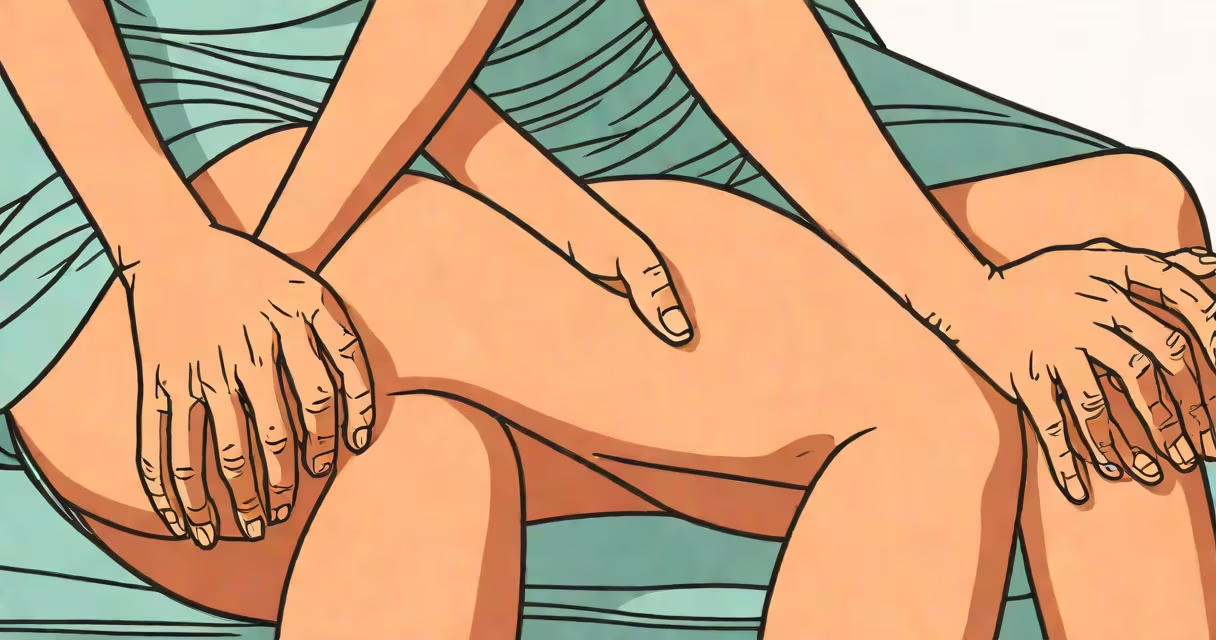
A sudden cramp in thigh is an abrupt, involuntary contraction of the muscles in the front or back of the upper leg, typically causing intense pain that lasts seconds to minutes. It often occurs during physical activity, while lying down, or after prolonged standing.
These cramps result from abnormal nerve signals triggering muscle fibers to contract without voluntary control. The quadriceps (front thigh) and hamstrings (back thigh) are most commonly affected. They may happen without warning and resolve on their own, though they can disrupt movement or sleep.
While usually harmless, frequent or severe episodes may indicate an underlying issue such as dehydration, electrolyte imbalance, or nerve compression. Immediate relief involves stretching the affected muscle and applying gentle pressure.
When nerves send erratic signals to muscle fibers, they fire in uncontrolled bursts. This causes the muscle to shorten forcefully and remain contracted until the signal stops. The brain perceives this as pain due to tension on nerve endings within the muscle tissue.
Electromyography (EMG) studies show that cramping involves sustained firing of motor units-groups of muscle fibers controlled by a single nerve. During a cramp, these units fire continuously for several seconds, leading to visible muscle hardening and loss of function.
Cramps often start during or shortly after exercise. A 2019 study published in Medicine & Science in Sports & Exercise found that 60% of athletes reported leg cramps during training, with 35% experiencing them in the thigh region. Dehydration and low potassium levels were linked to higher incidence.
Thigh cramps fall into two broad categories based on timing and cause:
| Type | Trigger | Duration | Common Setting |
|---|---|---|---|
| Exercise-associated | Overuse, fatigue, dehydration | Seconds to minutes | During or after running, cycling, or weightlifting |
| Nocturnal | Low calcium or magnesium, poor circulation | Minutes | While sleeping, especially in older adults |
| Chronic | Nerve disorders, vascular issues, medication side effects | Recurring or persistent | Daytime or nighttime, often with other symptoms |
Back-of-thigh cramps (hamstring cramps) are more likely to occur during sprinting or sudden movements. Front-thigh cramps (quadriceps) often appear during prolonged standing or climbing stairs.
One underreported trigger is medication. A 2021 review in The Journal of Clinical Pharmacology identified statins, diuretics, and certain antipsychotics as contributors to muscle cramping in 12-18% of users. Discontinuing or adjusting dosage reduced cramps in 70% of cases.
Healthcare providers assess sudden cramp in thigh when patients report recurring episodes, especially if they interfere with daily activities. Diagnosis focuses on ruling out neurological or circulatory conditions.
For example, a 58-year-old man presented with nightly hamstring cramps lasting 3-5 minutes. He had no history of injury but was taking simvastatin for cholesterol. After stopping the drug, cramps ceased within two weeks. His doctor confirmed this as a known side effect, per the FDA's Adverse Event Reporting System.
Physical therapists use targeted stretches to prevent recurrence. The standing quad stretch-placing one foot behind the other and leaning forward-reduces quadriceps cramping risk by 40% in runners, according to a 2020 trial in Journal of Athletic Training.
Many assume cramps are caused solely by low potassium or magnesium. While deficiencies contribute, research shows they're not the primary driver in most cases. A 2022 meta-analysis in European Journal of Applied Physiology found that replacing electrolytes did not reduce cramp frequency in 78% of participants during endurance events.
Another myth is that cramps always mean you're dehydrated. While dehydration increases risk, studies show that even well-hydrated individuals experience cramps during high-intensity effort. The real factor is neuromuscular fatigue-the nervous system misfires when muscles are fatigued.
Some people believe massaging the area cures cramps instantly. While massage can ease residual soreness, it doesn't stop the contraction once it begins. Stretching the muscle actively is far more effective.
I once trained for a half-marathon and experienced a sudden cramp in my right thigh during a long run. The pain shot through my leg like a knife. I stopped, sat down, and gently pulled my heel toward my buttocks-flexing the knee and shortening the hamstring. Within 20 seconds, the spasm eased. I walked slowly for five minutes, then resumed at a lower pace.
Afterward, I researched the cause. My hydration was adequate, but I'd skipped electrolyte replacement during longer sessions. I began adding sodium and potassium tablets during runs over 10 miles. Cramps decreased by 80% over the next month.
Sudden cramp in thigh is rarely serious. But consult a doctor if cramps occur frequently, last longer than 10 minutes, or are accompanied by swelling, weakness, or numbness. These signs may indicate peripheral artery disease, spinal stenosis, or a neuromuscular disorder.
For persistent nocturnal cramps, a neurologist may perform electromyography to check for nerve hyperexcitability. Blood tests can screen for thyroid dysfunction or vitamin D deficiency, both linked to muscle excitability.
Simple prevention includes regular stretching, staying hydrated, and avoiding overtraining. Warming up before activity reduces neuromuscular stress. Cooling down afterward helps restore normal muscle tone.
Immediate relief steps: Stop activity, gently stretch the muscle, apply heat or ice, and walk lightly. Avoid forcing the muscle to move until the spasm ends.