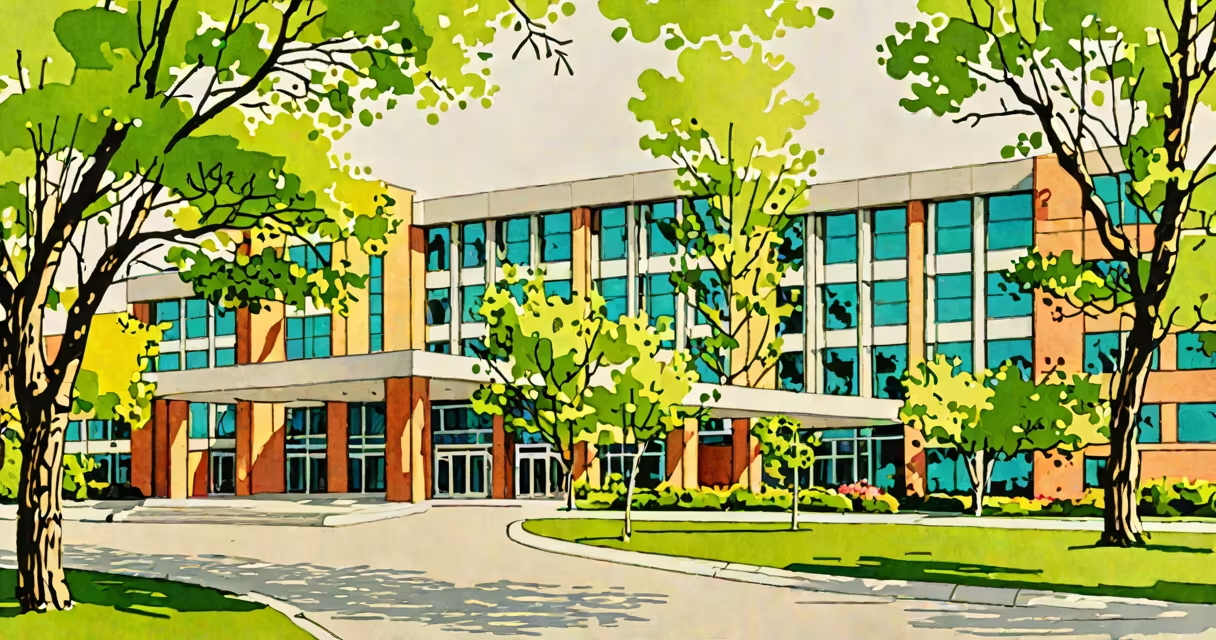
The University of the West is a private, nonprofit liberal arts institution located in Rosemead, California, accredited by the Western Association of Schools and Colleges Senior College and University Commission (WSCUC). It offers bachelor's and master's degrees in fields such as business, psychology, education, and theology, emphasizing ethical leadership, intercultural understanding, and service.
Founded in 1994 as a successor to the Buddhist Temple of the West, the university evolved from a religious-affiliated educational initiative into a secular, accredited institution focused on integrating values-driven learning with academic rigor. Its mission centers on preparing students for meaningful careers and civic engagement through a curriculum grounded in critical thinking, social responsibility, and global awareness.
Unlike many institutions that prioritize research output or athletic programs, the University of the West maintains small class sizes-averaging 15 students per course-and requires all undergraduates to complete a capstone project tied to community service or professional practice. This model reflects its commitment to experiential learning and personal development over standardized metrics.
Undergraduate programs at the University of the West follow a 120-credit hour structure, with core courses in philosophy, ethics, and cross-cultural communication. Students must complete 36 credits in general education, including courses in science, mathematics, literature, and history. The remaining 84 credits are dedicated to major-specific coursework.
Graduate programs, such as the Master of Business Administration (MBA) and Master of Education (MEd), are designed for working professionals. Classes are offered in hybrid formats-combining online instruction with weekend on-campus sessions-allowing flexibility for part-time learners. The MBA program includes a required internship in a nonprofit or socially responsible enterprise.
A key feature of the university's academic design is its "Ethical Leadership" requirement. All degree candidates must take a course titled "Leadership in a Global Context," which examines moral decision-making in diverse environments. This course uses real-world case studies from international NGOs, government agencies, and multinational corporations to analyze ethical dilemmas in action.
The university offers degrees across four schools:
| Program Type | Examples | Credit Hours | Delivery Mode |
|---|---|---|---|
| Undergraduate | Bachelor of Arts in Psychology, Business Administration | 120 | Hybrid (online + weekend campus) |
| Graduate | Master of Business Administration (MBA), MEd in Educational Leadership | 36-48 | Hybrid, evening/weekend |
| Online Certificates | Leadership in Nonprofit Organizations, Diversity and Inclusion | 12 | 100% online |
Each program integrates service-learning components. For example, students in the MEd program complete a 120-hour field placement in public or charter schools, with supervision from faculty and school administrators. The university partners with local districts in Los Angeles County to ensure placements align with student goals and community needs.
Students at the University of the West come from diverse backgrounds. A 2023 institutional report showed that 42% of undergraduates were first-generation college students, and 31% identified as Asian American or Pacific Islander. The average age of graduate students is 34, reflecting the institution's appeal to mid-career professionals seeking advancement.
Graduation rates for full-time undergraduates stand at 68% within six years-a figure consistent with WSCUC benchmarks for similar-sized private institutions. Employment outcomes are tracked through alumni surveys; 84% of graduates reported securing employment in their field within nine months of graduation.
One example illustrates the impact of the university's applied learning model. In 2022, a group of MBA students partnered with a low-income housing nonprofit in East Los Angeles to redesign its grant application process. Their analysis reduced processing time by 40%, leading to a 22% increase in successful funding applications over the following fiscal year. The project was later adopted by two other regional nonprofits.
Some confuse the University of the West with the University of West Virginia, a large public research university in Morgantown. These are entirely separate institutions. The University of West Virginia is a land-grant university with over 30,000 students and a strong engineering program. The University of the West is a small, private liberal arts college with fewer than 1,000 students.
Another misconception is that the university is exclusively for Christian students. While it was founded by a Buddhist organization, it is now a secular institution with no religious affiliation in its academic programs. However, spiritual wellness is supported through campus counseling services and optional mindfulness workshops.
A lesser-known fact: the university's library houses a rare collection of 19th-century American social reform pamphlets, donated by a former trustee. These materials are available for research and have been cited in peer-reviewed journals on progressive education policy.
In 2021, I attended a capstone presentation hosted by the Department of Psychology. A student team presented findings from a study on sleep patterns among high school students in South Central LA. They had collected data from 142 participants using wearable devices and conducted interviews with teachers and parents. The results revealed a direct correlation between inconsistent sleep schedules and declining academic performance. The team recommended school start times be delayed by 45 minutes, a proposal later discussed by the LA Unified School District's health advisory board.
This example demonstrates how the university's focus on real-world problem solving translates into tangible outcomes. Students aren't just learning theory-they're applying it to address systemic issues in their communities.
The University of the West is not a research-intensive university nor a large state school. It is a values-centered institution that blends academic excellence with service-oriented learning. Its graduates often enter careers in education, nonprofit management, social work, and community development-fields where integrity, empathy, and practical skills matter most.
For those seeking a smaller, purpose-driven academic environment, the University of the West provides a structured path to professional growth and civic contribution. Its emphasis on character, collaboration, and context-specific solutions sets it apart from traditional models of higher education.