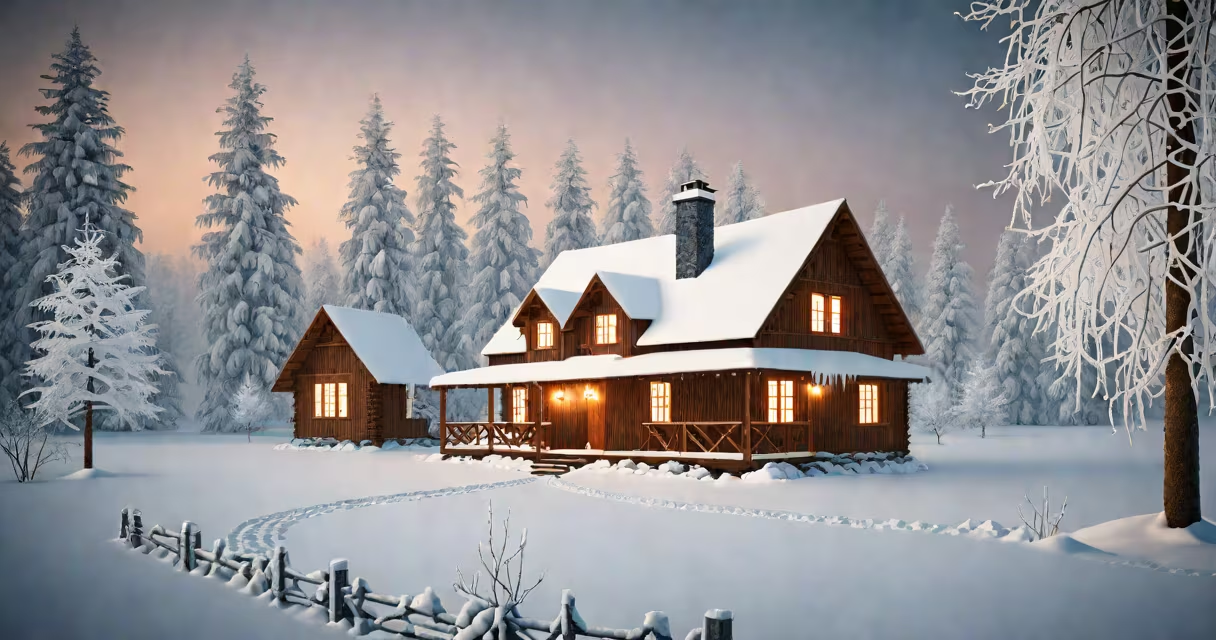
winter life in the countryside describes the daily routines, seasonal adaptations, and social rhythms of people living in rural areas during the cold months. It involves managing snowbound roads, maintaining heat through wood stoves, and relying on stored food and local networks. This lifestyle emphasizes self-reliance, slow pacing, and close ties to natural cycles.
Life in the countryside during winter unfolds at a different pace than urban centers. Days begin with the sun's weak rise through frozen windows. Heating relies on wood stoves or oil tanks-no central systems. Water may come from a well or a buried pipe system, requiring manual pumping when temperatures drop below freezing. People check their livestock early, often before dawn, to ensure animals have access to unfrozen water and sheltered feeding areas.
These routines aren't just practical-they're cultural. In Vermont, farmers report that winter is when they plan spring planting, review equipment, and repair fencing. A 2021 study by the USDA's Economic Research Service found that rural households in northern New England spend 37% more time on home maintenance tasks during winter months compared to summer. That includes chopping firewood, clearing gutters, and checking insulation levels.
Survival hinges on preparation. Before the first snowfall, families stockpile firewood-typically 6 to 8 cords per household depending on climate zone. A cord measures 128 cubic feet, roughly enough to heat a 2,000-square-foot home for a month. In Maine, the average rural household uses 5.2 cords annually, according to state energy reports.
Transportation shifts. Roads become impassable without plowing. Snowmobiles replace cars for travel between farms. In parts of northern Minnesota, residents rely on snowshoes or cross-country skis for short trips. Emergency services use tracked vehicles-snowcats or modified ATVs-to reach isolated homes.
Food systems go underground. Root cellars store potatoes, carrots, and onions. Fermented vegetables like sauerkraut and kimchi provide vitamin C. Families preserve meat through dry-curing or smoking. The USDA notes that 43% of rural households in the Pacific Northwest maintain at least one form of home food preservation, compared to 21% in urban areas.
Different regions develop distinct approaches based on elevation, snowfall, and access to resources. The table below outlines key differences:
| Region | Primary Heat Source | Transportation Method | Food Storage Type |
|---|---|---|---|
| Appalachian Mountains (NC/VA) | Wood stove (hardwood) | Four-wheel drive (plowed roads) | Root cellar, fermentation |
| Alaska Interior (Fairbanks area) | Propane furnace, electric backup | Snowmobile, sled dog teams | Freezer storage, drying |
| Scandinavian highlands (Norway/Sweden) | Electric underfloor heating, wood pellet stove | Skis, snowshoes, reindeer-drawn sleighs | Cellar, vacuum-sealed, smoked fish |
Each model reflects adaptation to local conditions. In Norway, for example, traditional log cabins are built with thick walls and steep roofs to shed snow. In contrast, Alaskan homesteads often feature raised foundations to prevent frost heave.
Many assume rural winter life is lonely or isolating. But research from the University of Wisconsin-Madison shows that rural communities in the Upper Midwest report higher rates of neighborly interaction during winter months-up to 58% more frequent visits than in summer. Shared meals, tool exchanges, and group ice fishing trips strengthen bonds.
Another misconception is that people only survive winter. In reality, many engage in meaningful work. In Vermont, 32% of rural residents continue farming year-round, using hoop houses to grow greens and raising heritage breeds of sheep and goats. One farmer near Middlebury reported harvesting kale and spinach in February using passive solar greenhouses.
A lesser-known fact: rural winter life often includes structured community events. In Quebec's Eastern Townships, towns host "Festival de la Neige" each January-three days of ice sculpting, bonfires, and storytelling. These gatherings reinforce identity and reduce isolation. They're not tourist spectacles-they're essential to mental health in remote areas.
On a 120-acre farm in the Northeast Kingdom, the Johnson family follows a predictable winter schedule:
This routine isn't idyllic-it's demanding. But it's also deeply intentional. As one resident told me during a visit last January: "The cold doesn't make us weaker. It makes us pay attention."
It is not synonymous with poverty or lack of opportunity. While access to healthcare and broadband remains limited in some areas, rural winter living often includes stable housing, low utility costs, and strong social safety nets. The U.S. Census Bureau reports that median household income in rural counties with populations under 5,000 was $58,700 in 2022-slightly above the national average.
It is not a retreat from modernity. Many rural homes use solar panels, off-grid batteries, and satellite internet. In Montana, 61% of rural households use renewable energy sources for at least part of their power needs. Winter life integrates technology where it improves resilience-not where it disrupts rhythm.
It is not universally peaceful. Blizzards can cut off power for days. A 2020 storm in northern New York left 140 homes without electricity for seven days. But even then, communication happens through ham radios and community hubs. Resilience is built into the culture.
Winter life in the countryside is not a single story. It varies by region, economy, and personal choice. But its core principle is clear: survival is not just physical-it's relational, ecological, and deliberate. Those who live it don't escape winter-they learn to move through it.