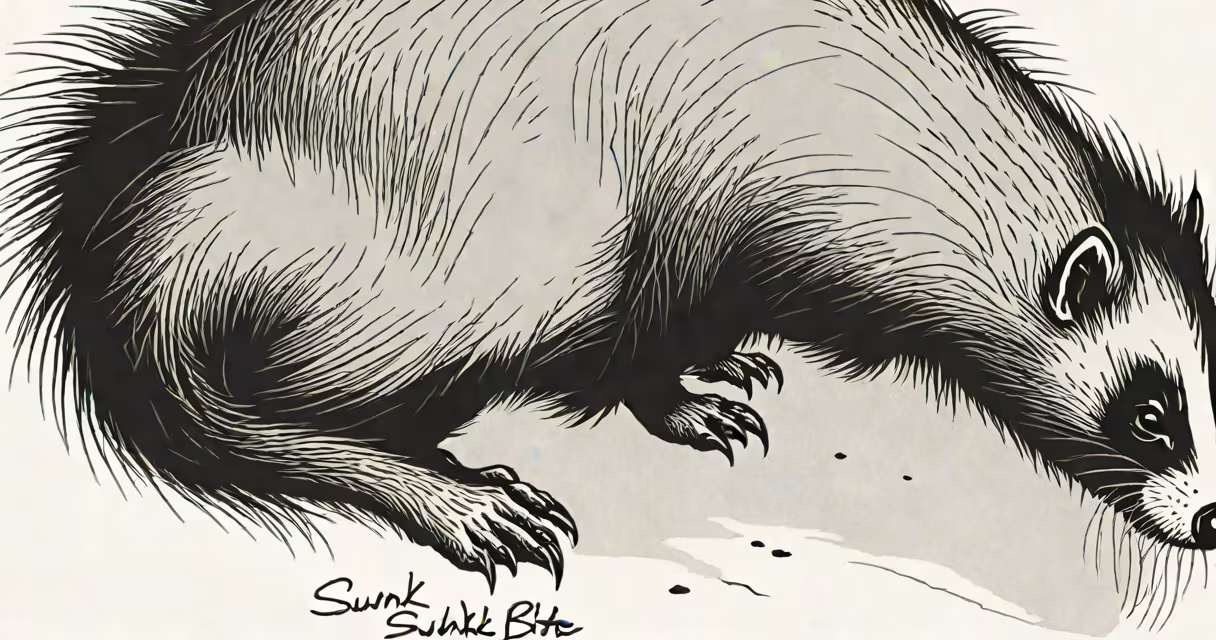
A skunk bite appears as two distinct puncture marks, often surrounded by redness, swelling, and warmth. The wound may ooze clear fluid or develop a small blood clot. These signs result from the skunk's sharp canine teeth piercing the skin, not from venom or toxins-skunks do not inject poison. Immediate pain and localized tenderness usually follow.
Skunks are primarily nocturnal and generally avoid confrontation. However, they will bite when threatened, cornered, or protecting their young. A bite typically occurs during a defensive reaction, such as when someone attempts to handle a skunk or accidentally steps near one. The bite force is moderate-around 100 psi-but sufficient to penetrate thin skin, especially on hands, fingers, or ankles.
According to the Centers for Disease Control and Prevention (CDC), animal bites from wild mammals-including skunks-carry a risk of rabies transmission. The CDC reports that between 2010 and 2020, 18% of reported rabies cases in the U.S. were linked to wildlife, including skunks. This makes prompt medical evaluation essential even if the wound seems minor.
Skunk bites differ from dog or cat bites in appearance and risk profile. Dog bites often leave lacerations or tearing due to useful jaws and grabbing behavior. Cat bites are deeper and more likely to cause infection due to bacteria in their saliva. Skunk bites are cleaner, with two precise punctures, similar to a needle prick.
Unlike raccoons or foxes, which may scratch or bite in rapid succession, skunks rarely attack multiple times. Their bite is a single defensive action. You're unlikely to see multiple wounds unless the animal was repeatedly provoked.
One common misconception is that skunk bites cause immediate odor. That's false. Skunks spray a foul-smelling liquid from anal glands when threatened. The bite itself does not carry scent. If you smell sulfur after being bitten, it's likely from contact with a skunk's spray during the encounter-not the bite.
Within hours of a skunk bite, swelling and redness typically appear around the puncture site. The area may feel warm to the touch. Pain ranges from mild to sharp, depending on location and individual sensitivity. In rare cases, the wound may develop pus or show signs of cellulitis-red streaks spreading from the injury.
More serious concerns include infection and rabies. The American Veterinary Medical Association (AVMA) notes that skunks are among the top three carriers of rabies in North America, behind bats and raccoons. If the skunk cannot be captured and tested, post-exposure prophylaxis (PEP) is recommended. PEP involves a series of rabies vaccines administered over 28 days.
Example: A hiker in Oregon reported being bitten while reaching for a dropped backpack near a den. Two clean punctures appeared on the index finger. Within six hours, swelling extended past the knuckle. After medical evaluation, the patient received tetanus booster and rabies PEP. The wound healed in 10 days with no complications.
Wash the wound immediately with soap and running water for at least five minutes. Do not apply antiseptic directly to open wounds-this can delay healing. Cover with a sterile bandage and seek medical care within 24 hours.
Do not attempt to identify the skunk. Instead, report the incident to local animal control. If possible, photograph the animal from a safe distance. The authorities may trap and test the skunk for rabies. Even if the animal is not seen again, testing is critical because symptoms of rabies can take weeks to appear.
Medical professionals assess the wound using the "RABIES" acronym: Risk factors, Animal behavior, Bite history, Exposure level, Immunization status, and Species. This structure helps determine whether PEP is necessary. For high-risk cases, PEP begins immediately after exposure.
| Wound Feature | Skunk Bite | Dog Bite | Cat Bite |
|---|---|---|---|
| Puncture pattern | Two small, clean holes | Multiple punctures and torn tissue | Deep, narrow punctures with minimal surface damage |
| Swelling onset | Within 2-6 hours | Minutes to hours | Within 1 hour |
| Infection risk | Low to moderate (bacteria from mouth) | High (Pasteurella multocida common) | Very high (similar to dogs) |
Many assume skunk bites are dangerous due to the animal's reputation. But the real danger lies in disease transmission, not physical trauma. A skunk bite is not inherently more harmful than a domestic cat's bite. The difference is the higher likelihood of rabies in wild skunks.
Another myth is that skunks always spray before biting. In reality, spraying is a warning sign, not a guarantee. Some skunks bite without spraying-especially if startled or injured. Conversely, some sprayed animals still bite when cornered.
Firsthand observation: During a field study in Pennsylvania, researchers documented 14 skunk encounters with humans. Only 3 involved spraying. In 5 cases, the skunk bit without prior warning. One participant reported being bitten while trying to move a skunk from a porch. The bite occurred after the animal turned and lunged.
Any bite from a wild animal requires medical attention. For skunk bites, go to urgent care or emergency room if:
Even if the wound appears minor, rabies prevention is time-sensitive. The CDC states that PEP is most effective when started within 72 hours of exposure. Delaying treatment increases the risk of neurological symptoms, which are fatal once they appear.
For those living in rural or wooded areas, carrying a basic first aid kit with antiseptic wipes, gauze, and gloves is advised. Always wash hands after handling wildlife or cleaning wounds.
Understanding what a skunk bite looks like helps reduce panic and ensures timely care. Recognizing the two-puncture pattern, swelling, and potential for rabies enables faster response. If you're unsure, consult a healthcare provider immediately. Early intervention prevents long-term complications.