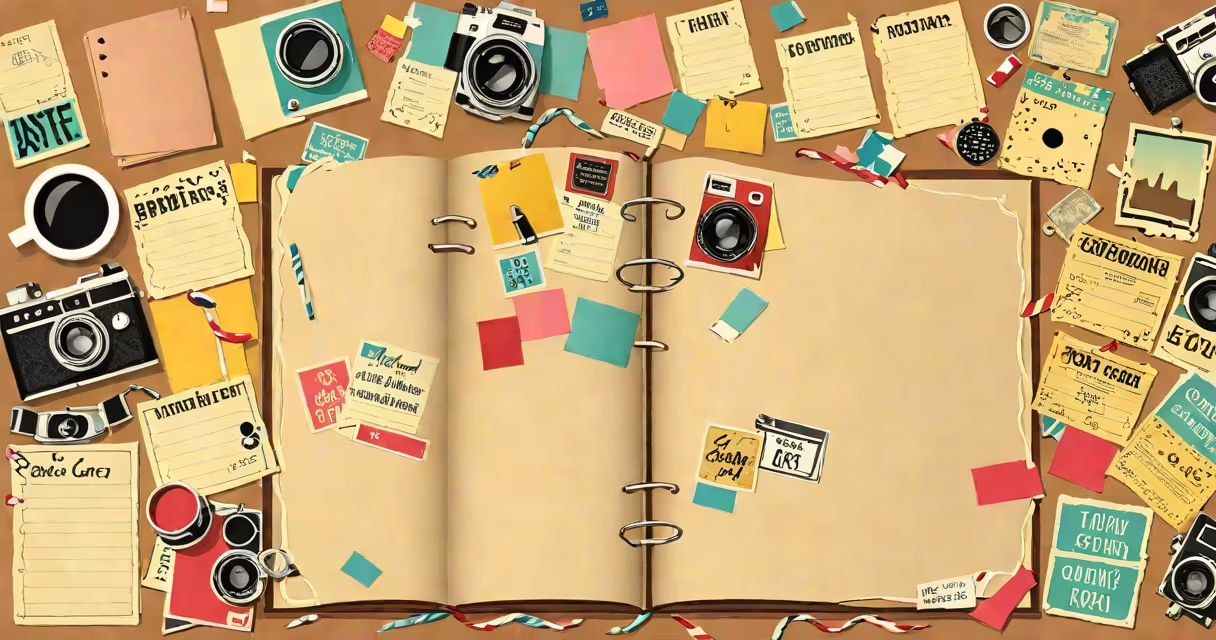
A scrapbook is a curated collection of personal memorabilia-photos, tickets, letters, and mementos-arranged in a bound album using decorative paper, stickers, and handwritten notes. It serves as a tangible record of life events, emotions, and experiences, often created by hand.
Scrapbooks began as private collections in the 19th century, evolving from early forms of photo albums and keepsake books. Today, they remain popular tools for preserving family histories, documenting travel, celebrating milestones like births or graduations, and expressing creativity. The practice blends art, memory, and narrative into a single physical object.
According to the Library of Congress, scrapbooking emerged as a distinct cultural activity in the United States during the late 1800s, with early practitioners using pressed flowers, newspaper clippings, and hand-drawn illustrations. Modern scrapbooking uses adhesive-backed paper, die-cut shapes, and digital printing tools to create polished, visually rich pages.
Creating a scrapbook involves selecting a theme-such as a wedding, a child's first year, or a cross-country road trip-and gathering relevant materials. These may include printed photos, event tickets, fabric swatches, dried leaves, or even small toys. Each item is mounted onto thick, acid-free paper to prevent deterioration over time.
Artistic elements like colored pens, washi tape, embossing powder, and stamped images are added to improve visual interest. Pages are arranged chronologically or thematically, with captions written in ink or typed text. Some scrapbookers use digital software like Adobe Photoshop or Canva to design layouts before printing and assembling them physically.
For example, a mother documenting her daughter's first birthday might include a photo of the cake, a handprint in paint, a balloon fragment, and a note saying "She laughed when the clown blew bubbles." This combination turns a fleeting moment into a lasting artifact.
Scrapbooks vary based on format, purpose, and materials used. The most common types include:
| Type | Materials Used | Common Use Cases |
|---|---|---|
| Traditional Handmade | Cardstock, glue, scissors, stickers, ribbon | Family histories, weddings, baby books |
| Digital Scrapbook | Software, digital images, virtual templates | Quick sharing, online archives, social media |
| Themed (e.g., travel, sports) | Maps, brochures, game tickets, team jerseys | Event-specific documentation |
| Interactive | Pockets, flaps, pull-out tabs, QR codes | Engaging storytelling, educational projects |
Acid-free paper and archival-quality adhesives are essential for long-term preservation. The Society of American Archivists recommends storing scrapbooks in cool, dry environments away from direct sunlight to prevent fading and degradation.
People use scrapbooks to preserve memories that might otherwise fade. Unlike digital files, which can be lost due to hardware failure or file corruption, a physical scrapbook remains accessible and emotionally resonant. A 2021 study by the University of California, Berkeley, found that individuals who engage in physical memory-keeping activities report stronger emotional connections to past events than those relying solely on digital storage.
One common mistake is assuming scrapbooks are only for sentimental purposes. While many focus on birthdays and holidays, professionals use them for project documentation, research logs, and even legal evidence. For instance, a teacher might compile a scrapbook of student progress throughout the school year, including assignments, artwork, and behavioral notes.
Another misconception is that scrapbooks require artistic skill. They don't. A well-made scrapbook can be simple-just a few photos taped to a page with a short caption. The goal isn't perfection but authenticity. As noted by the National Museum of American History, many early scrapbooks were made by children and immigrants with limited access to supplies, yet they remain useful historical artifacts.
A scrapbook is not a photo album. While both store images, a photo album typically displays pictures in chronological order with minimal decoration. A scrapbook adds context, emotion, and narrative through layered materials and personal commentary.
It's also not the same as a journal. Journals are primarily text-based, recording thoughts and daily entries. Scrapbooks emphasize visual storytelling and material artifacts. You might write a sentence in a journal about a vacation, but in a scrapbook, you'd include a map, a postcard, a ticket stub, and a photo-all arranged to evoke the feeling of being there.
One non-obvious fact: Many scrapbooks are never meant to be seen. They're private records kept for the creator's own reflection. I once found a scrapbook in my grandmother's attic, filled with wartime letters and ration coupons from 1943. She never showed it to anyone. Its power came from silence, not display.
To begin, gather your materials: a blank album, scissors, adhesive, and a selection of meaningful items. Choose a theme-your last trip abroad, your pet's life story, or a major achievement. Arrange items on a page before gluing to test composition. Use a pencil to mark placement points.
Start simple. A single page with one photo, a ticket stub, and a short note is enough. Over time, you'll develop a style. Some prefer minimalist designs; others layer multiple textures and colors. There's no right way.
What does scrapbook mean? It means creating a lasting, tactile archive of moments that matter. It's not about aesthetics-it's about presence. When you hold a scrapbook, you're holding time.