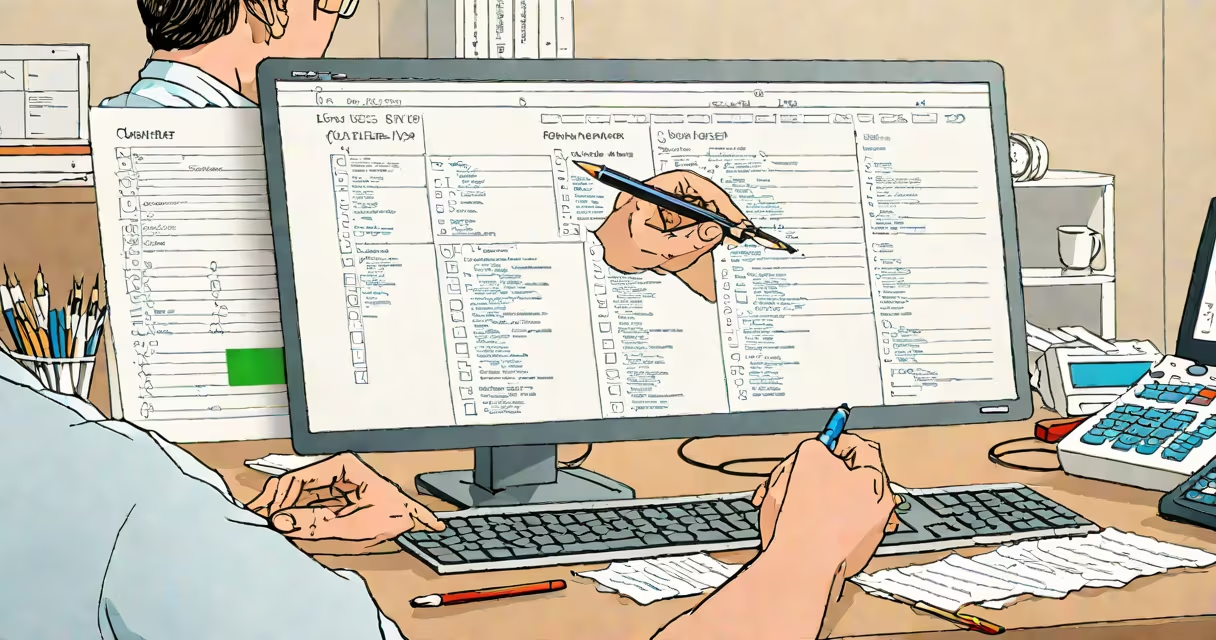
A CPC coder is a certified medical professional trained to assign standardized alphanumeric codes to patient diagnoses and procedures using CPT, HCPCS, and ICD-10-CM/PCS systems. These codes enable accurate billing, insurance claims processing, and health data reporting across U.S. healthcare settings.
CPC stands for Certified Professional Coder, a credential awarded by the American Academy of Professional Coders (AAPC). The certification validates expertise in outpatient and physician office coding, with a focus on procedural documentation and compliance with federal regulations such as HIPAA and Medicare guidelines.
Medical coders translate clinical notes from physicians into precise codes. For example, a doctor's note stating "laparoscopic cholecystectomy performed" becomes the CPT code 47562. This code triggers payment from insurers and supports public health tracking. Without accurate coding, providers risk denied claims, audits, and financial loss.
CPC coders analyze electronic health records (EHRs), operative reports, and physician notes to identify documented services. They match each service to the correct code based on official coding manuals and payer-specific guidelines. This process requires attention to detail and familiarity with modifiers that adjust code meaning.
For instance, if a surgeon performs a bilateral procedure, the coder adds modifier -50 to indicate both sides were operated on. Omitting this modifier may result in reduced reimbursement. Similarly, using the wrong ICD-10 code for a diagnosis-such as assigning E11.69 for uncontrolled diabetes instead of E11.42 for diabetic neuropathy-can lead to claim denials.
Coders work in hospitals, clinics, insurance companies, and remote coding firms. Many operate under strict deadlines, often handling 20-30 charts per day. Accuracy is critical: a single error can delay payments by weeks and trigger compliance reviews.
CPC coders primarily use three types of codes:
| Code Type | Use Case | Example | Issuer |
|---|---|---|---|
| CPT | Physician services, surgeries, diagnostic tests | 99213 - Established patient office visit, moderate complexity | American Medical Association |
| HCPCS Level II | Supplies, equipment, ambulance services | A4550 - Disposable glucose test strips | Centers for Medicare & Medicaid Services (CMS) |
| ICD-10-CM/PCS | Disease diagnosis and inpatient procedures | E11.69 - Type 2 diabetes mellitus with other specified complications | World Health Organization (WHO), adopted by CMS |
Each code set serves a distinct purpose. CPT codes describe what was done during a visit. HCPCS codes cover non-physician services. ICD-10 codes define the reason for care. A single encounter may involve dozens of codes across all three systems.
For example, a patient visits a primary care clinic with chest pain. The provider orders an EKG (CPT 93010), prescribes statins (HCPCS J0640), and diagnoses stable angina (ICD-10 code I25.10). The CPC coder assigns all three codes to ensure proper billing and clinical documentation.
Many assume coding is simply copying numbers from a manual. In reality, it involves clinical judgment. A coder must understand medical terminology, anatomy, and the intent behind a procedure. Two patients with similar symptoms may require different codes based on treatment decisions.
Another misconception is that all coders are interchangeable. CPC certification is not automatic. To earn the credential, candidates must pass a 100-question exam covering coding principles, compliance, and ethics. The AAPC reports a 70% pass rate among first-time test-takers, indicating the rigor involved.
CPC coders differ from medical billers. While both handle revenue cycle tasks, coders focus exclusively on translating clinical data into codes. Billers then use those codes to create claims, follow up on payments, and manage patient balances. A single office may employ both roles.
One non-obvious fact: CPC coders are not authorized to alter clinical documentation. They cannot change a doctor's note to make it codeable. If a note lacks sufficient detail-such as failing to specify whether a biopsy was excisional or incisional-the coder must request clarification. This prevents inaccurate coding and potential fraud allegations.
I spent six months working remotely as a CPC coder for a multispecialty group in Florida. My daily workload included reviewing 25 patient encounters, mostly office visits and minor surgical procedures. One case stood out: a 62-year-old male with chronic obstructive pulmonary disease (COPD) presenting with acute bronchitis.
The physician documented: "Patient seen for worsening shortness of breath. Spirometry shows FEV1/FVC ratio of 0.65. Started on albuterol inhaler and prednisone. Diagnosis: COPD exacerbation."
Using the ICD-10-CM guidelines, I assigned J44.1 (Chronic obstructive asthma with acute exacerbation). For the visit, I selected CPT 99213, as the encounter met criteria for moderate complexity: history, exam, and medical decision-making. I added modifier -25 to indicate a significant, separately identifiable evaluation and management service on the same day.
After submission, the insurer approved the claim with no edits. The entire process took 18 minutes. This efficiency stems from years of training and continuous learning-CPCs must complete 36 hours of continuing education annually to maintain certification.
Employers increasingly require CPC credentials. According to the Bureau of Labor Statistics, job growth for medical records and health information technicians is projected at 8% through 2032-faster than average. Employers report that certified coders have 22% fewer claim denials than non-certified staff.
The AAPC states that certified professionals earn $60,000-$75,000 annually on average, depending on location and experience. Non-certified coders typically earn $10,000 less. Certification also opens doors to specialized roles such as compliance officer, auditor, or coding trainer.
For those considering the path, the AAPC offers online prep courses, practice exams, and study materials. The exam covers topics including anatomy, pharmacology, and coding conventions. Candidates must demonstrate proficiency in both outpatient and inpatient coding scenarios.
Understanding what a CPC coder does reveals their role as gatekeepers of healthcare data integrity. Their work helps providers are paid fairly, patients receive appropriate care, and public health systems track disease patterns accurately.