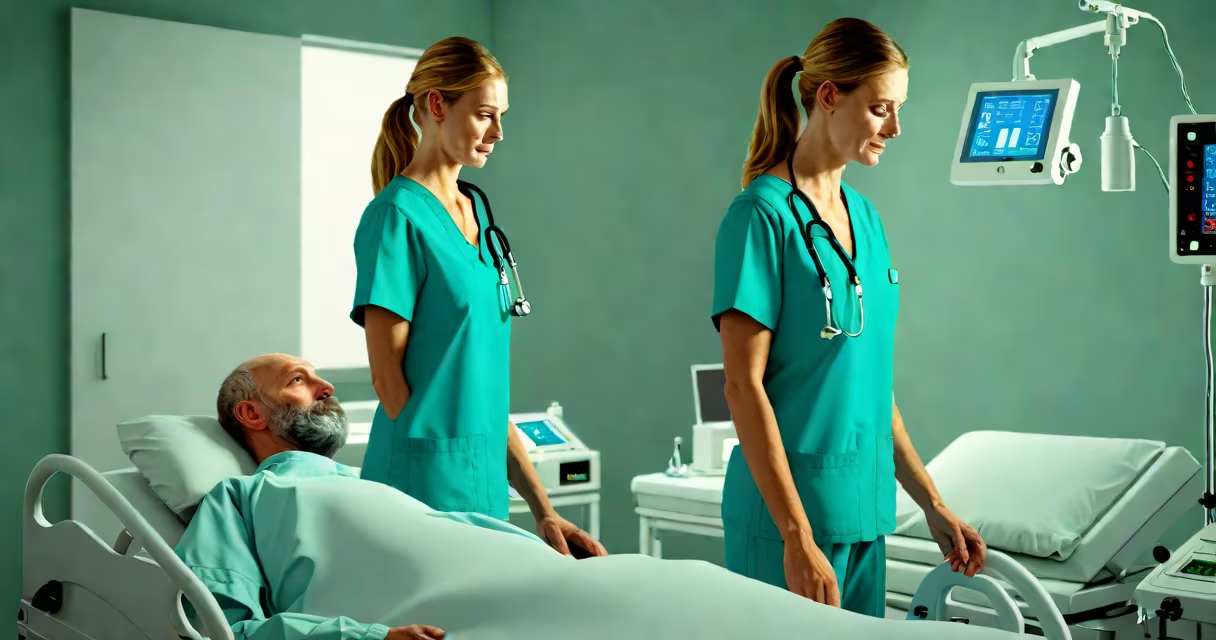
A registered nurse (RN) is a licensed healthcare professional who assesses patient conditions, administers treatments, and coordinates care across medical settings. RNs work under physician supervision but make independent clinical decisions within their scope. They are required to pass the NCLEX-RN exam and maintain state licensure.
RNs are responsible for monitoring important signs, administering medications, documenting patient progress, and educating patients and families about health conditions and treatment plans. Their role spans acute care, long-term facilities, outpatient clinics, and community health programs. According to the U.S. Bureau of Labor Statistics, RNs held over 3 million jobs in 2023, with demand projected to grow 6% through 2032.
RNs begin each shift by reviewing patient charts and assigning priorities based on acuity levels. They perform physical assessments-checking temperature, blood pressure, heart rate, and respiratory rate-and interpret changes in important signs. For example, a sudden drop in systolic blood pressure below 90 mmHg may trigger immediate intervention, such as fluid boluses or notifying a provider.
Medication administration is a core duty. RNs calculate dosages using weight-based formulas. A patient weighing 70 kg prescribed morphine at 0.1 mg/kg IV would receive 7 mg. The nurse verifies the drug name, dose, route, time, and patient identity using the "five rights" protocol. Errors in this process occur in 1 in 100 medication administrations, according to a 2022 study in the Journal of Nursing Safety.
Documentation is equally critical. Nurses enter findings into electronic health records (EHRs) using standardized templates. A single missed entry-such as omitting a patient's new onset of confusion-can delay diagnosis. The Joint Commission reports that incomplete documentation contributes to 30% of preventable adverse events in hospitals.
RNs specialize across multiple environments. Clinical roles differ in focus, tools, and workflow. The following table outlines common RN practice areas:
| Role Type | Typical Setting | Key Responsibilities | Specialization Focus |
|---|---|---|---|
| Medical-Surgical RN | Hospital ward | Post-op monitoring, wound care, IV therapy | Acute illness management |
| Pediatric RN | Children's hospital, clinic | Child development assessment, immunizations, family education | Developmental milestones, pediatric pharmacology |
| Emergency Room RN | ER department | Triage, trauma response, rapid sequence intubation prep | Crisis stabilization, time-critical interventions |
| Home Health RN | Patient's residence | Wound dressing, medication reconciliation, fall risk evaluation | Chronic disease management, patient autonomy support |
Each role requires additional certifications. For example, ER nurses often hold Advanced Cardiac Life Support (ACLS) and Trauma Nurse Core Course (TNCC) credentials. Home health RNs may pursue certification in wound care (CWSP) or diabetes education (CDE).
Many assume RNs simply follow doctor orders. In reality, they initiate actions independently. When a patient's oxygen saturation drops below 90%, an RN can start supplemental oxygen, adjust ventilator settings, or call for a rapid response team-without waiting for a physician's order.
Another myth is that RNs only work in hospitals. While 60% of RNs work in acute care settings, nearly 25% are employed in outpatient centers, schools, or public health departments. The National Association of School Nurses reports that over 50,000 RNs work in K-12 schools, managing asthma, seizures, and mental health crises.
A less obvious point: RNs are frontline leaders in care coordination. In a 2023 study published in Nursing Outlook, RNs led 78% of interdisciplinary team meetings in ICUs. They delegate tasks to nursing assistants, verify lab results, and advocate for patient safety-functions that require advanced judgment, not just technical skill.
Consider Sarah, an RN working a 12-hour shift in a surgical unit. She begins at 7:00 AM by reviewing her assigned patients' charts. One patient, Mr. Lopez, had a hip replacement yesterday. His vitals show a temperature of 38.2°C and elevated white blood cell count. Sarah recognizes early sepsis signs and notifies the surgeon.
She administers antibiotics at 8:00 AM, double-checking the dose against the pharmacy label. At 10:30 AM, she teaches Mrs. Chen, recovering from a mastectomy, how to perform arm exercises to prevent lymphedema. Later, she documents a fall incident involving a patient who stood unassisted. She files a report and updates the care plan to include bed alarms.
Sarah ends her shift by handing off to the night team using SBAR (Situation, Background, Assessment, Recommendation) format. Her notes include: "Patient fell during transfer; no injury. Recommend increased supervision." This handoff prevents miscommunication and ensures continuity of care.
Entering the field requires formal education. Associate Degree in Nursing (ADN) programs take two years; Bachelor of Science in Nursing (BSN) programs take four. BSN graduates have higher employment rates in leadership and specialty roles. The National Council of State Boards of Nursing reports that BSN-prepared nurses score 12% higher on NCLEX-RN exams.
After graduation, candidates must pass the NCLEX-RN, a computer-adaptive test with 75-265 questions. The exam covers safe patient care, health promotion, and clinical decision-making. Only 87% of first-time test-takers pass nationally.
Once licensed, RNs must complete continuing education credits-typically 15 hours annually-to renew their license. Some states require specific training in topics like opioid overdose reversal or infection control.
Understanding what an RN nurse does reveals a complex, changing role rooted in science, communication, and empathy. These professionals are not just caregivers-they are clinicians, educators, and advocates who shape patient outcomes every day.