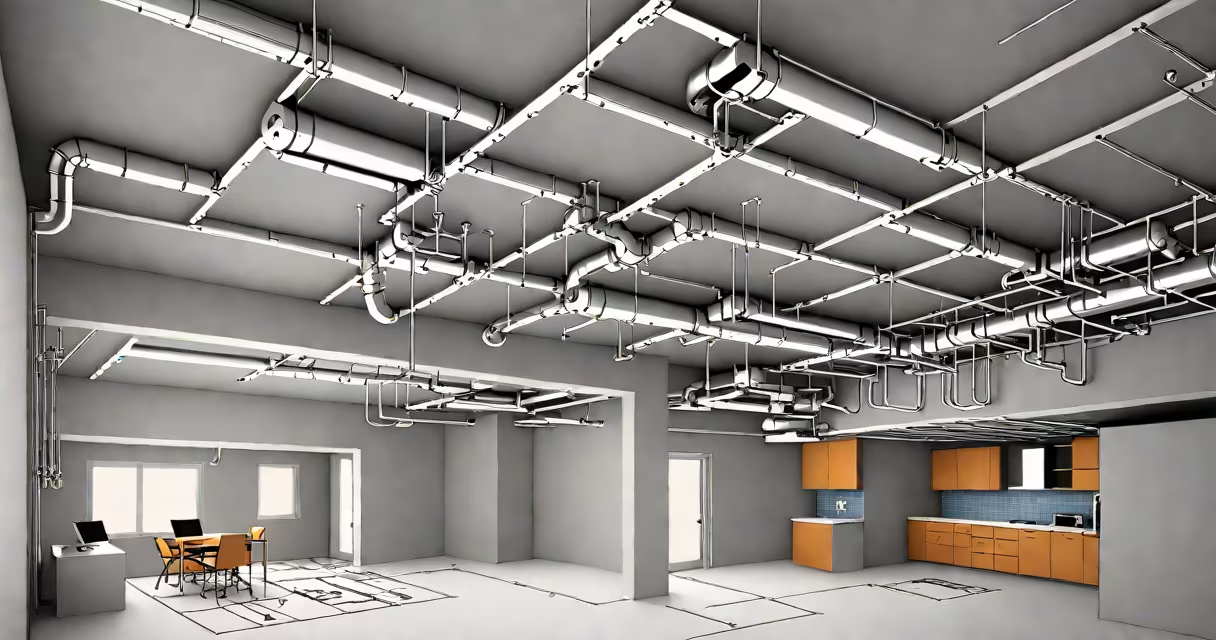
An hvac duct is a system of enclosed channels-typically made of sheet metal, fiberglass, or flexible plastic-that transports heated or cooled air from a central hvac unit to rooms and returns air back to the system. These ducts form the circulatory system of a building's climate control.
Ducts carry air generated by furnaces, air conditioners, or heat pumps. They distribute conditioned air through supply ducts and collect return air via return ducts. The entire process maintains consistent indoor temperatures and supports ventilation requirements.
According to the U.S. Department of Energy, properly designed and sealed ductwork can reduce energy waste by up to 20%. Poorly maintained or leaky ducts compromise both comfort and efficiency.
A furnace or air handler pushes air through supply ducts. As air travels, it cools or warms depending on the season. When air reaches a room, it exits through grilles or registers. Return air then flows back through return ducts to the central unit, completing the cycle.
The system relies on pressure differences created by fans in the hvac unit. Air moves from high-pressure zones (supply ducts) to low-pressure zones (return ducts). This movement ensures even temperature distribution and continuous air exchange.
For example, in a typical 2,000-square-foot home, supply ducts may branch into 12 separate runs, each feeding a different zone. A single return duct collects air from multiple rooms and routes it back to the furnace.
Different materials serve distinct purposes based on location, airflow needs, and installation constraints.
| Type | Material | Best For | Common Use Cases |
|---|---|---|---|
| Sheet Metal | Galvanized steel or aluminum | High airflow, durability | Commercial buildings, large homes |
| Fiberglass Lined | Sheet metal with insulating fiberglass lining | Sound dampening, thermal insulation | Residential homes, quiet zones |
| Flexible Duct (Flex Duct) | Polyethylene-coated wire mesh with foil layer | Easy routing, tight spaces | Attics, crawlspaces, retrofit projects |
| Plastic or PVC Ducts | Reinforced rigid plastic | Moisture resistance, clean environments | Basements, industrial settings |
Sheet metal ducts offer the highest efficiency and longest lifespan. Fiberglass-lined versions reduce noise and prevent condensation. Flexible ducts are common in renovations due to ease of installation, but they're prone to kinking and reduced airflow if not installed correctly.
According to ASHRAE Standard 62.1, ducts must maintain a minimum air velocity of 700 feet per minute in supply lines to avoid stratification and ensure proper mixing of air.
Hvac ducts are essential in all mechanically cooled or heated buildings. They enable centralized climate control, which is more efficient than individual heaters or window units.
In a standard residential HVAC setup, supply ducts run from the furnace in the basement to ceiling or wall outlets in each room. Return ducts connect to wall or floor grilles and feed into a central return plenum. The layout balances airflow across zones to avoid hot or cold spots.
For example, a 3-bedroom house with a split-system air conditioner uses a 12-inch round supply duct to deliver cool air to the master bedroom. The duct branches into smaller 6-inch runs to reach secondary vents. Return air enters through a 10-inch square grille near the hallway door.
Proper duct sizing prevents excessive fan strain. Oversized ducts reduce airspeed and cause poor distribution. Undersized ducts increase pressure, leading to higher energy use and premature equipment wear.
Many people assume that visible ducts in attics or basements are the entire system. In reality, most ductwork is hidden within walls, ceilings, or under floors. Only access points and grilles are visible.
Another myth is that ducts don't need maintenance. Dust, debris, and mold can accumulate inside ducts over time. The EPA reports that indoor air can be 2 to 5 times more polluted than outdoor air, and ducts contribute to airborne particulates.
Ducts are not interchangeable. Using flex ducts in high-static-pressure applications leads to performance loss. A 2019 study by the National Institute of Standards and Technology found that improperly sized flexible ducts reduced airflow by up to 35% compared to rigid sheet metal.
I once inspected a 15-year-old home where flex ducts had collapsed in the attic due to improper support. The result was uneven cooling and a 22% rise in energy bills. Replacing them with properly supported sheet metal ducts restored balance and cut costs.
Do not confuse hvac ducts with plumbing pipes, electrical conduits, or vent stacks. Plumbing pipes carry water. Electrical conduits house wires. Vent stacks handle exhaust gases from toilets or appliances.
Also, avoid calling any tube "a duct" just because it carries air. For example, a dryer vent is not part of the hvac system. It's a separate exhaust system for moisture and lint. Mixing these systems causes safety risks and inefficiencies.
True hvac ducts are engineered to meet specific airflow, pressure, and insulation standards. They must comply with local building codes and ASHRAE guidelines.
An hvac duct is a critical component of indoor climate control. It helps air moves efficiently and evenly throughout a building. Proper design, material selection, and maintenance directly affect comfort, energy use, and air quality.
When issues arise-such as cold spots, high bills, or dusty air-checking the duct system often reveals the root cause. Regular inspections and cleaning can extend equipment life and improve health outcomes.
Understanding what is hvac duct helps homeowners and technicians make informed choices about system performance, safety, and long-term savings.