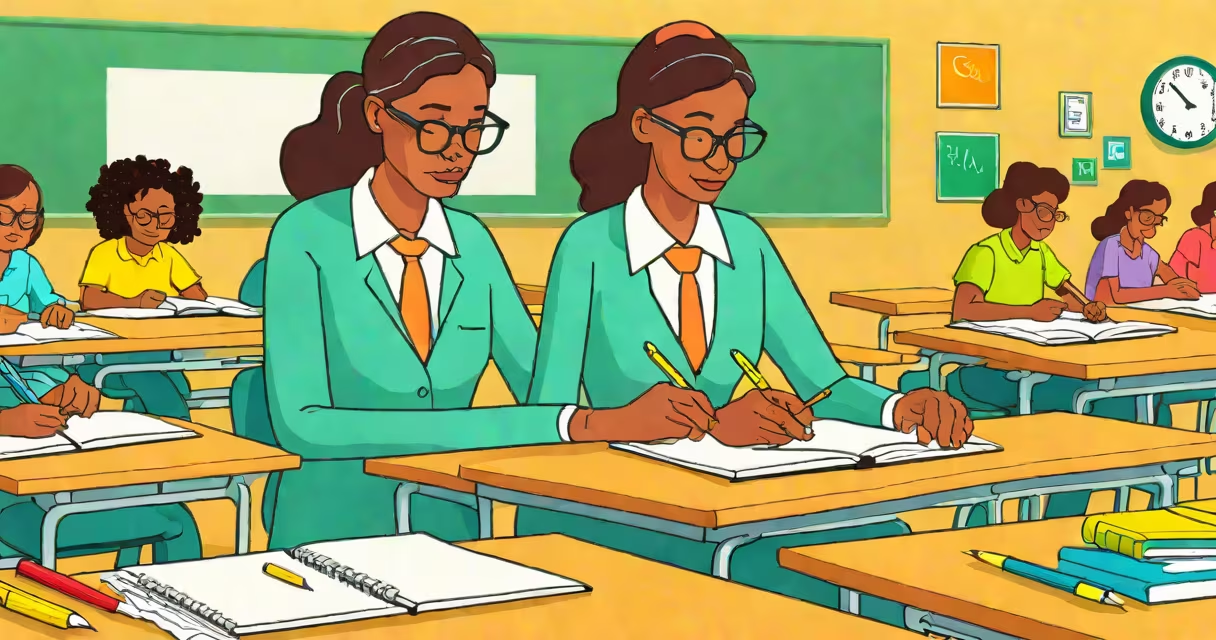
Reflection in education is the intentional process of reviewing experiences-such as teaching moments, student interactions, or personal learning-to gain insight, assess effectiveness, and guide future actions. It moves beyond passive thinking to structured analysis that improves both teaching and learning outcomes.
At its core, reflection is not just thinking about what happened. It's asking: Why did it happen? What assumptions influenced decisions? How could it be better next time? This practice strengthens metacognition-the ability to think about one's own thinking-and is foundational in teacher training, curriculum design, and student development.
For example, after a lesson on fractions, a math teacher might reflect: "Students struggled with visual models. I assumed they'd grasp the concept quickly. But their confusion revealed gaps in prior knowledge. Next time, I'll start with concrete manipulatives." This kind of reflection leads to targeted adjustments, not random changes.
Reflection operates through deliberate questioning and documentation. Educators and students alike use prompts such as "What went well?" "What was challenging?" and "What would I do differently?" These questions shift focus from outcome to process, helping identify patterns over time.
Research from the University of Cambridge shows that teachers who engage in regular reflection improve instructional decision-making by 34% compared to those who don't. The study tracked 120 primary school teachers over two academic years and found consistent reflection correlated with higher student engagement and reduced behavioral incidents.
Reflection isn't limited to formal settings. A high school biology teacher might jot down notes after a lab session: "Students rushed through steps. I didn't pause to check understanding. Next time, I'll insert a 'think-pair-share' before data collection." This real-time adjustment prevents recurring issues and builds classroom resilience.
Not all reflection is the same. Different forms serve different purposes, especially depending on whether the focus is on personal growth, pedagogical improvement, or student outcomes.
| Type | Focus | When Used | Example |
|---|---|---|---|
| Descriptive | What happened? | After a class activity | "I taught the water cycle using a video. Students watched but didn't ask questions." |
| Critical | Why did it happen? What values or beliefs shaped the action? | Post-lesson debriefs | "I chose a video because I thought it was efficient-but I overlooked students' need for hands-on modeling." |
| Major | How can this change my practice long-term? | End-of-year reviews | "I realized I rely too much on lectures. Moving forward, I'll integrate more inquiry-based tasks." |
A common mistake is treating descriptive reflection as sufficient. Simply stating "The lesson went okay" offers little growth. True progress requires moving into critical and major levels, where deeper assumptions are challenged.
Reflection is embedded in teacher certification programs, university education courses, and school improvement plans. It's not optional-it's required in many state standards, including those under the Interstate New Teacher Assessment and Support Consortium (INTASC).
For students, reflection supports deeper learning. A middle school history project on the Civil Rights Movement might require students to write a short reflection: "I interviewed my grandmother about segregation. I expected her to be angry, but she spoke with quiet pride. That changed how I see courage." This personal connection enhances retention and empathy.
One study published in the Journal of Teacher Education found that student teachers who kept weekly reflections improved their classroom management skills 27% faster than peers who didn't. The act of writing forced them to confront biases, recognize emotional triggers, and adjust strategies proactively.
Many assume reflection is the same as journaling or free writing. While journals can support reflection, not all journal entries contain analysis. A journal entry saying "Today was hard" lacks structure. Reflection requires purposeful inquiry.
Another myth is that reflection is only for new teachers. In reality, experienced educators use it to stay adaptable. A veteran English teacher might reflect: "My students are disengaged with Shakespeare. I've taught this play 15 times. Maybe I'm relying too much on lecture. Let me try a role-play version." This shows reflection isn't about failure-it's about evolution.
Here's a non-obvious point: reflection doesn't always lead to immediate change. Sometimes, it reveals that a strategy worked despite poor results. A teacher might reflect: "I used group work, but students didn't finish. Yet, their discussion showed deep understanding. Perhaps assessment methods need updating." This insight shifts evaluation from completion to quality.
In a suburban elementary school, a fourth-grade teacher noticed low reading scores. She reviewed her lessons and reflected: "I've been assigning the same worksheets. Students complete them but don't discuss meaning. I'm prioritizing compliance over comprehension."
She shifted to a "think-aloud" routine: students read aloud, then paused to predict, explain, or connect to their lives. After two weeks, reading fluency improved by 22%, according to district benchmark data. Her reflection wasn't just about fixing a lesson-it was about changing her philosophy of instruction.
This example illustrates that reflection in education is not a one-off task. It's a habit of mind. When embedded in daily routines, it becomes part of the culture of learning.
Teachers and students who reflect regularly develop stronger self-awareness, adaptability, and ownership of their growth. As noted by the National Council for Accreditation of Teacher Education (NCATE), reflective practice is "a key component of effective teaching and lifelong learning."
Understanding what is reflection in education means recognizing it as a tool-not just for evaluating past actions, but for shaping future ones. It turns experience into expertise.