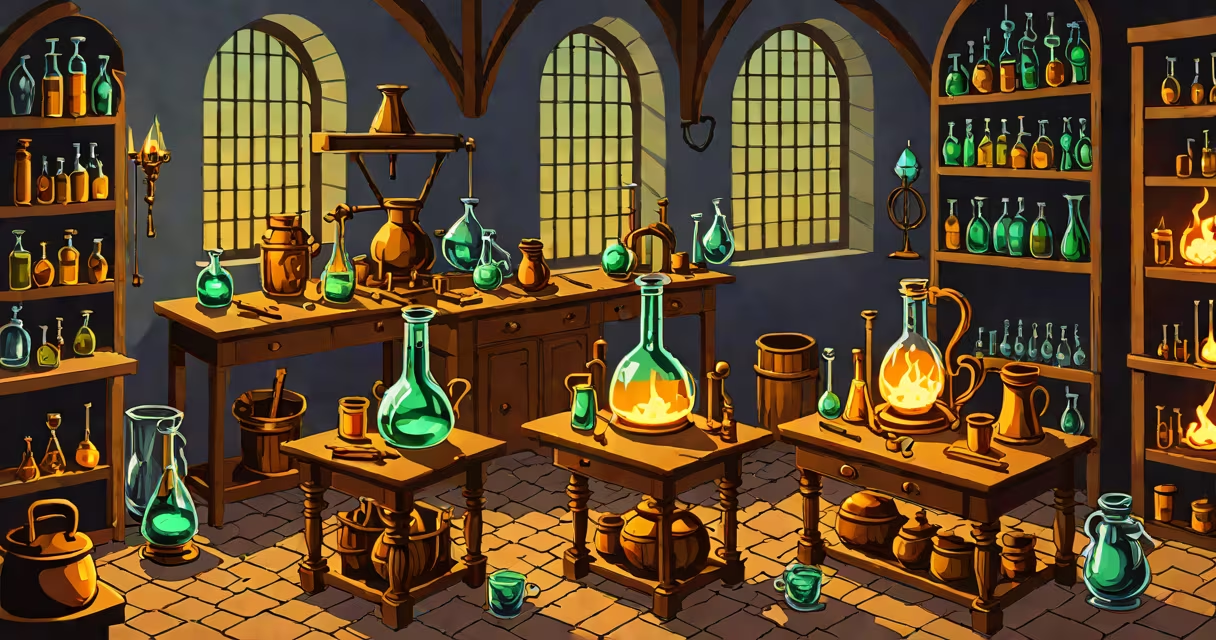
The study of alchemy is a historical discipline that combined early experimental chemistry, spiritual philosophy, and mystical symbolism to explore the transformation of matter and the perfection of the soul. Rooted in Greco-Roman, Islamic, and European traditions from the 2nd century CE onward, it sought both material and metaphysical change-most famously, turning lead into gold, but also achieving inner purification through ritual and symbolic practice.
Alchemy was not a single unified system. It emerged in multiple cultural contexts with distinct goals. In the Hellenistic world, alchemy focused on the nature of substances and their hidden principles. By the 8th century, Islamic scholars like Jabir ibn Hayyan developed systematic experiments using distillation, sublimation, and alloying-methods that later influenced European laboratories. In medieval Europe, alchemical texts were often written in coded language, mixing Latin, Greek, and symbolic imagery to obscure meaning from uninitiated readers.
Modern historians distinguish between practical alchemy-the proto-chemistry that led to the discovery of acids, metals, and refining techniques-and speculative alchemy, which centered on spiritual transformation. The latter drew from Hermetic teachings, especially the Corpus Hermeticum, which claimed that "as above, so below"-a principle linking cosmic order to physical processes. This idea underpinned the belief that altering base materials mirrored inner moral and intellectual refinement.
Alchemists operated under the assumption that all matter contained a hidden essence or potential. They believed that through precise combinations of heat, time, and specific ingredients-such as mercury, sulfur, and various plant extracts-they could enable the substance's true form. The process was often described in stages: nigredo (blackening, decay), albedo (whitening, purification), citrinitas (yellowing, awakening), and rubedo (reddening, completion).
These stages weren't just chemical steps. They represented psychological and spiritual phases. For example, nigredo symbolized confronting darkness or despair, while rubedo signified enlightenment or union with the divine. The philosopher's stone-a mythical substance said to enable transmutation-was both a literal goal and a metaphor for personal wholeness.
A 15th-century manuscript from the University of Bologna shows detailed diagrams of alembics and retorts alongside Latin verses referencing the soul's ascent. The author, a monk named Arnoldus de Villa Nova, wrote that "the fire of the furnace is the same as the fire of the mind." This reflects how alchemy merged physical experimentation with introspection, treating the laboratory as a sacred space for transformation.
While alchemy is often seen as a monolithic pursuit, it split into several schools based on intent and method. The table below outlines key branches:
| Type | Focus | Key Figures | Outcome Goal |
|---|---|---|---|
| Practical (Material) | Metals, minerals, pharmaceuticals | Jabir ibn Hayyan, Paracelsus | Transmutation, medicine, purification |
| Speculative (Spiritual) | Mind-body-soul unity, divine knowledge | Hermetic authors, Nicholas Flamel | Inner enlightenment, union with God |
| Esoteric (Symbolic) | Myth, allegory, encoded wisdom | Robert Fludd, John Dee | Revelation through ciphered texts |
Practical alchemy laid groundwork for modern chemistry. Jabir ibn Hayyan's treatises described over 100 chemical operations, including the preparation of nitric acid and the use of distillation apparatus. His work was translated into Latin in the 12th century and became foundational in European universities.
Speculative alchemy, however, was less concerned with replicable results. It used myths and symbols to convey truths beyond empirical testing. The Emerald Tablet, attributed to Hermes Trismegistus, states: "As above, so below; as within, so without." This principle guided alchemists to see the cosmos reflected in the lab and the soul reflected in the elements.
Esoteric alchemy relied heavily on secrecy. Texts were written in riddles or encoded with astrological signs. John Dee, an Elizabethan mathematician and occultist, spent years deciphering alchemical manuscripts using angelic languages. He believed that understanding the "true names" of substances would grant access to divine power-an idea that influenced later mystical traditions.
From the 12th to the 17th centuries, alchemy was taught in universities across Europe and the Middle East. At the University of Paris, students studied alchemical texts alongside natural philosophy. The curriculum included readings from Pseudo-Democritus and translations of Arabic commentaries on Aristotle's physics.
Rulers supported alchemists for practical reasons. In 15th-century Florence, Cosimo de' Medici funded research into metal purification to improve coinage. In England, King James I maintained a royal alchemist who reported on attempts to produce gold from mercury. These efforts failed financially, but they advanced metallurgical knowledge.
One notable failure occurred in 1672 when Robert Boyle, later known as a founder of modern chemistry, tested a claim that a "philosopher's stone" could turn silver into gold. After months of heating and grinding, he obtained no measurable increase in weight or purity. His notes show he concluded: "The stone is not a physical object-it is a state of understanding." This marked a shift toward empirical validation over mystical belief.
Despite its decline, alchemy left lasting influence. The periodic table's structure echoes alchemical ideas about elemental harmony. Even today, the term "alchemy" appears in scientific contexts-like "the alchemy of flavor" in culinary arts-but it no longer carries the original philosophical weight.
Many assume alchemy was purely pseudoscience. But historians like Lawrence M. Principe, author of The Secrets of Alchemy, argue that alchemists conducted rigorous experiments. He replicated 16th-century recipes and confirmed that some produced stable compounds-proof that alchemical methods had real utility.
Another myth is that alchemists were always secretive. In reality, many published detailed instructions. The Summa Perfectionis by Raymond Lull, written in 1300, contains step-by-step procedures for creating the philosopher's stone. It includes measurements: "Take one part mercury, two parts sulphur, and burn them together for seven days under a glass dome." Such precision contradicts the stereotype of vague mysticism.
Perhaps the biggest misunderstanding is equating alchemy with magic. While alchemy used symbolic language, it was grounded in observation and repetition. A 1526 experiment recorded by the German alchemist Valentin Weigel involved measuring temperature changes during distillation and noting color shifts in solutions. These were documented in notebooks-early forms of scientific journals.
One non-obvious fact: alchemy contributed directly to the development of laboratory equipment. The alembic, a still used to separate liquids by boiling, was refined by Islamic alchemists and adopted by European labs. Modern distillation columns in chemical plants trace their lineage to these tools.
I once visited the Bodleian Library in Oxford and handled a 14th-century alchemical manuscript. The pages were stained with iron oxide and mercury residue. The scribe had drawn a serpent coiled around a crucible-symbolizing the cycle of death and rebirth. When I held it, the parchment felt brittle, yet the ink remained sharp. That moment made me realize: alchemy wasn't just about gold. It was about persistence, patience, and the belief that change is possible-even when invisible.
Today, the study of alchemy persists in academic circles. Institutions like the Warburg Institute in London host annual symposia on alchemical thought. Scholars examine how alchemical ideas informed Renaissance art, literature, and even early psychology. Carl Jung, for example, saw the alchemical process as a model for individuation-the integration of conscious and unconscious parts of the self.
For those interested in the roots of scientific inquiry, exploring the study of alchemy offers insight into how curiosity evolved. It reveals that early science wasn't just about facts-it was about meaning. The search for transformation, whether of metal or mind, remains central to human effort.
Understanding what is the study of alchemy clarifies that it was neither pure superstition nor modern science. It was a transitional phase-where experimentation met imagination, and where the quest for knowledge began not with instruments, but with questions.