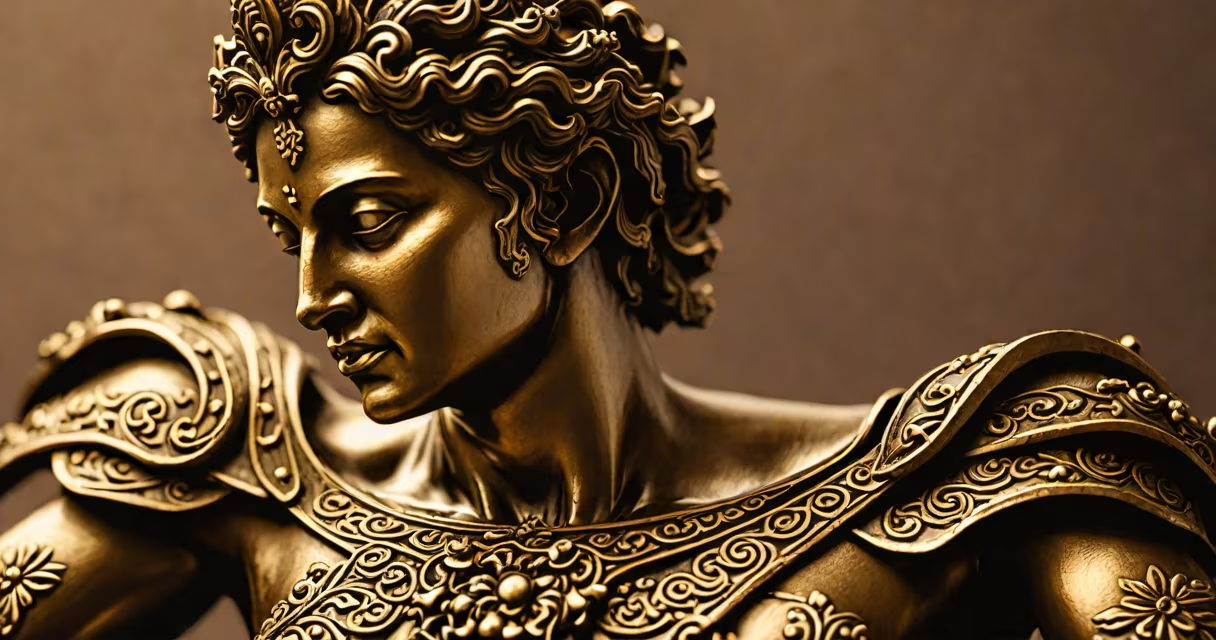
The value of bronze stems from its physical properties, historical role in human development, and enduring cultural significance. As a metal alloy primarily composed of copper and tin, bronze resists corrosion, holds fine detail, and lasts centuries-making it prized for tools, weapons, and art since at least 3300 BCE.
Bronze's value isn't just functional. It's deeply tied to human history. The term "Bronze Age" marks a period when societies across Eurasia shifted from stone tools to metal-based economies. This transition wasn't just technological-it redefined power, trade, and craftsmanship. The value of bronze, then, is both material and symbolic.
Modern assessments of bronze value depend on context: raw material cost, artistic merit, historical provenance, and market demand. A 100-gram ingot of bronze may sell for $1.20 based on current metal prices. A 19th-century bronze sculpture by Auguste Rodin can fetch over $1 million at auction. The difference reflects more than weight-it reflects legacy, rarity, and artistic intent.
Bronze is an alloy, meaning it's made by combining two or more metals. The most common form is copper mixed with 5% to 20% tin. This ratio creates a material harder than pure copper yet still malleable enough for detailed casting. Some variations include aluminum, nickel, or silicon-used in industrial applications.
Its resistance to corrosion sets bronze apart. Unlike iron, which rusts rapidly, bronze develops a protective patina-a greenish layer formed by oxidation. This layer slows further degradation and gives antique bronze objects their distinctive aged look. The British Museum notes that many surviving Roman-era bronze statues remain intact due to this property.
For comparison, pure copper melts at 1,085°C. Bronze melts at around 950°C, making it easier to cast into complex shapes. Ancient artisans used the lost-wax method to create complex figurines-like the famous Riace Warriors from 5th-century BCE Greece-whose fine facial features and muscle definition were preserved through precise casting techniques.
Not all bronze is the same. Different compositions yield different strengths, colors, and uses. The table below outlines major types and their functions:
| Type | Primary Alloying Element | Common Uses | Key Property |
|---|---|---|---|
| Phosphor Bronze | Phosphorus | Electrical contacts, springs | High fatigue resistance |
| Aluminum Bronze | Aluminum | Marine hardware, ship propellers | Excellent saltwater corrosion resistance |
| Gunmetal | Tin and zinc | Historical cannons, gears | Good wear resistance |
| Standard Bronze | Tin (8-12%) | Statues, architectural details | Classic golden-brown color, stable patina |
Each variant serves distinct purposes. Aluminum bronze, for example, is used in underwater ship components because it doesn't degrade in seawater. Phosphor bronze is favored in electronics due to its low electrical resistance and high elasticity-ideal for switch contacts and circuit springs.
The term "bronze" in modern contexts often refers to aesthetic or decorative uses. A bronze-colored finish on a modern door handle may contain no actual bronze-just a coating of copper and tin powder. True bronze requires specific metallurgical ratios. Mislabeling is common in consumer products.
Bronze marked humanity's first major leap beyond stone and wood. The earliest known bronze artifacts date to around 3300 BCE in Mesopotamia. By 2500 BCE, bronze tools and weapons had spread across Egypt, China, and the Indus Valley. These tools enabled agriculture, construction, and warfare on a new scale.
The Shang Dynasty in China (c. 1600-1046 BCE) produced elaborate bronze ritual vessels-some weighing over 100 kilograms. These weren't practical tools; they were symbols of divine authority. Today, such pieces sell for millions at auction. A 1,200-year-old Chinese bronze ding vessel fetched $1.2 million at Sotheby's in 2021.
Artistic value is another key driver. Bronze's ability to capture fine detail makes it ideal for sculpture. The Greek statue of the Discobolus, originally cast in bronze, inspired countless copies. Though the original is lost, surviving Roman marble versions confirm the precision achievable in bronze casting.
A lesser-known fact: Bronze artifacts often carry inscriptions in ancient scripts. The Rosetta Stone, while not bronze itself, was carved on a slab of granodiorite-but many similar decree stones were made in bronze. These inscriptions provide direct access to ancient languages and governance systems. The discovery of the Ebla tablets in Syria revealed that bronze was used to store legal records in cuneiform script.
Many assume bronze is simply "old copper." That's incorrect. Pure copper is softer and more prone to deformation. Bronze's strength comes from the atomic structure formed when tin atoms displace some copper atoms in the crystal lattice-this disrupts electron flow and increases hardness.
Another misconception: All bronze objects are valuable. Not true. A mass-produced bronze doorknob from the 1950s may have little collector interest. Value depends on age, condition, origin, and craftsmanship. A 19th-century French bronze lamp by Émile-Jacques Ruhlmann can sell for $15,000. A factory-made version from the same era might go for $50.
Also, bronze is not interchangeable with brass. Brass is copper and zinc-typically yellow in color. While both are alloys, their properties differ. Brass is more ductile and easier to machine. Bronze is tougher and better for load-bearing parts. Mixing them up leads to design failures in engineering.
In 2017, a 12-inch bronze statue of a standing warrior from the Han Dynasty sold at Christie's for $2.8 million. The piece weighed 1.4 kg and bore the inscription "Made in the year of the Monkey." Experts verified its authenticity using X-ray fluorescence to analyze the alloy composition-confirming a tin content of 11.3%, consistent with Han-era standards.
The buyer was a private collector in New York. The statue's value came from multiple factors: age (over 2,000 years), craftsmanship (fine facial features, layered armor), provenance (documented ownership since 1930), and rarity (fewer than 10 similar statues exist worldwide).
Even in modern times, bronze retains utility. The U.S. Mint produces commemorative bronze coins-like the 2020 American Women Quarters series-which feature detailed portraits. These aren't just currency-they're collectible art. A single uncirculated coin can sell for $15 online.
The value of bronze spans millennia. It's not just a material-it's a record of human ambition, innovation, and artistry. From ancient temple bells to modern sculptures, bronze endures. Its worth isn't fixed. It changes with culture, economy, and discovery. But its core value-durability, beauty, and historical resonance-remains constant.