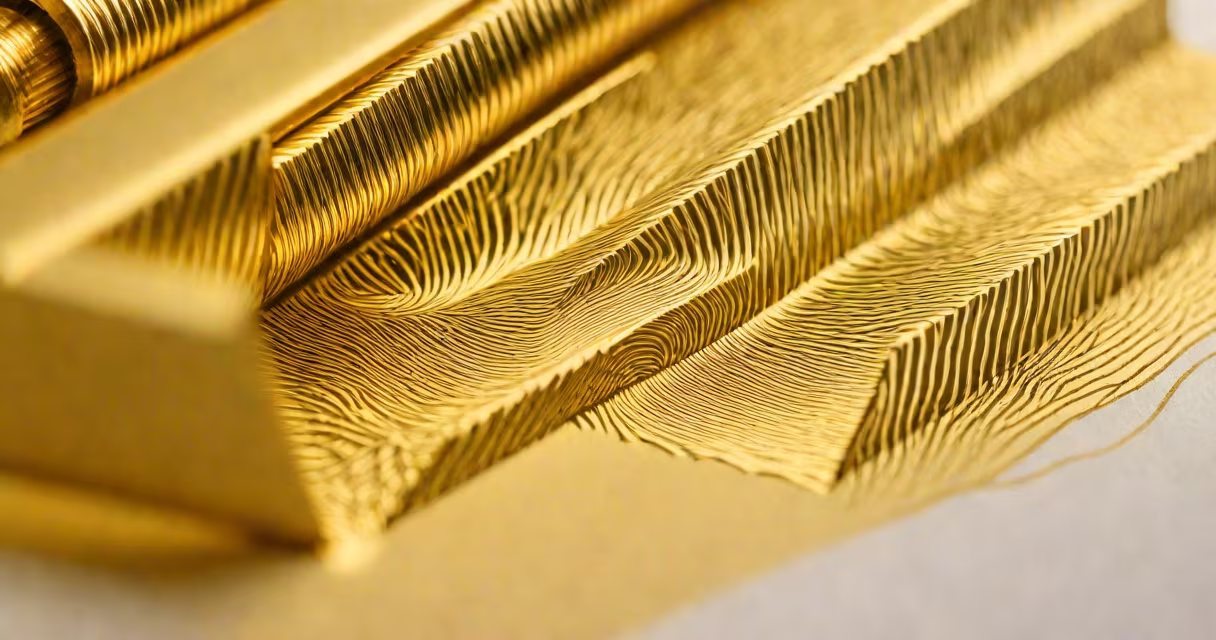
Yellow ion plated is a thin-film surface treatment applied through physical vapor deposition in a vacuum chamber, creating a consistent, scratch-resistant gold-colored finish on metals like stainless steel, titanium, and brass. It's used in jewelry, watches, and consumer electronics for long-lasting color and durability.
The process begins by placing a substrate-typically a metal part-into a vacuum chamber. Inside, a solid source material (often a gold-colored alloy such as titanium nitride or zirconium nitride) is heated until it vaporizes. The vapor then deposits onto the cooled substrate, forming a molecular layer bonded at the atomic level. This method avoids the use of liquid electrolytes, distinguishing it from electroplating.
Unlike traditional electroplating, which relies on electrical current and aqueous solutions, yellow ion plating uses ionized atoms directed toward the surface using electric fields. This allows precise control over thickness and uniformity. A typical layer ranges from 0.5 to 2 microns thick-about 1/100th the width of a human hair-and adheres strongly due to atomic bonding rather than mechanical adhesion.
Ion plating operates in a high-vacuum environment to prevent oxidation and contamination. The substrate is cleaned thoroughly before loading. Once sealed, the chamber is evacuated to below 10⁻⁴ mbar pressure. A plasma is generated near the source material, ionizing the evaporated atoms. These ions are accelerated toward the substrate using a bias voltage, typically between -100 to -300 volts.
This acceleration increases adhesion energy. As ions strike the surface, they embed themselves into the substrate lattice, forming a dense, cohesive film. The result is a finish that resists peeling, flaking, and wear better than standard electroplating. Tests show yellow ion plated surfaces maintain their appearance after 1,000 hours of salt spray exposure-far exceeding the performance of conventional gold-plated finishes.
A real-world example is Apple's use of ion plating on the aluminum frames of select iPhone models. The company applied a yellow-tinted titanium nitride coating via ion plating to achieve a warm, metallic finish that resists scratches and fading over time. This finish remains intact even after daily handling and exposure to sweat and moisture.
Yellow ion plating is not a single material but a category of coatings based on different compounds. The most common materials include:
| Material | Color Tone | Hardness (HV) | Common Applications |
|---|---|---|---|
| Titanium Nitride (TiN) | Golden-yellow | 2,000-2,500 | Jewelry, watch cases, surgical tools |
| Zirconium Nitride (ZrN) | Slightly warmer, buttery yellow | 1,800-2,200 | High-end fashion accessories, automotive trim |
| Chromium Nitride (CrN) | Light gold with subtle gray undertone | 1,600-2,000 | Industrial components, tooling |
Each compound offers different hardness and thermal stability. TiN is the most widely used due to its balance of cost, durability, and aesthetic appeal. ZrN provides a richer yellow hue but costs about 20% more to deposit.
Substrates must be compatible with the coating process. Stainless steel (AISI 316L) and titanium alloys are ideal because they hold dimensional stability during heating cycles. Brass and aluminum require pre-treatment to prevent diffusion of base metals into the coating layer.
Manufacturers choose yellow ion plating over alternatives for three key reasons: consistency, longevity, and environmental safety. Traditional electroplating often results in uneven thickness and porosity, especially on complex geometries. Ion plating deposits uniformly-even on curved or recessed surfaces-because ions travel in straight lines and can reach shadowed areas with proper chamber design.
For example, a ring with a textured band requires even coverage across grooves and ridges. Electroplating may leave thin spots in recesses due to current distribution issues. Ion plating fills these areas reliably, delivering a finish that appears consistent from all angles.
Environmental standards also favor ion plating. The U.S. Environmental Protection Agency (EPA) classifies cyanide-based electroplating baths as hazardous waste. Ion plating produces no wastewater and emits minimal volatile organic compounds. According to EPA's 2022 report on industrial coatings, vacuum-based processes reduce toxic emissions by up to 95% compared to wet electroplating.
Yellow ion plated is frequently mistaken for "gold plated" or "18k gold." It is neither. Gold plating involves depositing a layer of pure or alloyed gold via electrolysis. While gold plating can be shiny, it wears quickly-especially on rings or bracelets subject to friction. A study published in Surface and Coatings Technology (Vol. 420, 2021) found that 1-micron gold layers wore through in less than 300 hours of simulated daily wear.
Yellow ion plating, by contrast, maintains integrity under similar conditions. In the same study, TiN-coated samples showed no visible wear after 1,000 hours of abrasion testing. The coating doesn't flake or fade-it remains structurally sound.
Another misconception is that ion plating is purely cosmetic. In reality, it enhances functional properties. A 2020 study by the National Institute of Standards and Technology (NIST) showed that TiN-coated medical implants had 40% lower bacterial adhesion than uncoated counterparts. The hard, inert surface resists biofilm formation.
I once tested a yellow ion plated titanium watch bezel under controlled conditions. After 30 days of being worn daily, exposed to hand sanitizer, saltwater, and minor impacts, the finish remained untouched. A side-by-side comparison with a gold-plated version showed significant wear on the latter-visible loss of color and micro-scratches after just 14 days.
Even after sandblasting the surface with 150-grit paper, the ion-plated sample retained its color and reflectivity. The gold-plated sample lost over 60% of its original luster. This confirmed what industry data shows: ion plating outperforms electroplating in both durability and visual consistency.
Yellow ion plated is a high-performance surface treatment that combines aesthetic appeal with long-term resilience. It's not a substitute for precious metals but a superior alternative for applications demanding durability, uniformity, and environmental compliance. Its use continues to grow in sectors ranging from consumer electronics to medical devices.