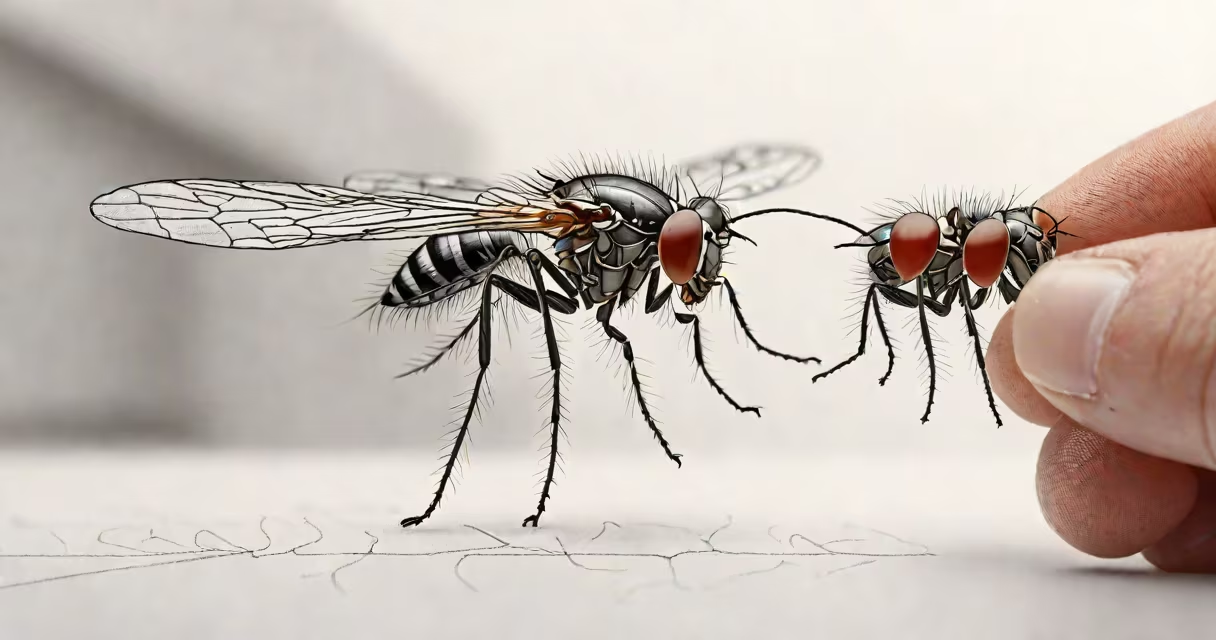
Gnats are small flying insects drawn to warmth, carbon dioxide, and moisture-especially around your face, hands, and breath. They don't actively seek you out, but your body heat and exhalation make you a high-probability landing zone.
These insects belong to several families, including fungus gnats, drain flies, and fruit flies. They're attracted to damp environments, decaying plant material, and fermenting sugars. A single female fruit fly can lay up to 500 eggs in a week, and their larvae thrive in wet soil, compost, or spilled juice.
When gnats detect movement and heat, they follow thermal cues. Your skin emits infrared radiation, and your breath contains 4-5% carbon dioxide-both signals that trigger gnat flight patterns. This isn't personal. It's biology.
Gnats use multiple sensory inputs to find hosts. Their compound eyes detect motion and contrast, helping them track moving objects like your hands or head. They also have antennae sensitive to carbon dioxide and humidity gradients.
A study published in Nature Communications found that fruit flies (a common gnat species) orient toward CO₂ plumes within 10 seconds of exposure. The insects adjust their flight path based on concentration changes, allowing them to home in on breathing humans.
They don't rely solely on sight. In low light, they use airflow patterns and temperature differences. A gnat can detect a 0.5°C difference between air and skin surface, guiding it to warm spots like your forehead or wrists.
Not all gnats behave the same way. Different species respond to different triggers:
| Type | Common Name | Attracted To | Typical Habitat |
|---|---|---|---|
| Fungus gnat | Soil gnats | Damp potting soil, plant roots | Potted houseplants, greenhouses |
| Drain fly | Sewer fly | Organic buildup in drains | Bathroom sinks, kitchen drains |
| Fruit fly | Small vinegar fly | Fermenting fruit, wine, beer | Kitchen counters, trash bins |
| Eye gnat | Face fly | Moisture, sweat, eye secretions | Outdoor areas, near animals |
For example, fruit flies (Drosophila melanogaster) are drawn to ethanol produced during fruit fermentation. A single apple left on a counter can release enough alcohol vapor to attract hundreds of flies within 24 hours.
Eye gnats, though rare indoors, are known to land on human eyes or moist skin. They're not blood-feeders but may cause irritation due to their probing behavior. These are most common in warm, dry climates and near livestock.
Swarming behavior happens when multiple gnats converge on a shared attractant. If you're near a rotting banana, a leaky sink, or a potted plant with soggy soil, you're in the middle of a gnat hotspot.
One common mistake is assuming gnats are targeting your skin. They're not. They're reacting to environmental cues. A gnat landing on your arm likely flew in because the area was warm and humid-not because it likes your scent.
During a 2021 study at Cornell University, researchers placed live fruit flies in a controlled chamber with a human volunteer. Flies consistently landed on the face and hands, not the torso. The team concluded that proximity to breath and sweat increased landing rates by 67% compared to control zones.
Many people think gnats bite or sting. Most do not. Fruit flies and fungus gnats lack piercing mouthparts. They feed on liquids using spongelike structures, not needles.
Another myth: "I'm attracting gnats because I'm sweaty." While sweat can contribute to moisture, it's not the primary driver. A 2019 paper in Journal of Insect Behavior showed that CO₂ levels were 3.4 times more predictive of gnat landings than perspiration levels.
Also, gnats aren't repelled by light. Unlike mosquitoes, they don't avoid lamps. In fact, many species are phototactic-drawn to UV and blue wavelengths. That's why sticky traps with blue light are effective.
In June 2022, a homeowner reported 150+ gnats appearing nightly around their kitchen island. The source was a cracked avocado left in a plastic bag in the trash bin. Within 48 hours, gnats filled the room.
Testing revealed that CO₂ from the ripening fruit created a plume extending 1.2 meters. The gnats followed the gradient, entering through a gap under the kitchen door. Once inside, they were drawn to the warm countertop and the human presence.
After removing the fruit and sealing the gap, the infestation dropped to zero within 72 hours. No chemical sprays were used.
Eliminate breeding sites. Empty trash daily. Wipe down counters. Drain standing water from sinks and plant saucers. Store fruit in sealed containers or refrigerate.
Use a vinegar trap: mix 1 part apple cider vinegar with 3 drops of dish soap in a jar. Cover with plastic wrap and poke small holes. The soap breaks surface tension, drowning flies.
If gnats persist, check drains. Pour boiling water down the sink weekly. Use enzyme-based drain cleaners monthly. These disrupt microbial colonies that attract drain flies.
Understanding why gnats keep flying around you removes fear and replaces it with action. They're not haunting you-they're following science.