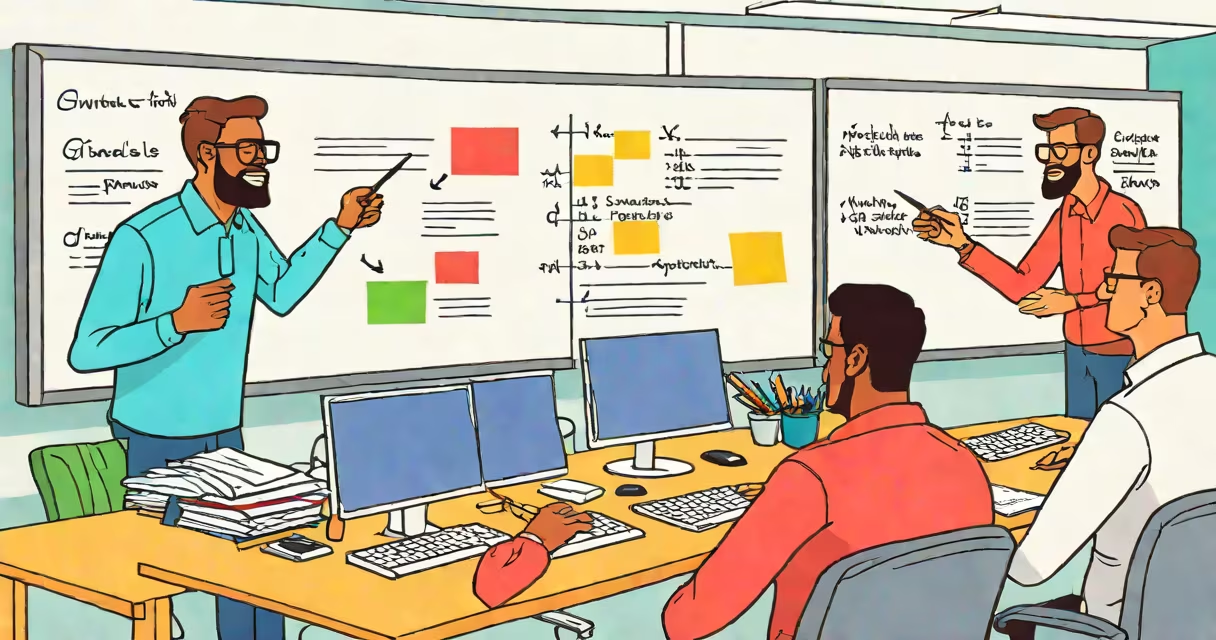
XP in agile methodology-short for Extreme Programming-is a software development structure that prioritizes adaptability, continuous delivery, and high-quality code through disciplined engineering practices. It's designed to respond quickly to changing requirements while maintaining system stability.
Extreme Programming emerged in the late 1990s as a response to rigid project management models. Kent Beck, its primary architect, introduced XP as a set of values and practices aimed at improving software quality and team productivity. Unlike traditional waterfall models, XP operates in short cycles-typically one to two weeks-where teams deliver working software frequently.
At its core, XP treats coding as a craft requiring constant refinement. It assumes that software requirements evolve, and teams must be able to adjust quickly without compromising code integrity. This focus on responsiveness and technical discipline distinguishes XP from other agile frameworks.
XP operates through a series of interlocking practices that reinforce each other. These aren't optional add-ons-they're mandatory components of the process. The cycle begins with a customer-facing requirement, which is broken into small, testable units called user stories.
Each story is then implemented using pair programming: two developers work together at one machine. One writes code; the other reviews it in real time. This reduces bugs early and spreads knowledge across the team. A study by Lui et al. (2006) found that pair programming reduced defect rates by up to 15% compared to solo coding.
After implementation, every piece of code must pass automated tests before being merged. These tests run continuously in a build pipeline. If any test fails, the build is marked as broken, and the team halts work until it's fixed. This helps the codebase remains stable even as new features are added.
XP includes twelve key practices grouped into four categories: planning, coding, testing, and team culture. Not all are equally applied in every team, but the structure requires at least six to be in place for XP to be valid.
| Practice | Primary Goal | Example |
|---|---|---|
| Pair Programming | Reduce defects, share expertise | Two developers write code together; one drives, one navigates. |
| Test-Driven Development (TDD) | Ensure code meets requirements before implementation | Write a failing test first, then write minimal code to pass it. |
| Continuous Integration | Prevent integration conflicts | Code is committed multiple times daily; builds run automatically. |
| Refactoring | Improve code structure without changing behavior | Renaming variables, splitting large functions to improve readability. |
| Small Releases | Deliver value early and often | Ship working software every 1-2 weeks, even if incomplete. |
One non-obvious fact about XP: it doesn't require a dedicated QA team. Instead, testing is integrated into development. Every feature must have a test written before the code is accepted. This shifts responsibility from testers to developers and reduces handoff delays.
XP is often mistaken for a lightweight version of Scrum or Kanban. While all three are agile, they differ in philosophy and mechanics. Scrum focuses on roles (Scrum Master, Product Owner), ceremonies (daily stand-ups, retrospectives), and time-boxed sprints. Kanban emphasizes visual workflow and limiting work-in-progress.
XP, by contrast, centers on engineering excellence. It doesn't mandate sprints or roles. You can run XP without a Scrum Master. The structure is less about process structure and more about technical rigor. For example, XP allows teams to skip sprint planning if they're delivering in small, frequent increments.
A common error is assuming XP is only for startups or small teams. In reality, companies like IBM and Google have successfully applied XP in large-scale projects. IBM used XP to rebuild legacy systems in the early 2000s, reducing maintenance costs by 40% over five years (IBM Systems Journal, 2003).
Consider a fintech startup building a new payment gateway. The product owner defines a user story: "As a user, I want to pay via credit card so I can complete my purchase."
The team breaks this into smaller tasks: validate card format, encrypt data, call external API, handle errors. They start by writing a failing test for card validation. Only after the test passes do they write the code.
Two developers pair on the task. One types; the other suggests improvements and catches logic errors. After completion, the code is checked into the shared repository. The CI server runs all tests. If any fail, the team investigates immediately.
After testing, the feature is deployed to staging. A second round of automated regression tests runs. Once approved, it goes live within 48 hours. No waiting for quarterly releases. No last-minute bug fixes. The system evolves incrementally, safely.
I've seen this process in action during a sprint at a SaaS company. The team delivered six features in two weeks-each tested, reviewed, and shipped. The lead developer later told me, "I didn't realize how much faster we were moving until we stopped estimating in days and started measuring in hours."
XP thrives in environments where requirements change rapidly and technical debt is a concern. It's ideal for startups, internal tools, and complex systems with evolving needs. However, it's less suitable for regulated industries like healthcare or finance where audit trails and formal documentation are required.
For example, a medical device software team may struggle with XP's lack of formal design documents. Regulatory bodies often demand traceability from requirements to code. XP's focus on just-in-time documentation can conflict with compliance standards.
That said, XP can still be adapted. Teams can generate documentation automatically from tests and code comments. Tools like Doxygen or Javadoc can extract specifications from annotated code. But this requires discipline-XP doesn't assume documentation will happen unless enforced.
XP in agile methodology is not a process-it's a mindset. It demands commitment to code quality, collaboration, and continuous improvement. Its strength lies in treating software development as a craft, not a checklist. Teams using XP report higher morale, fewer production incidents, and faster delivery cycles.