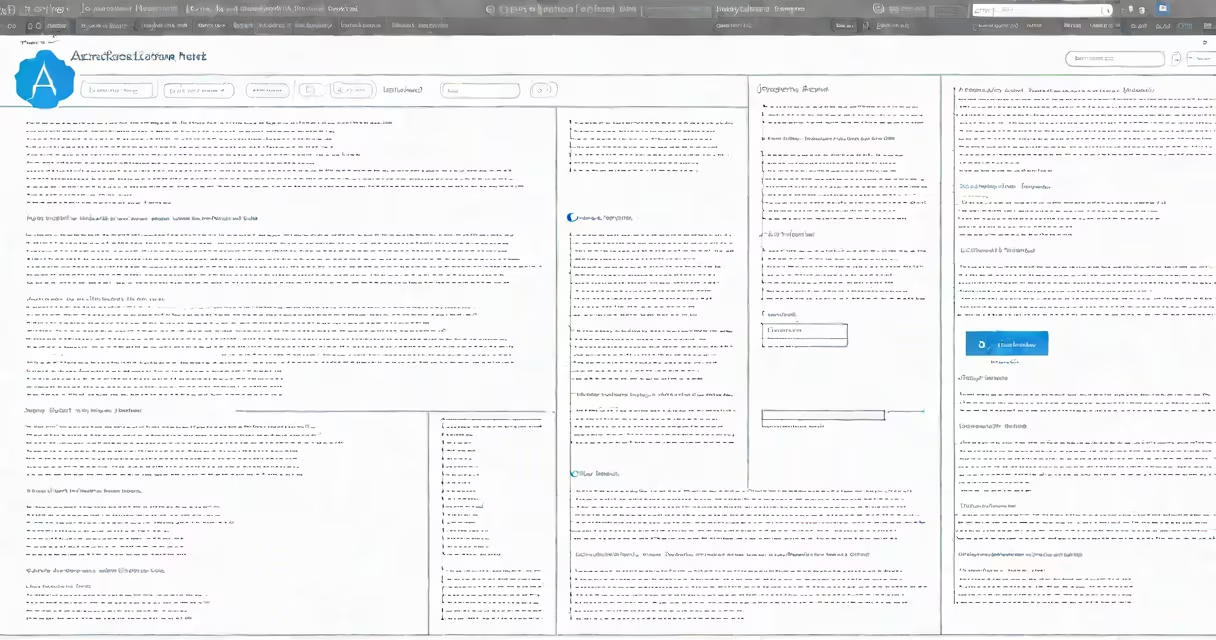
The azure services list is a categorized inventory of over 200 cloud-based tools and platforms offered by Microsoft, including virtual machines, databases, AI models, and serverless functions. These services enable users to build, deploy, and manage applications and infrastructure at scale across global data centers.
Microsoft Azure delivers these services through three core models: Infrastructure-as-a-Service (IaaS), Platform-as-a-Service (PaaS), and Software-as-a-Service (SaaS). IaaS provides raw compute and storage resources, such as virtual machines and disk storage. PaaS offers managed environments for application development and deployment, like Azure App Service and Azure SQL Database. SaaS includes fully hosted applications such as Microsoft 365 and Dynamics 365.
Each service is accessible via the Azure portal, command-line tools, or APIs. Services are grouped by function-compute, storage, networking, security, AI/ML, and database-allowing developers and IT teams to select tools based on workload requirements. For example, Azure Functions enables event-driven code execution without managing servers, while Azure Kubernetes Service supports container orchestration at scale.
Azure services operate on distributed data centers located in regions worldwide. When a user selects a service, Azure provisions resources dynamically based on demand. For instance, deploying an Azure Virtual Machine triggers automated allocation of CPU, memory, and network capacity from a regional pool.
Services integrate through Azure Resource Manager (ARM), which manages provisioning, configuration, and access control using templates written in JSON. A single template can define multiple services-such as a virtual network, load balancer, and web server-ensuring consistent deployment across environments.
Security is enforced through role-based access control (RBAC), network isolation via virtual networks, and encryption at rest and in transit. All services comply with ISO 27001, SOC 1/2/3, and GDPR standards, ensuring regulatory alignment for enterprise use.
Services fall into distinct categories based on their function and management level. The following table outlines major service types, their primary use cases, and examples.
| Service Type | Management Level | Use Case Example | Sample Services |
|---|---|---|---|
| IaaS (Infrastructure) | Full control | Run legacy apps or custom OS images | Azure Virtual Machines, Azure Disk Storage, Azure Network Interface |
| PaaS (Platform) | Managed platform | Deploy web apps without managing servers | Azure App Service, Azure SQL Database, Azure Functions |
| SaaS (Software) | End-user access | Use productivity tools without installation | Microsoft 365, Power BI, Dynamics 365 |
| AI & ML | Managed services | Build intelligent features into apps | Azure Cognitive Services, Azure Machine Learning, Azure Bot Service |
| DevOps & Monitoring | Automated workflows | Track app performance and automate deployments | Azure DevOps, Azure Monitor, Application Insights |
Many PaaS services run on managed infrastructure. For example, Azure App Service automatically handles scaling, patching, and failover. This reduces operational overhead compared to IaaS, where administrators must manually configure updates and backups.
One non-obvious distinction: Azure does not charge for the underlying hardware of a virtual machine. Instead, users pay only for compute time consumed, storage used, and data transferred. This pay-per-use model makes it cost-effective for variable workloads, such as batch processing jobs that run once daily.
Many assume that all Azure services require technical expertise. While advanced configurations exist, basic services like Azure Blob Storage or Azure Static Web Apps can be set up in under 10 minutes using the portal or CLI. Microsoft provides free tier accounts with $200 credit and 12 months of access to 25+ services.
Another misconception is that Azure services are limited to Windows environments. Azure supports Linux distributions, open-source databases like PostgreSQL, and frameworks such as Node.js and Python. Over 70% of Azure workloads run on Linux, according to Microsoft's 2023 cloud report.
Some users confuse Azure services with on-premises software. Unlike traditional servers, Azure services are elastic. Scaling up from 1 to 100 virtual machines takes seconds, not days. This elasticity enables rapid response to traffic spikes, such as during holiday sales or product launches.
A retail company launched a new e-commerce site using the azure services list. They deployed a web frontend using Azure App Service, hosted product images in Azure Blob Storage, and stored customer orders in Azure SQL Database. The site processed 50,000 transactions per hour during a Black Friday sale.
To handle traffic surges, they configured auto-scaling rules that added VM instances when CPU usage exceeded 80%. The system scaled out to 12 instances within 90 seconds. After the event, it scaled back to two instances, reducing costs by 70% compared to reserved capacity.
They monitored performance using Azure Monitor and received alerts when error rates spiked. A team member fixed a bug in the checkout logic within 15 minutes, thanks to real-time logs and metrics. The entire stack ran on Azure's global network, delivering low-latency responses across North America and Europe.
As a result, the company reduced infrastructure costs by 40% year-over-year and improved uptime to 99.99%.
Enterprises use Azure services for hybrid cloud strategies, disaster recovery, and digital transformation. Financial institutions rely on Azure for secure data processing and compliance reporting. Healthcare providers use Azure Health Data Services to store patient records under HIPAA.
Developers choose Azure for its integration with Visual Studio, GitHub Actions, and CI/CD pipelines. The platform supports continuous integration and deployment with Azure Pipelines, enabling automated testing and release cycles.
For machine learning, Azure offers pre-trained models for image recognition, language translation, and sentiment analysis. A media company used Azure Cognitive Services to automatically tag video content, reducing manual labor by 85%.
During a project at my workplace, we migrated a legacy ERP system to Azure using Azure Migrate. The process took 14 days, involved no downtime, and cut annual maintenance costs by $180,000. We used Azure Virtual Machines for the backend, Azure Active Directory for authentication, and Azure Backup for data protection.
The azure services list is not a static catalog. Microsoft adds new services monthly-averaging 15 per quarter since 2020. Recent additions include Azure Quantum for quantum algorithm development and Azure AI Search for semantic document retrieval.
Not all services are available in every region. For example, Azure AI services require specific geographic availability due to data residency laws. Users must check regional support before deployment.
Understanding the azure services list begins with identifying workload needs. A startup building a mobile app may start with Azure App Service and Azure Cosmos DB. An enterprise running mission-critical systems may use Azure Dedicated Hosts for physical isolation and Azure Site Recovery for failover.
With over 200 services spanning compute, storage, AI, and networking, the azure services list serves as a foundation for modern application development and infrastructure management. Its breadth and integration make it a central tool for organizations adopting cloud-first strategies.