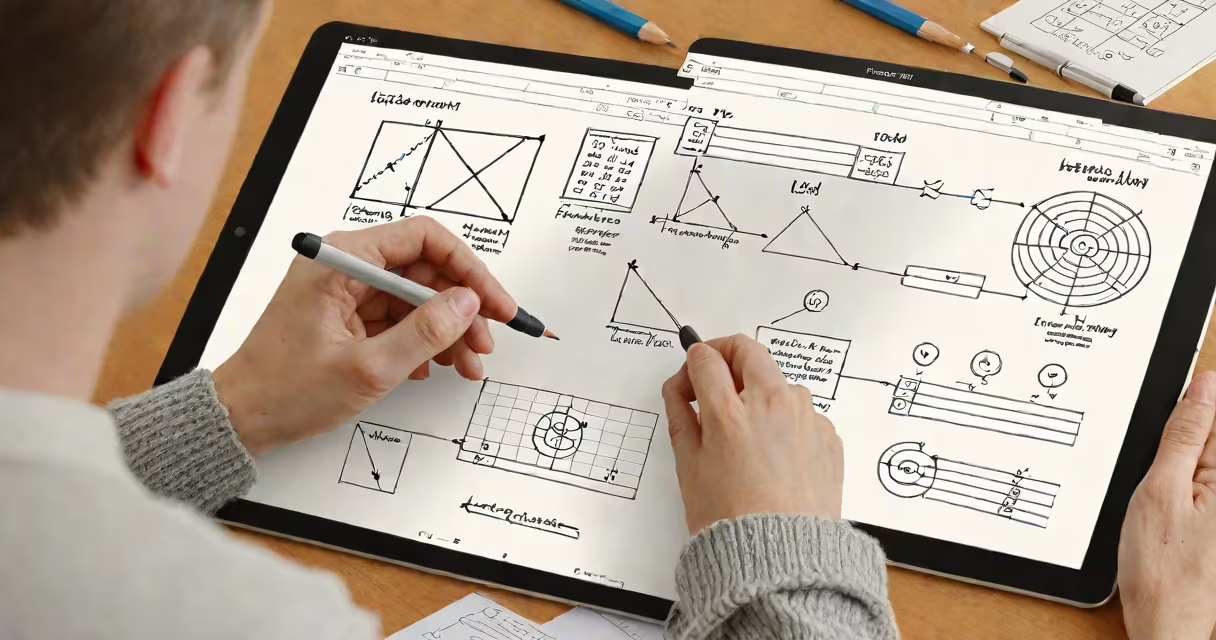
An Individual Learning Plan (ILP) is a structured, student-centered document that outlines academic goals, skill development, and progress tracking over time. It serves as a living record of a learner's process, integrating personal interests, strengths, and long-term objectives into a coherent educational strategy. Used widely in K-12 schools and colleges, an ILP helps instruction adapts to the learner, not the other way around.
An ILP begins with a baseline assessment of a student's current abilities, interests, and academic history. Educators, counselors, and the student collaboratively set short- and long-term goals-such as improving math scores by 20% within a semester or completing a research project on renewable energy. These goals are then mapped to specific coursework, extracurricular activities, internships, or community service opportunities.
Progress is monitored through regular check-ins, typically quarterly. Data such as test scores, teacher feedback, and project outcomes are logged into the plan. This creates a changing record that evolves as the student grows. For example, a high school junior aiming for a STEM scholarship might track lab participation, advanced course enrollment, and mentorship hours.
The ILP functions as both a planning tool and a communication device. Parents receive updates via secure portals. Teachers reference it during IEP meetings or college counseling sessions. When a student transfers schools, the ILP travels with them, preserving continuity.
While formats vary by institution, most ILPs contain five core elements:
Some schools use tiered ILP models based on student needs:
| Type | Use Case | Example |
|---|---|---|
| Standard ILP | General academic planning for all students | A ninth grader mapping out course load for graduation requirements. |
| Advanced ILP | Gifted or accelerated learners | A tenth grader enrolled in AP Calculus and a university research internship. |
| Specialized ILP | Students with IEPs or 504 plans | A student with dyslexia using speech-to-text software and extended time on exams. |
Not all ILPs are digital. Some middle schools still use printed binders with color-coded tabs for each subject area. However, platforms like ILS Solutions and Schoology offer cloud-based tools that sync with student information systems (SIS), enabling real-time updates across districts.
ILPs are standard practice in U.S. public schools under the Every Student Succeeds Act (ESSA), which mandates personalized learning pathways. According to the National Center for Education Statistics, 68% of public high schools reported using some form of individualized planning in 2022. The focus is on closing achievement gaps and increasing college readiness.
In higher education, ILPs support first-generation college students. A study by the Carnegie Foundation for the Advancement of Teaching found that students who maintained an ILP throughout their freshman year were 32% more likely to persist to sophomore year than peers without one. The plan helps students map out credit requirements, identify transferable courses, and select majors aligned with their career aspirations.
Employers increasingly request ILPs during job applications for entry-level roles. A 2023 report from the U.S. Bureau of Labor Statistics noted that 41% of employers in tech and healthcare fields now consider a candidate's documented learning trajectory when evaluating resumes. An ILP demonstrates initiative, self-awareness, and long-term thinking-qualities linked to higher retention rates.
Many confuse an ILP with a syllabus or a resume. A syllabus details course content and deadlines. A resume summarizes past achievements. An ILP is forward-looking and developmental-it's not about what was done, but what's next.
Another misconception is that ILPs are only for struggling students. On the contrary, they're equally valuable for high achievers. I once observed a high school senior in Portland, Oregon, use her ILP to apply for a national science competition. She had documented weekly lab hours, submitted three drafts of her proposal, and scheduled mentorship sessions with university professors-all tracked in her ILP. She won a $10,000 scholarship.
An ILP is not a contract. It's a flexible structure. Goals can be revised based on new interests or changing circumstances. A student might start with a goal to join the debate team, then pivot to robotics after taking a coding elective. The plan adapts. This adaptability is key to its effectiveness.
One non-obvious fact: ILPs are legally protected under FERPA (Family Educational Rights and Privacy Act) when stored digitally. Schools must ensure access controls and audit logs are in place. Unauthorized changes to a student's ILP are considered violations of privacy and can result in federal penalties.
An ILP is not a static document. It's a living strategy that grows with the learner. Whether guiding a middle schooler toward reading proficiency or helping a college graduate land a job in environmental policy, the ILP provides clarity, accountability, and direction. Its power lies in personalization-turning abstract ambitions into actionable steps. With consistent use, it becomes a proven tool for lifelong success.