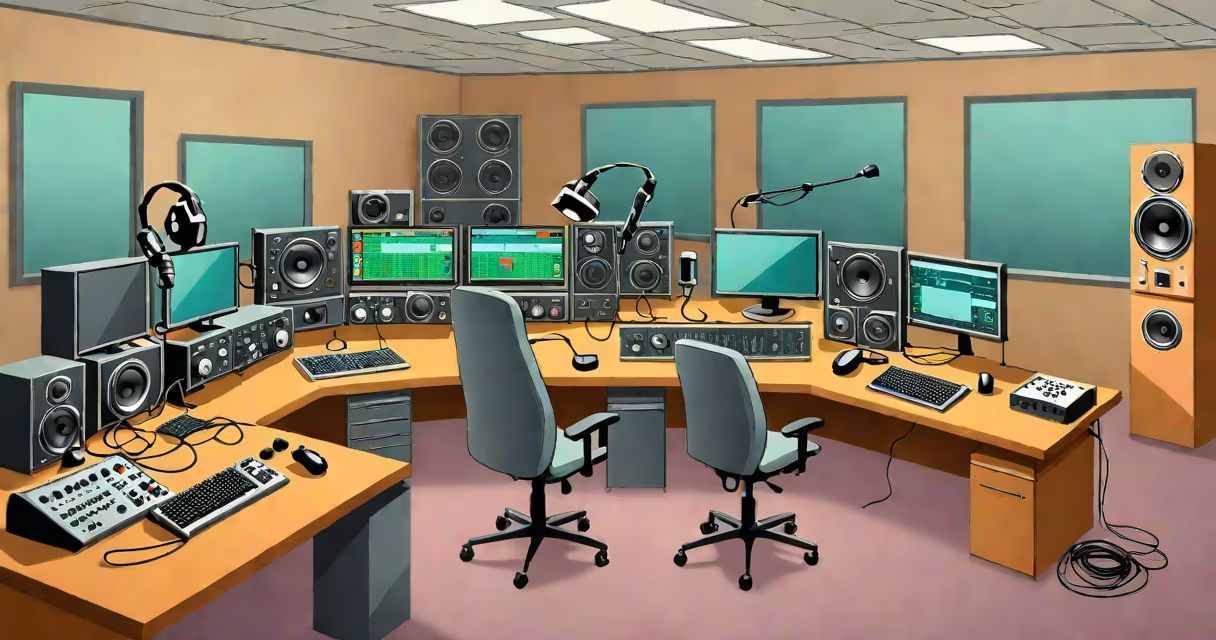
BBC Radio Four is the UK's principal network for spoken-word programming, delivering news, current affairs, documentaries, drama, and arts content through a mix of live broadcasts and on-demand audio. It operates under the BBC's public service mandate and reaches over 6 million listeners weekly.
Launched in 1967 as part of the BBC's reorganization of its domestic radio services, Radio Four replaced the BBC Home Service. Its programming focuses on intellectual engagement, critical reporting, and narrative depth-distinct from the pop music and entertainment formats of other BBC stations. The station broadcasts daily from London's Broadcasting House and maintains a strong presence in regional studios across England, Scotland, Wales, and Northern Ireland.
Radio Four's schedule includes flagship programs such as Today (weekday mornings), PM (afternoon news), Analysis (in-depth political commentary), and Front Row (arts and culture reviews). These shows are produced by dedicated editorial teams and often feature contributions from academics, journalists, and public figures. The station also produces long-form documentaries and serialized dramas, including the acclaimed The Archers, a soap opera about rural life in the UK that has aired since 1951.
BBC Radio Four transmits via FM, DAB digital radio, online streaming, and podcast platforms. Listeners access content through traditional radio receivers, mobile apps, smart speakers, and web browsers. All programming is archived on the BBC Sounds platform, allowing users to stream or download episodes within 30 days of broadcast.
Content is produced in-house by BBC News and BBC Audio departments. Scripts undergo editorial review, and recordings are edited for clarity, pacing, and accuracy. A single episode of Today involves 12-15 contributors, including correspondents, analysts, and guest experts. The show's structure follows a rigid format: headlines, international updates, UK politics, economic reports, and a segment on science or health.
For example, a typical weekday Today broadcast begins at 6:00 AM GMT with a 15-minute news summary, followed by interviews with government officials and foreign correspondents. On March 14, 2023, the program covered the UK's inflation rate, a parliamentary debate on renewable energy subsidies, and a report on rising mental health referrals among teenagers. The segment on youth mental health included input from a clinical psychologist and a student advocate, with statistics drawn from NHS England's latest quarterly report.
Radio Four organizes its output into distinct categories based on duration, purpose, and production method. The following table outlines the core formats:
| Type | Duration | Frequency | Example |
|---|---|---|---|
| News bulletins | 1-5 minutes | Hourly | News Summary |
| Daily magazine | 30-45 minutes | Weekdays | Today |
| Long-form documentary | 45-60 minutes | Weekly | Costing the Earth |
| Serialized drama | 30 minutes | Weekly | The Archers |
| Special event | 60-90 minutes | Occasional | Great Lives (biographical tributes) |
Each format serves a different audience need. News bulletins provide time-efficient updates, while long-form documentaries allow for investigative depth. The Archers, which airs Monday to Friday at 1:45 PM, uses continuous narrative to explore farming policy, community conflict, and personal relationships in a fictional village called Ambridge. The show has maintained consistent ratings since 1970, with over 1.2 million weekly listeners.
Many assume BBC Radio Four is solely for older audiences. While it has a higher proportion of listeners aged 55+, research from the BBC's 2022 Audience Survey shows that 34% of its listeners are under 35. This demographic engages primarily through podcasts and BBC Sounds, not live FM broadcasts.
Another misconception is that Radio Four lacks originality. In reality, it leads in innovation. In 2021, the station launched Radio 4 Extra, a sister channel focused on comedy, satire, and archival material. Radio 4 Extra features remastered versions of classic shows like Yes Minister and Blackadder, and new productions such as Stella's Kitchen, a fictional cooking show with a satirical edge.
A lesser-known fact: Radio Four was the first UK station to broadcast a full-length audio adaptation of a Shakespeare play. In 2018, it released a 12-part dramatization of King Lear, starring David Tennant as the titular king. The production used immersive sound design and historical voice actors to recreate the play's emotional arc. It received a BAFTA for Best Sound and was streamed over 2.1 million times in its first month.
BBC Radio Four is used by educators, policymakers, and professionals who require accurate, context-rich information. Journalists cite its reports as primary sources. A 2023 study by the Reuters Institute found that 68% of UK-based political reporters reference Today or PM when preparing stories on domestic legislation.
During the 2022 UK general election, Radio Four's coverage of party manifestos was cited by the Electoral Reform Society as a benchmark for balanced reporting. The station hosted debates between candidates and independent analysts, with transcripts published on the BBC website. These sessions were accessed over 1.8 million times in the week leading up to polling day.
I once attended a live recording of Any Questions? at the Royal Festival Hall in London. The audience included university students, retired civil servants, and local activists. The moderator, Jonathan Dimbleby, asked each panelist to respond to a question on housing policy. One guest, a housing economist from the LSE, cited data from the Office for National Statistics showing a 12% increase in rent arrears since 2020. The discussion lasted 47 minutes and was later released as a podcast episode with over 400,000 downloads.
BBC Radio Four is not a commercial station. It receives no advertising revenue and is funded entirely by the UK television licence fee. This ensures editorial independence and prevents influence from corporate sponsors. Unlike commercial stations such as Capital or Heart, it does not play music charts or celebrity gossip.
It is also not synonymous with BBC News. While both are part of the BBC's public service arm, BBC News operates as a separate division with its own channels (BBC News 24, BBC World News). Radio Four covers news but frames it within broader social, political, and cultural contexts. For example, a report on climate change on Today may include a scientist's explanation of carbon sequestration, a policy expert's view on EU emissions targets, and a farmer's account of drought impacts-all in one 15-minute segment.
BBC Radio Four remains a defining institution in British media. Its commitment to accuracy, depth, and public service distinguishes it from mass-market alternatives. With over 50 years of continuous operation, it continues to shape how millions of people understand the world around them.