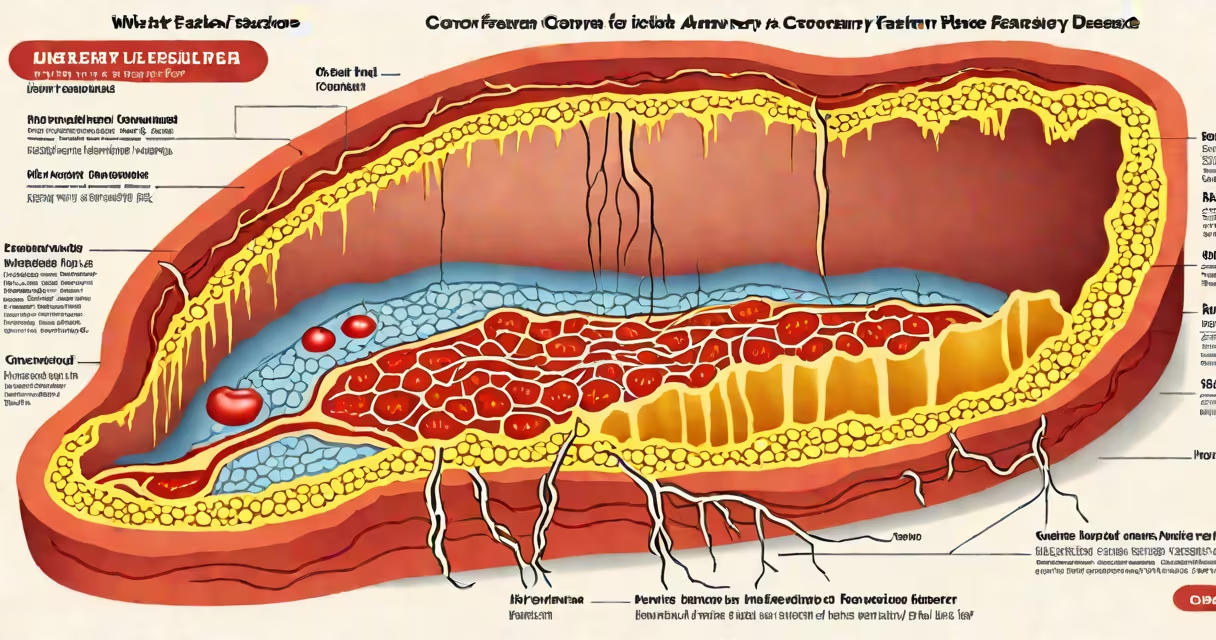
Risk factors for coronary artery disease are conditions or behaviors that increase the likelihood of developing narrowing or blockage in the arteries supplying blood to the heart muscle. These factors either promote atherosclerosis-the buildup of fatty deposits in arterial walls-or directly damage the endothelium, leading to reduced blood flow and potential heart attacks.
Coronary artery disease develops when plaque accumulates in the coronary arteries, restricting oxygen-rich blood flow to the heart. This process begins with injury to the inner lining of the artery, often triggered by chronic exposure to certain risk factors. Over time, inflammation and lipid deposition lead to fibrous plaques that narrow the vessel lumen. The presence of multiple risk factors accelerates this progression.
According to the American Heart Association, nearly half of all U.S. adults have at least one major risk factor for cardiovascular disease, including high blood pressure, high cholesterol, or smoking. The Framingham Heart Study, which began in 1948 and continues today, identified several of these factors through decades of longitudinal tracking, establishing their predictive power for heart events.
Each risk factor affects the arterial wall differently. High LDL cholesterol contributes to lipid infiltration into the intima-the innermost layer of the artery. Once inside, oxidized LDL triggers immune cell recruitment, forming foam cells and initiating plaque formation. Elevated blood pressure increases mechanical stress on the endothelium, causing micro-tears that allow lipids and inflammatory cells to enter the arterial wall.
Diabetes mellitus is particularly damaging because chronically high glucose levels impair endothelial function and accelerate glycation of proteins in the vascular wall. This leads to stiffened arteries and increased susceptibility to plaque rupture. Smoking introduces free radicals and reduces nitric oxide availability, weakening vasodilation and promoting thrombosis.
A 2020 analysis published in Circulation found that individuals with five or more traditional risk factors had a 12-fold higher risk of experiencing a major adverse cardiac event compared to those with none. The study tracked over 15,000 participants across 12 years, confirming that cumulative exposure to risk factors elevates risk beyond individual contributions.
Risk factors fall into two categories: non-modifiable (cannot be changed) and modifiable (can be altered through behavior or treatment).
| Type | Examples | Impact Level |
|---|---|---|
| Non-modifiable | Age (over 45 for men, over 55 for women), male sex, family history of early heart disease (before age 55 in father or brother), genetic conditions like familial hypercholesterolemia | High (independent of lifestyle) |
| Modifiable | Smoking, hypertension (≥130/80 mmHg), high LDL cholesterol (>100 mg/dL), low HDL cholesterol (<40 mg/dL), diabetes, obesity (BMI ≥30), physical inactivity, poor diet (high saturated fat, sodium, added sugar) | Very high (reduction lowers risk ) |
For example, a 52-year-old man with a father who had a heart attack at 50 has a baseline elevated risk due to family history. If he also smokes, has a BMI of 32, and a fasting glucose level of 135 mg/dL (indicating prediabetes), his combined risk profile places him in the highest-risk category according to the Pooled Cohort Equations.
Even with non-modifiable risks, modifying other factors can reduce risk. A 2019 study in The Lancet showed that individuals with a strong family history who maintained a healthy lifestyle had a 40% lower incidence of coronary events than those with similar genetics but unhealthy habits.
Many people assume that only older men develop coronary artery disease. While men do have higher rates earlier in life, women's risk rises sharply after menopause. The Women's Health Initiative reported that postmenopausal women had a 2.3 times greater risk of coronary events than premenopausal women, even after adjusting for age and lifestyle.
Another misconception is that high cholesterol always causes heart attacks. Not all cholesterol is equal. Small, dense LDL particles are far more atherogenic than large, buoyant ones. A patient with normal total cholesterol but high triglycerides and low HDL may still have significant coronary risk. This is why advanced lipid testing-such as apolipoprotein B or LDL particle number-is increasingly recommended for accurate risk assessment.
Some patients believe that if they feel fine, they don't need screening. But silent ischemia-reduced blood flow without symptoms-occurs in up to 30% of patients with significant coronary artery disease. A 64-year-old woman with no chest pain but a positive stress test was later diagnosed with 70% stenosis in her left anterior descending artery. She underwent angiography and received a stent. Her case highlights that symptoms are not required for serious disease.
Consider a 48-year-old male software engineer with a sedentary job, a waist circumference of 42 inches, and a blood pressure reading of 142/90 mmHg. His fasting lipid panel shows: total cholesterol 220 mg/dL, LDL 150 mg/dL, HDL 35 mg/dL, triglycerides 200 mg/dL. He reports smoking half a pack daily and consuming fast food 5 days a week.
Using the ASCVD Risk Estimator Plus (from the American College of Cardiology and American Heart Association), his 10-year risk of a major cardiovascular event is calculated at 22%, placing him in the high-risk category. He has four modifiable risk factors (hypertension, dyslipidemia, smoking, poor diet) and one non-modifiable (age). His physician recommends statin therapy, blood pressure control, smoking cessation counseling, and a structured exercise program.
After six months of intervention, his LDL dropped to 85 mg/dL, blood pressure stabilized at 128/80 mmHg, and he reduced smoking to one cigarette per day. His 10-year risk recalculated to 11%. This illustrates how targeting modifiable factors can dramatically alter long-term outcomes.
One underappreciated point is that risk factors do not act independently. They interact synergistically. For example, smoking amplifies the atherogenic effect of high LDL. Hypertension worsens endothelial dysfunction caused by diabetes. The combination of metabolic syndrome components-abdominal obesity, high blood pressure, high triglycerides, low HDL, and elevated glucose-increases risk more than the sum of individual parts.
When treating patients, clinicians don't assess each factor in isolation. Instead, they use risk scores that integrate multiple variables. The Pooled Cohort Equations, validated in diverse populations, estimate 10-year risk based on age, sex, race, total cholesterol, HDL, systolic BP, antihypertensive medication use, diabetes status, and smoking history.
I've seen this in clinical practice: a 55-year-old Black man with well-controlled diabetes and normal cholesterol levels still developed acute coronary syndrome after a period of unmanaged stress and sleep disruption. His troponin rose, and angiography revealed a 90% lesion in the circumflex artery. His case underscores that even with controlled lab values, psychosocial stress and sleep deprivation contribute to plaque instability.
Understanding what are risk factors for coronary artery disease allows for early identification and prevention. Addressing modifiable factors can delay or prevent disease onset. Even with non-modifiable traits like age or family history, proactive management reduces risk by up to 50% over 10 years.
For individuals with known risk, regular monitoring and lifestyle modification remain central. Those with multiple risk factors should consult a cardiologist. Early detection of coronary artery stenosis through imaging or functional testing improves outcomes and guides treatment decisions.
Recognizing the full spectrum of risk factors-both preventable and unavoidable-enables informed choices about health. Knowledge of these factors empowers patients and providers to act before irreversible damage occurs.