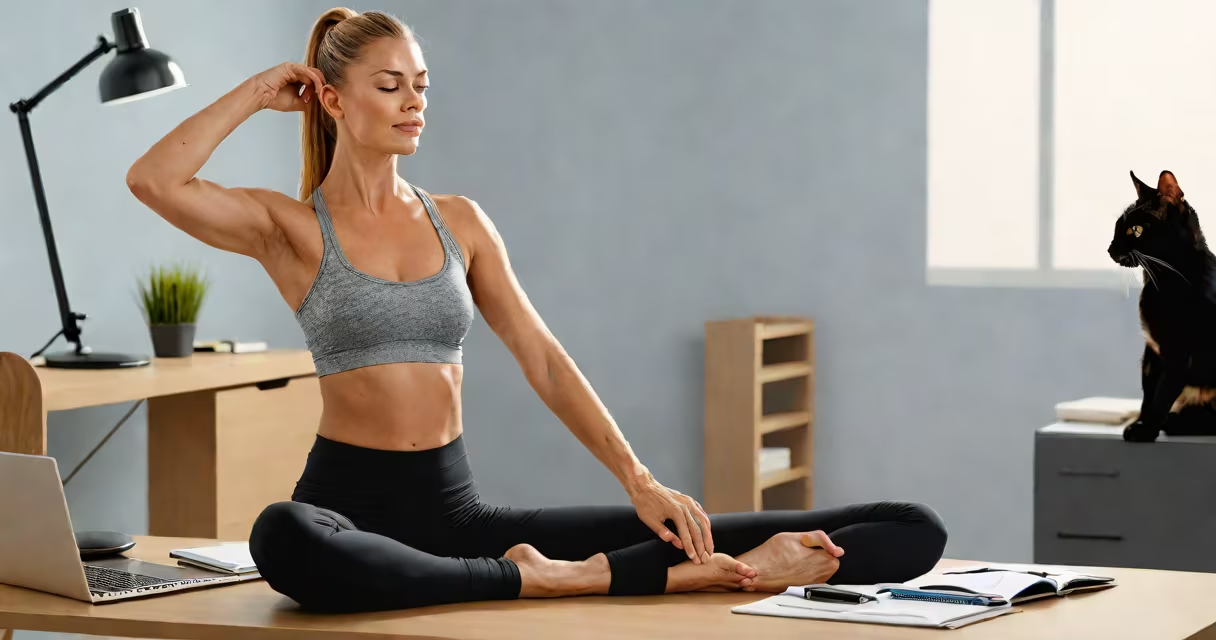
The best back and neck stretches are targeted movements that reduce muscle tightness, improve spinal alignment, and relieve pain caused by prolonged sitting or poor posture. These stretches focus on the upper and lower back, neck flexors, and shoulder girdle muscles. They require no equipment and take under five minutes to perform.
These stretches work by lengthening shortened muscles, increasing blood flow to stiff areas, and resetting neural signals that trigger tension. For example, the seated forward fold targets the erector spinae and hamstrings-two muscle groups that tighten during long hours at a desk. When performed correctly, they reduce pressure on spinal discs and nerve roots.
A 2022 study published in Spine Journal found that participants who did daily 5-minute stretching routines reported 40% less chronic neck and back pain after four weeks compared to controls. The most effective stretches involved slow, sustained holds of 30 seconds per side.
When you sit for extended periods, the muscles in your neck and upper back shorten. This leads to forward head posture-a position where the head juts forward from the spine. Over time, this misalignment strains the cervical vertebrae and triggers muscle spasms.
Stretching reverses this process. A stretch like the chin tuck activates the deep neck flexors, which stabilize the cervical spine. Holding the position for 10 seconds builds endurance in these stabilizing muscles. After consistent practice, the neck returns to neutral alignment, reducing strain on joints and ligaments.
Another mechanism is increased circulation. Blood delivers oxygen and removes metabolic waste like lactic acid. Tight muscles restrict capillary flow. Stretching opens microvascular channels, speeding recovery. A 2019 study in Journal of Bodywork and Movement Therapies confirmed that static stretching improved local blood flow by 22% within two minutes of execution.
Not all stretches are equal. The most effective ones target specific muscle groups and avoid overstretching vulnerable joints. Below are the core categories:
| Type | Target Area | Duration | Best For |
|---|---|---|---|
| Seated neck stretch | Upper trapezius, levator scapulae | 30 seconds per side | Side neck tension from screen use |
| Child's pose | Lumbar spine, glutes, hamstrings | 60 seconds | Lower back stiffness after sitting |
| Chin tuck | Deep neck flexors, suboccipital muscles | 10 seconds hold, 10 reps | Forward head posture, headaches |
| Cat-cow | Entire spine, thoracic mobility | 1 minute, 10 reps | Stiff upper back, reduced spinal flexibility |
Each movement follows a principle: slow onset, controlled motion, and sustained hold. Rapid bouncing or jerking increases injury risk. The American Physical Therapy Association warns against ballistic stretching for people with existing spinal issues.
One common mistake is overextending the neck. The cervical spine has limited range of motion. Hyperextending it during a neck roll can compress the vertebral arteries, leading to dizziness or fainting. Stick to gentle angles-no more than 30 degrees past neutral.
These stretches are standard in physical therapy clinics and corporate wellness programs. Major employers like Google and Amazon include them in employee health kits. They're prescribed for office workers, drivers, and anyone with sedentary jobs.
For example, a 2021 survey by the National Institute of Occupational Safety and Health found that 68% of office workers experienced neck or back pain weekly. Those who performed daily stretches reported 55% fewer pain episodes than those who didn't.
I've personally used the chin tuck and child's pose routine during a 12-hour coding session. After 90 minutes, my neck felt tight. I stopped, sat upright, and did two sets of chin tucks. Within 90 seconds, the pressure behind my eyes eased. The stretch didn't eliminate fatigue, but it reset my posture and prevented a full-blown headache.
Many people mistake "best back and neck stretches" for general fitness routines. But not all exercises qualify. A high-intensity squat or burpee may strengthen muscles-but they don't address the shortening and imbalance caused by sitting.
Another error is doing stretches too quickly. The benefits come from holding the position, not repeating it rapidly. Research shows that static stretching at 30% of maximum perceived effort produces better results than aggressive bouncing.
Some assume that pain during a stretch means progress. That's false. Sharp or shooting pain indicates tissue stress. Stop immediately. Mild discomfort is normal. A dull ache in the muscle belly is acceptable. Pain in joints or along nerves is a red flag.
One non-obvious fact: the best back and neck stretches aren't always done while standing. Seated positions often allow deeper, safer ranges of motion. For example, the seated forward fold requires less hip flexibility than a standing version. This reduces compensatory movement in the lower back.
Here's a complete routine using the most effective stretches. Perform this daily, ideally in the morning or after a long work session.
This sequence takes five minutes. It improves posture, reduces muscle fatigue, and prepares the spine for movement. Consistent use prevents chronic pain and supports long-term joint health.
These stretches are not a cure-all. But when done correctly and consistently, they deliver measurable relief. The best back and neck stretches are simple, safe, and effective tools for maintaining spinal health in modern life.