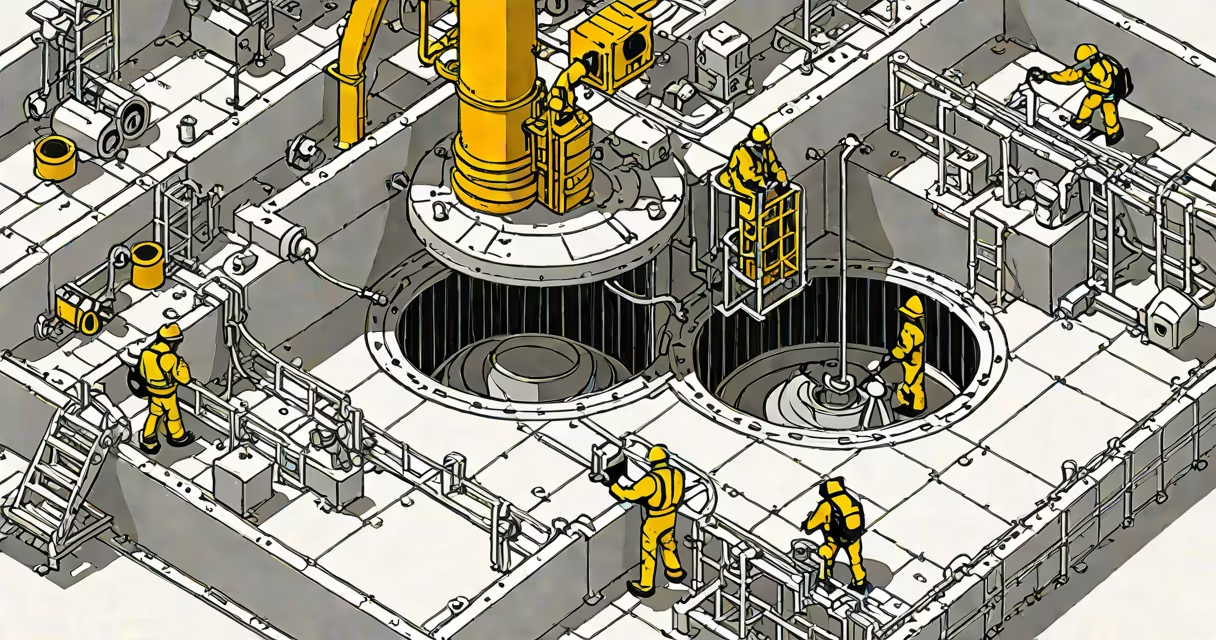
A confined space mean refers to an area that is large enough for a person to enter, has limited access points, and is not designed for continuous occupancy. These spaces pose significant risks due to hazardous atmospheres, engulfment, or physical hazards. The term is defined by OSHA under 29 CFR 1910.146, which governs workplace safety in such environments.
Confined spaces are not simply small rooms or tight areas. They are defined by three key characteristics: enclosure, limited entry/exit, and lack of design for continuous human presence. A storage tank, sewer line, silo, or underground vault qualifies if it meets all three criteria. The confusion often arises because people assume size determines confinement, but a large industrial chamber can still be a confined space if it lacks proper ventilation and access.
OSHA's standard specifies that a confined space must have one or more of the following features: limited openings for entry and exit, inadequate natural ventilation, and conditions that could cause oxygen deficiency, toxic fumes, or physical hazards. For example, a 10-foot diameter manhole in a sewer system may appear accessible, but if it contains hydrogen sulfide gas at 50 ppm-well above the safe exposure limit-it becomes a confined space requiring permit procedures.
Confined spaces create risk because they trap gases, fluids, or heat. Oxygen levels can drop below 19.5% due to displacement by inert gases or consumption by corrosion processes. Carbon monoxide from engine exhaust in a basement garage can accumulate rapidly in a sealed space. Flammable vapors from solvents in a chemical drum can ignite if a spark occurs during entry.
One incident in 2018 involved a maintenance worker who entered a 12-foot-deep concrete storm drain without testing for methane. The gas concentration reached 12%-within the flammable range-and ignited when he turned on his flashlight. He died instantly. This case illustrates that even a space not visibly enclosed can qualify as a confined space if it traps dangerous substances.
Entry into a confined space requires a permit process under OSHA's 1910.146(d). This includes atmospheric testing, ventilation, lockout/tagout of energy sources, and a trained attendant outside the space. Failure to follow these steps leads to preventable fatalities. In 2021, OSHA reported 62 deaths in confined spaces across U.S. industries-most involving rescue attempts without proper training.
Confined spaces fall into two categories: non-permit and permit-required. Non-permit spaces are those where no hazard exists beyond normal entry. Permit-required confined spaces involve actual or potential hazards such as toxic atmospheres, engulfment, or structural collapse.
| Type | Characteristics | Examples | OSHA Criteria |
|---|---|---|---|
| Non-permit | No known hazards; air quality acceptable | Small electrical panel box, dry crawl space | Safe for brief entry without monitoring |
| Permit-required | Presence of toxic gas, low oxygen, or engulfment risk | Storage tank, manhole, silo, ductwork | Requires authorization, testing, and attendant |
For instance, a 5,000-gallon fuel tank used in a refinery may appear empty. But residual vapor pressure can hold volatile organic compounds at concentrations exceeding PELs (Permissible Exposure Limits). Without gas testing, entry is fatal. OSHA mandates that before anyone enters, the atmosphere must be tested for oxygen (19.5-23.5%), combustibles (<10% LEL), and toxic gases.
One overlooked detail: confined space means are not always obvious. A trench deeper than 4 feet qualifies as a confined space under OSHA, even if it's open to the sky. Soil collapse risk makes it a permit-required space. In 2019, a construction worker died in a 6-foot trench that collapsed during excavation. The site had no shoring or protective systems-violating OSHA's 1926.651(k).
Many assume that "confined" means "small." That's incorrect. A 30-foot-long pipeline with a 24-inch diameter opening is a confined space-even if it's long and narrow. Size doesn't define it; the presence of restricted access and potential danger does.
Another mistake is thinking that ventilation eliminates risk. Ventilation reduces but does not eliminate hazards. In a 2020 case, a worker entered a 10-foot-diameter biogas digester after running a fan for 30 minutes. Methane levels remained at 8%, well above the 5% lower explosive limit. The fan failed to displace gas effectively due to poor airflow design. The worker was overcome and died.
Also, confined space mean is not synonymous with "hazardous environment." All permit-required confined spaces are hazardous, but not all hazardous environments are confined. A warehouse with leaking ammonia tanks is dangerous but not a confined space unless entry is restricted and atmospheric risk exists.
Consider a wastewater treatment plant where a technician must inspect a 12-foot-diameter circular pump chamber. The chamber has a single 24-inch hatch, is lined with wet concrete, and contains standing water. The technician plans to enter for cleaning.
Step 1: Identify the space. It's enclosed, has limited access, and is not intended for continuous work. It meets the definition of a confined space.
Step 2: Determine if it's permit-required. Testing reveals 12% methane and 14% oxygen-both outside safe ranges. Toxic gas detection confirms hydrogen sulfide at 20 ppm. This is a permit-required confined space.
Step 3: Implement controls. The site supervisor issues a permit. Air quality is monitored continuously. A ventilation system runs for 45 minutes. A trained attendant stays outside with a communication device. The technician wears a full-body use connected to a lifeline.
Step 4: Entry and monitoring. The technician enters with a multi-gas detector. After 10 minutes, methane spikes to 18%. He exits immediately. The space is re-evaluated before further work.
This example shows that identifying a confined space mean is not just about labeling-it's about action. OSHA requires documented procedures, training, and equipment checks. Skipping any step increases fatality risk.
During a personal inspection at a municipal water facility, I witnessed a team bypass the permit process for a 6-foot-diameter manhole. They assumed it was "just a hole." Gas readings showed 15% carbon dioxide. One worker began feeling dizzy. They exited and called for a permit. The delay nearly cost lives. This experience reinforced that compliance isn't bureaucracy-it's survival.