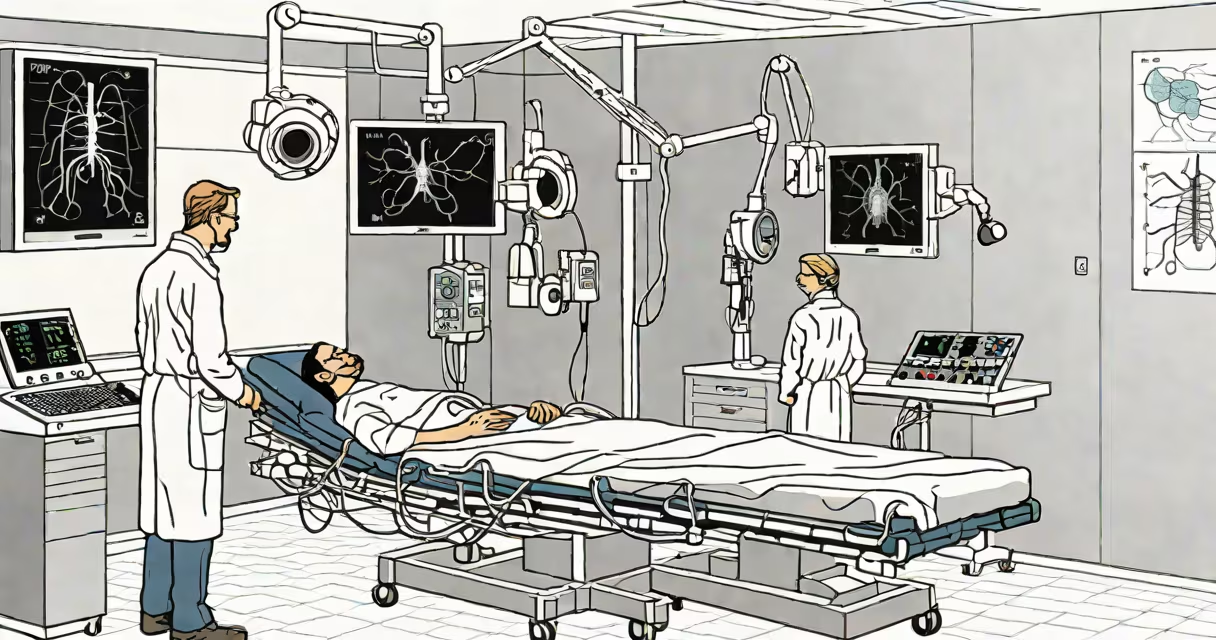
A coronary angiogram procedure is a minimally invasive diagnostic test that uses contrast dye and real-time X-ray imaging to assess blood flow through the coronary arteries. It identifies blockages, narrowing, or abnormalities that may cause chest pain, shortness of breath, or increase the risk of heart attack.
The procedure is performed in a specialized cardiac catheterization laboratory under local anesthesia. A thin, flexible tube called a catheter is inserted into an artery in the groin or wrist and guided to the heart's coronary arteries. Once in position, a special dye is injected through the catheter. The dye makes the arteries visible on X-ray images, allowing doctors to see any obstructions or reduced blood flow.
According to the American Heart Association, coronary angiography is the gold standard for diagnosing coronary artery disease. It provides detailed images of the heart's blood vessels, helping physicians determine whether a patient needs medication, stenting, or bypass surgery. The entire process typically takes 30 to 60 minutes, and most patients go home the same day.
The coronary angiogram procedure relies on fluoroscopy-a continuous X-ray imaging technique-to capture live video of the heart's blood vessels. As the contrast dye flows through the coronary arteries, it highlights any areas of narrowing or blockage. These visual cues help cardiologists assess the severity and location of disease.
Before the procedure, patients receive a sedative to reduce anxiety. The insertion site-usually the femoral artery in the groin or the radial artery in the wrist-is cleaned and numbed. A small incision allows the catheter to be threaded into the artery. Using real-time imaging, the physician guides the catheter to the aortic root and then into the openings of the left and right coronary arteries.
Dye is injected in rapid bursts during the imaging sequence. Each injection lasts less than a second but captures multiple frames of the dye moving through the arteries. Patients may feel a brief warm sensation during injection, which is normal and temporary. The entire imaging session lasts about 10 to 15 minutes.
While the core method remains consistent, variations exist based on access site and imaging modality:
| Access Site | Procedure Type | Common Use Cases | Advantages |
|---|---|---|---|
| Femoral (groin) | Standard coronary angiogram | Complex cases, older patients | Higher success rate in difficult anatomy |
| Radial (wrist) | Transradial angiogram | Patients with peripheral vascular disease | Lower bleeding risk, faster recovery, better patient comfort |
Transradial access is now preferred in many centers due to lower complication rates. A 2021 study published in JAMA Cardiology found that transradial procedures had a 37% lower risk of major bleeding compared to femoral access. This shift reflects growing evidence supporting radial access as the standard of care for most patients.
Doctors order a coronary angiogram procedure when symptoms suggest significant coronary artery disease. Common indications include persistent chest pain (angina), unexplained shortness of breath, abnormal results on stress tests, or suspected heart attack during emergency evaluation.
For example, a 58-year-old man with stable angina lasting six months underwent a coronary angiogram after a positive treadmill stress test. The test revealed a 90% blockage in the left anterior descending artery. Based on this finding, his cardiologist recommended percutaneous coronary intervention (PCI) with stent placement. Without the angiogram, the blockage might have gone undetected until a major event occurred.
Another key use is evaluating candidates for heart surgery. Before bypass grafting, surgeons need precise maps of blocked arteries. The angiogram provides that detail, reducing surgical risk and improving outcomes.
Many people confuse a coronary angiogram procedure with coronary artery bypass surgery or a CT scan. The angiogram is purely diagnostic-it does not treat blockages. It's not the same as a coronary CT angiography (CTA), which uses computed tomography and radiation to create 3D images of the heart's arteries. CTA is non-invasive and often used for screening, while the angiogram requires catheter insertion and is reserved for confirmed or high-risk cases.
A common misunderstanding is that the procedure is painful. Most patients report only mild discomfort at the insertion site and a brief warmth during dye injection. The procedure itself is not associated with long-term pain. According to the National Institutes of Health, fewer than 5% of patients report significant pain during the test.
Also, the term "angiogram" is sometimes used loosely. In medical contexts, a coronary angiogram specifically refers to imaging of the heart's blood vessels. An angiogram of the brain or legs involves different techniques and locations. Always confirm the anatomical focus when discussing the term.
I observed a coronary angiogram procedure in a university hospital cardiac cath lab. The patient was a 63-year-old woman with unstable angina. After she was positioned on the fluoroscopy table, the technician applied sterile drapes and prepared the radial artery site. The cardiologist used ultrasound guidance to locate the vessel, then inserted a sheath. Within minutes, the catheter reached the aortic root.
During the dye injection, the screen lit up with branching red and yellow patterns-each branch representing a coronary artery. A 70% stenosis in the circumflex artery was visible. The team discussed treatment options in real time. The patient remained awake throughout, answering questions about her symptoms. She reported feeling fine afterward and was discharged the same day.
The coronary angiogram procedure is a critical tool for diagnosing and managing heart disease. It offers precise visualization of coronary arteries, guiding decisions on treatment and intervention. While it involves minimal risk, it requires skilled personnel and specialized equipment. Understanding its purpose, process, and limitations ensures accurate expectations and informed consent.
For those with symptoms of heart disease, this test can reveal life-threatening blockages early. It's not a treatment, but it's the foundation for effective management. If your doctor recommends a coronary angiogram procedure, it's because they want to understand your heart's condition and protect your health.