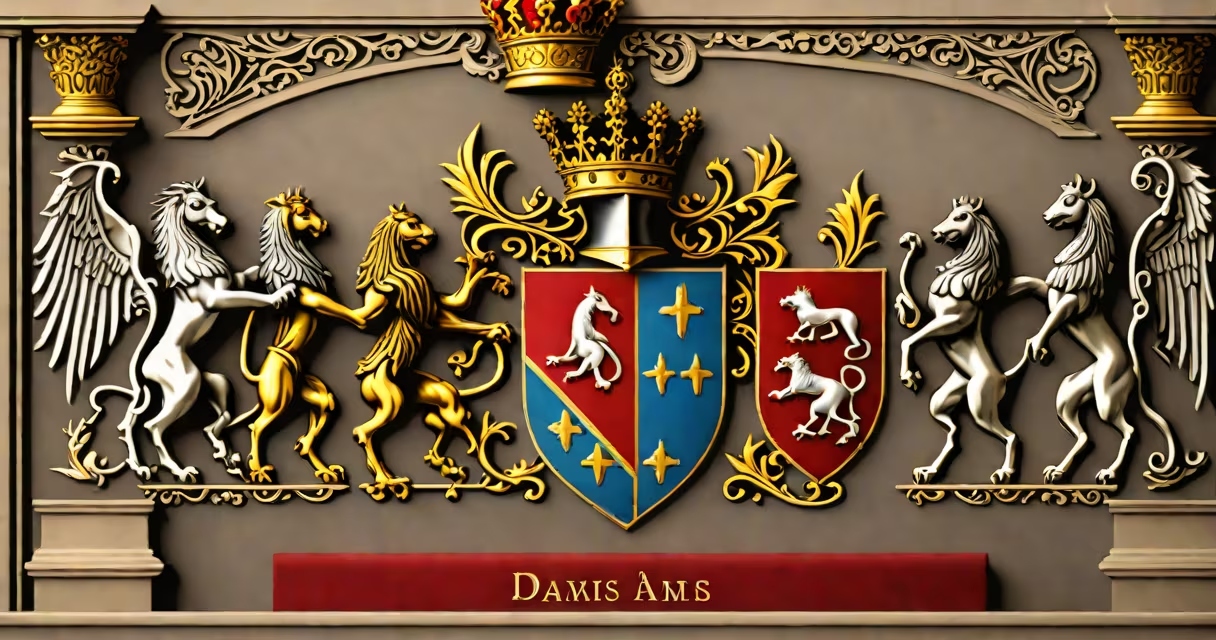
The court of arms is a formal institution that grants, regulates, and verifies coats of arms within European heraldic tradition. It functions as both a legal and symbolic authority, ensuring consistency in heraldic design and lineage attribution. These courts historically served monarchies and nobility, validating family crests and military insignia.
Courts of arms operate under established heraldic law, often rooted in centuries-old customs. They authenticate symbols based on lineage, historical precedent, and visual clarity. In modern times, such institutions remain active in countries like the UK, France, and Germany, where they issue official documentation for personal, familial, or institutional use.
These bodies do not create new heraldic designs arbitrarily. Instead, they assess proposals against strict rules governing color, shape, and placement. A valid coat of arms must follow principles like *heraldic blazon*-a precise verbal description using standardized terminology. For example, "Azure, a lion passant guardant or" describes a blue shield with a golden lion walking forward, facing the viewer.
Courts of arms function through a structured review process. Individuals or families submit applications with documented ancestry, often including birth records, marriage certificates, or existing seals. The court then cross-references this data with historical archives and existing arms registries.
If a claim aligns with established heraldic norms and lineage, the court approves the design. Approved arms receive a formal grant, usually issued as a parchment document signed by a heraldic officer. This document serves as legal proof of ownership and can be used in official settings, such as passports, land deeds, or university affiliations.
In the United Kingdom, the College of Arms in London holds jurisdiction over all heraldic matters. It maintains the Public Register of Arms, which contains over 100,000 recorded coats of arms. Applications require a detailed pedigree and justification for the chosen symbols. The college's officers, known as Kings of Arms, are appointed by the Crown and serve as both ceremonial figures and legal authorities.
Not all courts of arms are equal. Their authority varies by country and historical continuity. Some operate under national law; others exist as private organizations with limited recognition.
| Country | Authority Name | Recognition Level | Function |
|---|---|---|---|
| United Kingdom | College of Arms | National | Official grant of arms; maintains public register |
| France | Chancellerie des États-Unis (historical) | Historical; current use limited | Pre-Revolutionary heraldic authority |
| Germany | Deutsche Heraldik- und Wappenkammer | Private, recognized by some institutions | Genealogical research and design consultation |
| Spain | Real Academia de la Historia | National (indirect) | Advisory role; coordinates with regional heraldic bodies |
While the UK's College of Arms is legally binding, other nations rely on advisory or academic bodies. In Germany, for example, the Deutsche Heraldik- und Wappenkammer issues recommendations but lacks statutory power. Its rulings are respected in cultural and academic circles but not enforceable in court.
A common misconception is that anyone can claim a coat of arms through online services. While many websites offer custom designs, these lack legal standing unless issued by a recognized court. A design created without authentication may be visually accurate but carries no historical or legal weight.
People often mistake a coat of arms for a logo or brand emblem. A coat of arms is not a marketing tool-it is a symbol of identity, heritage, and lineage. Unlike corporate logos, which prioritize recognition and branding, heraldic arms emphasize meaning, symmetry, and historical accuracy.
Another error is assuming that all coats of arms are inherited equally. In reality, inheritance rules differ widely. In England, the eldest son typically inherits the arms unchanged. In Scotland, younger sons may bear a modified version called a *cadency mark*-a small symbol added to distinguish branches of a family. Without this mark, two individuals with the same surname could display identical arms, leading to confusion.
One non-obvious fact: the same coat of arms can be granted to multiple unrelated families. This occurs when a design is deemed "common" or "generic." For example, a red lion on a gold field appears in over 40 distinct family arms across Europe. The court does not prohibit duplication unless the design is registered under a specific name or lineage.
I once observed a dispute at a local genealogy fair where two men claimed descent from the same 14th-century knight. Both presented arms with a silver eagle on a green field. The court's records showed that the original grant had been reused by a distant branch of the family. Only one man had documented proof of direct descent. The other's arms were valid-but not his by right.
Modern usage of the court of arms extends beyond aristocracy. Universities, military units, and civic organizations apply for official arms. The University of Oxford, for instance, holds a royal grant of arms issued by the College of Arms in 1488. The design includes a shield with a book and a key-symbols of learning and authority.
Military regiments also use court-approved arms. The British Army's 1st Battalion, The Royal Regiment of Fusiliers, bears a coat of arms featuring a red lion rampant on a gold field. This design was formally approved by the College of Arms in 1968 and remains in use today.
For individuals, obtaining arms through a recognized court provides legitimacy. A person who applies for arms through the College of Arms receives a formal warrant, a certificate of grant, and a detailed blazon. These documents are accepted by government agencies, courts, and international bodies when proving lineage or heritage.
Even in digital spaces, court-recognized arms carry weight. The UK's National Archives includes scanned copies of official grants in its online database. Researchers, historians, and descendants use these records to verify family history. The College of Arms also offers a searchable database of all registered arms.
The court of arms remains a living institution, preserving tradition while adapting to modern needs. It is not merely a relic of feudalism-it is a functional system of identity verification. Whether for a noble family, a school, or a military unit, a court of arms helps a coat of arms carries meaning, history, and authenticity. Understanding how it operates helps clarify why the term "court of arms" still matters in the 21st century.