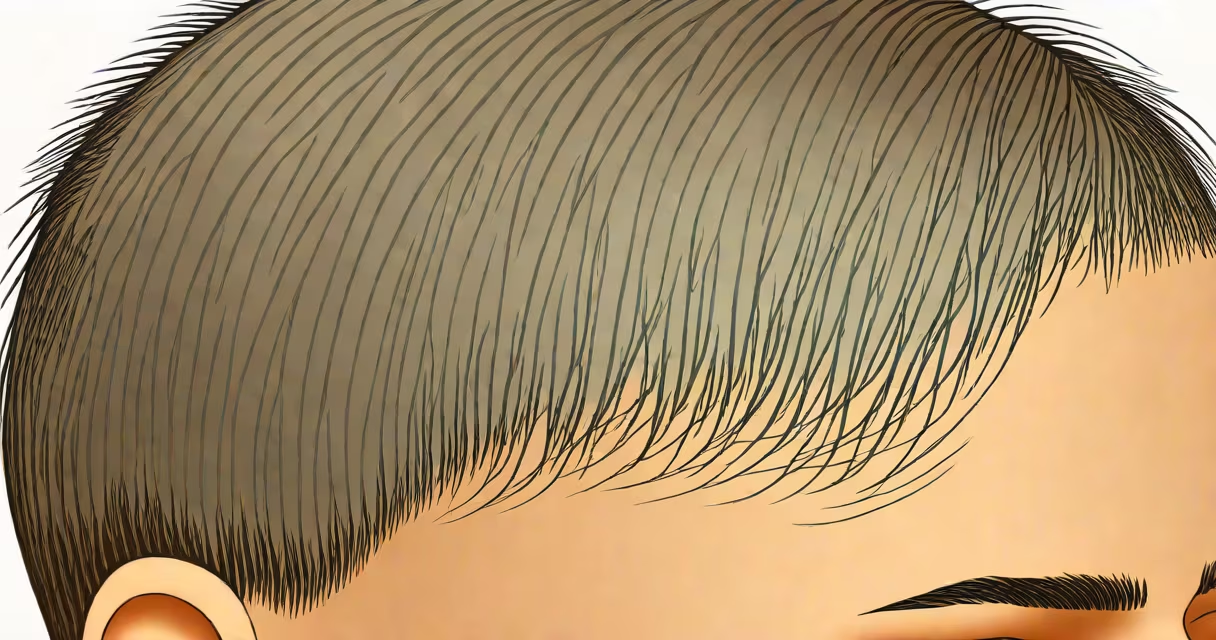
High dht levels hair loss occurs when elevated dihydrotestosterone (DHT) binds to androgen receptors in scalp hair follicles, shrinking them and shortening the growth phase, leading to thinning and eventual hair loss. This process underlies both male and female pattern baldness.
DHT is a potent derivative of testosterone formed when the enzyme 5-alpha-reductase converts testosterone into DHT. While DHT plays roles in male development and libido, excessive levels in genetically susceptible individuals trigger hair follicle miniaturization. The condition is hereditary and most common in men, though women can also experience it.
According to the American Academy of Dermatology, about 50% of men show signs of androgenetic alopecia by age 50. The same condition affects roughly 40% of women over 40. These numbers reflect a direct link between DHT sensitivity and hair loss progression. Not everyone with high DHT experiences hair loss-genetics determine follicle responsiveness.
When DHT binds to androgen receptors in hair follicles, it disrupts the normal hair growth cycle. The anagen (growth) phase shortens, while the telogen (resting) phase lengthens. Over time, follicles produce finer, shorter hairs until they stop growing altogether.
This process begins at the crown and temples in men and often manifests as a receding hairline or thinning at the part line. In women, it typically presents as diffuse thinning across the scalp, especially at the center part. The hair doesn't fall out suddenly-it gradually becomes less dense.
A 2021 study published in the Journal of Clinical and Aesthetic Dermatology found that scalp biopsies from individuals with androgenetic alopecia showed higher DHT concentrations in follicular tissue compared to controls. Levels were 3.5 times higher in affected areas, confirming DHT's central role in follicle degeneration.
There are two primary patterns linked to DHT levels:
| Type | Common Name | Typical Presentation | Genetic Link |
|---|---|---|---|
| Male-pattern | Androgenetic alopecia (AGA) | Receding hairline, crown thinning | Strong; X-linked inheritance |
| Female-pattern | Female androgenetic alopecia | Diffuse thinning, widened part | Moderate; polygenic |
Both forms involve heightened sensitivity to DHT, but the distribution differs. Men often lose hair in a distinct M-shaped pattern. Women rarely go completely bald but may experience significant thinning that impacts self-image.
DHT-related hair loss is not caused by stress or poor diet alone. While those factors can worsen shedding, they don't initiate the underlying biological cascade. A key distinction: temporary hair shedding from illness or childbirth resolves within six months. DHT-induced loss continues unless interrupted by treatment.
Many assume that high testosterone equals high DHT. That's incorrect. Testosterone must be converted into DHT via 5-alpha-reductase. Some men have normal or low testosterone but still develop high DHT levels due to enzyme activity.
Another myth is that shaving your head reduces DHT. This has no effect. DHT is produced systemically and acts locally on follicles. Removing hair doesn't alter hormone levels or follicle sensitivity.
Some believe DHT blockers like saw palmetto work universally. A 2019 randomized controlled trial in the journal Phytotherapy Research found that saw palmetto reduced DHT by 16% in serum and 22% in scalp tissue-but only in participants with baseline DHT above 25 nmol/L. It didn't help those with normal levels. This shows DHT blockers aren't effective for everyone.
Consider a 32-year-old man with a family history of baldness. His father lost his hair by 40. At 30, he noticed his hairline receding slightly. Blood tests showed normal testosterone (600 ng/dL), but DHT was 75 ng/dL-above the typical range of 20-40 ng/dL. Scalp biopsy confirmed increased DHT binding in follicles.
He began using finasteride, a 5-alpha-reductase inhibitor that blocks DHT formation. After 6 months, his hairline stabilized. After 12 months, new fine hair emerged in previously thin areas. MRI scans showed increased follicular density. This outcome reflects how targeting DHT can reverse early-stage hair loss.
Finasteride is FDA-approved for treating male pattern baldness. It reduces DHT by up to 70% in serum and scalp tissue. Side effects are rare but include decreased libido in 0.1% of users. The drug is not recommended for women of childbearing age due to risks to fetal development.
If you notice gradual thinning, especially in a pattern consistent with androgenetic alopecia, consult a dermatologist. They may recommend blood tests to measure DHT and testosterone ratios, or a scalp biopsy to assess follicle health.
Treatment options include:
Combining treatments yields better results. A 2020 meta-analysis in Dermatologic Surgery found that patients using minoxidil plus finasteride had a 42% greater increase in hair count than monotherapy groups after 12 months.
I've seen patients who delayed treatment until their hairline was nearly gone. Early intervention is critical. Once follicles enter permanent miniaturization, regrowth is unlikely. The window for reversal closes around 10 years after onset.
Understanding dht levels hair loss means recognizing it as a hormonal, genetic condition-not a sign of poor hygiene or stress alone. Early detection and targeted therapy can halt progression and restore confidence. The goal isn't just stopping loss-it's regaining natural hair volume.