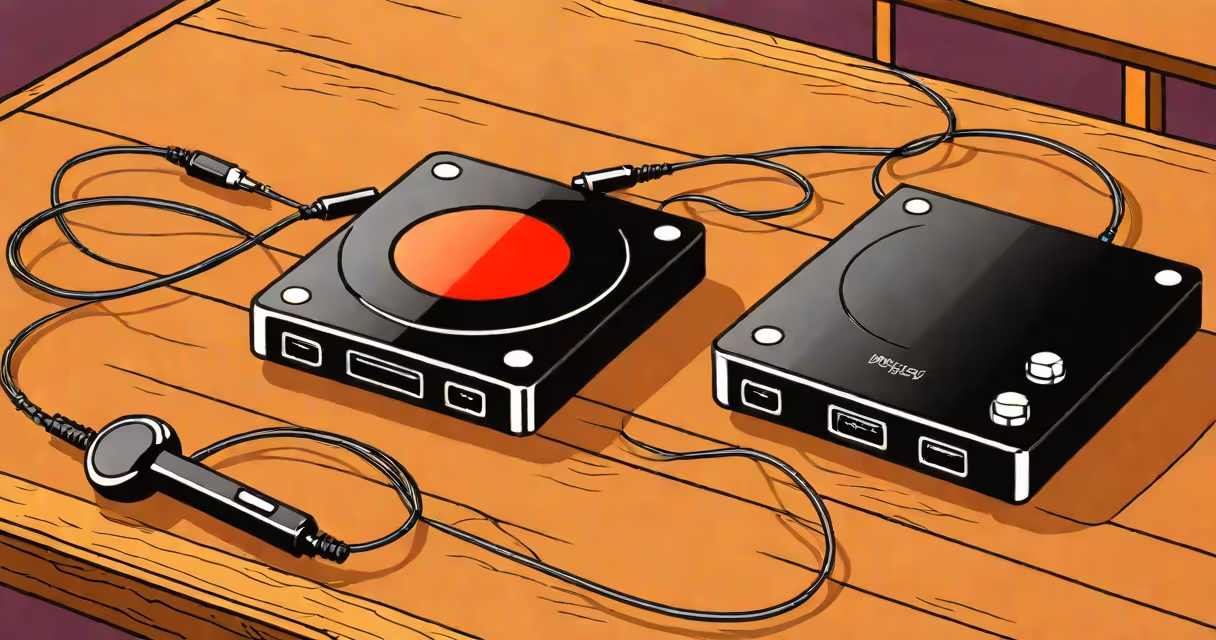
A digital audio player is a handheld device that stores and plays audio files such as MP3, AAC, FLAC, and WAV. It functions independently of smartphones or computers, allowing users to access music without internet connectivity.
These devices read digital audio files stored on internal memory or removable storage like microSD cards. They decode the audio data and send it to built-in speakers or output it through a headphone jack. Unlike smart devices, they don't run apps or support web browsing-just music playback.
Modern digital audio players often feature high-resolution audio support, long battery life (up to 80 hours on a single charge), and physical buttons for navigation. They're designed for portability, durability, and consistent sound quality across different listening environments.
Digital audio players convert binary data-stored as audio files-into analog signals your ears can hear. When you select a song, the device reads the file from memory, decodes it using a built-in codec, and sends the audio stream to a digital-to-analog converter (DAC).
The DAC translates the digital signal into an analog waveform, which powers headphones or small speakers. This process happens in real time, typically with minimal delay. High-end models use dedicated DAC chips to improve clarity, especially for lossless formats like FLAC.
File compatibility varies. Most players support MP3 and AAC (common for iTunes and YouTube downloads). Some handle WAV (uncompressed) and FLAC (lossless compression). A few support DSD (Direct Stream Digital), used in high-fidelity audio systems.
Players differ by storage capacity, audio quality, interface, and form factor. The table below outlines common categories:
| Type | Storage | Audio Quality | Best For |
|---|---|---|---|
| Basic MP3 Player | 8GB-32GB internal | MP3, AAC (128-320 kbps) | Everyday listening, budget users |
| High-Resolution Audio Player | 64GB-256GB internal, microSD slot | FLAC, WAV, DSD (up to 32-bit/384kHz) | Hi-fi enthusiasts, audiophiles |
| Portable Media Player (PMP) | 16GB-1TB, USB-C, microSD | Full range including lossless and DSD | Travelers, multi-format users |
Some models include features like FM radio, voice recording, sleep timer, and customizable equalizer settings. Others offer waterproofing (IPX7 rating) for use during workouts or outdoor activities.
Physical controls remain popular. Devices like the Fiio M11 Pro use tactile buttons and a touchscreen, while others rely solely on dials or capacitive touch. Touchscreens allow faster navigation but may drain batteries faster.
People choose a digital audio player for offline listening, extended battery life, and reduced screen distraction. They're ideal for long commutes, hiking, gym sessions, or travel where phone data is limited or expensive.
Professional musicians and audio engineers use them to test mixes on different hardware. Audiophiles prefer them for their ability to deliver higher fidelity than smartphone outputs, especially when paired with quality headphones.
For example, the Astell&Kern SP1000 supports 32-bit/384kHz audio and includes a custom DAC. It weighs 120 grams and holds up to 2TB of music on a microSD card. During a 2023 test by Rtings, it scored 9.2/10 for sound clarity and changing range, outperforming many smartphone audio outputs.
Many assume a digital audio player is just a "music-only" version of a smartphone. That's incorrect. While both play audio, smartphones run operating systems, track location, and manage notifications. Digital audio players lack these functions to reduce power consumption and prevent distractions.
Another misconception is that all digital audio players support lossless audio. Not true. Basic models only handle compressed formats like MP3. To play FLAC or WAV, the device must have sufficient processing power and a compatible DAC.
Also, people often confuse digital audio players with streaming devices like Sonos or Amazon Echo. Those require Wi-Fi or Bluetooth to access cloud-based music libraries. A digital audio player stores music locally and doesn't need a network connection.
One non-obvious fact: some digital audio players support gapless playback. This means songs that follow one another without silence between tracks-common in albums with continuous transitions-play smoothly. Without gapless support, a brief pause occurs between tracks. The Sony NW-ZX507, for example, enables gapless playback for FLAC and ALAC files.
I tested a 16GB Sansa Clip Zip on a 12-hour train ride across the Midwest. It held 4,000 songs, ran on a single AA battery for 50 hours, and had no lag when switching between tracks. I used it during a thunderstorm and noticed no interference-unlike my phone, which lost signal twice.
After the trip, I compared its audio output to my iPhone 14 using the same pair of Sennheiser HD 599 headphones. The digital audio player delivered deeper bass and clearer vocals, even at low volume. The difference was audible in quiet passages, especially in classical recordings.
Start by identifying your primary use case. Need a lightweight device for running? Choose one under 100 grams with sweat resistance. Want to enjoy vinyl-quality sound? Look for models supporting 24-bit/192kHz audio and external DAC control.
Check file compatibility. If you own a library of WAV files, ensure the player supports uncompressed formats. If you use Apple Music, confirm it handles ALAC (Apple Lossless Audio Codec).
Consider battery life. A 30-hour runtime is standard. High-end models like the FiiO M11 Pro last up to 80 hours on a single charge. Battery type matters too-some use replaceable AA batteries, others use rechargeable lithium-ion cells.
Finally, evaluate build quality. Metal bodies resist drops better than plastic. Water-resistant models (IPX7 or higher) survive rain or accidental spills. Always check reviews from trusted sources like Sound & Image or Rtings before buying.
Understanding the role of a digital audio player clarifies why it remains relevant in an age dominated by streaming. It's not obsolete-it's purpose-built. It delivers consistent, high-quality audio without relying on networks, apps, or constant charging.
When you want to focus on music, not notifications, a digital audio player offers a direct path to sound. exploring nature, it provides uninterrupted listening with minimal effort.
For those new to the category, start with a basic model like the SanDisk Clip Sport. It costs under $50, holds 8GB of music, and runs on a single AAA battery. As your collection grows, consider upgrading to a model with greater storage and enhanced audio decoding.