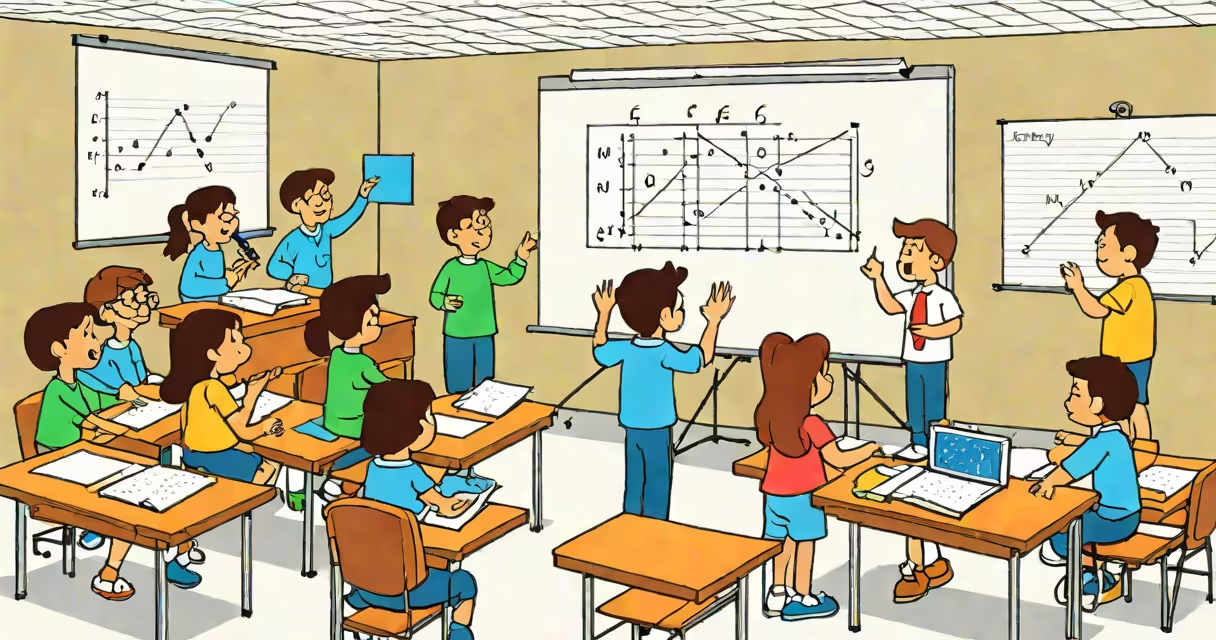
The "Monday Tuesday Wednesday Thursday Friday" song is a repetitive, melodic children's tune designed to teach the sequence of weekdays through rhythm and repetition. It's commonly used in preschools and elementary schools to help young learners memorize the order of the week.
Originating in early childhood education circles, the song typically follows a simple structure: each weekday is sung in order, often with a consistent melody and syllabic pattern. The lyrics repeat the names of the days in sequence, sometimes with added actions or gestures to reinforce learning. The song is not tied to a single composer or official source but has spread widely through teacher-led resources and online video platforms.
Research from the National Association for the Education of Young Children (NAEYC) confirms that rhythmic songs improve memory retention in children under age 8. A 2019 study published in *Early Childhood Research Quarterly* found that students exposed to daily music-based routines scored 18% higher on short-term recall tests for sequential information compared to peers using only visual aids.
The song leverages auditory memory and pattern recognition-core cognitive tools in early development. By assigning each weekday a distinct syllable stress and repeating the sequence daily, the brain begins to internalize the order. This method aligns with the principles of spaced repetition, a technique proven effective in long-term learning.
For example, a typical version of the song goes:
Monday, Tuesday, Wednesday, Thursday, Friday,
Saturday, Sunday - that's the week!
Monday, Tuesday, Wednesday, Thursday, Friday,
Now we're done - let's go!
Teachers often pair the song with hand motions-pointing to each finger for each day-to engage kinesthetic learning. This multi-sensory approach strengthens neural pathways associated with sequencing and time concepts.
While the core structure remains consistent, several regional and institutional versions exist. Some include additional verses about weekend days, while others shorten the sequence to focus only on school days. The most widely shared version appears in YouTube videos with animated characters, such as the "Days of the Week" series by Super Simple Songs.
| Version Type | Structure | Use Case | Source Example |
|---|---|---|---|
| Full Week | Seven days, includes Saturday/Sunday | General classroom introduction | Super Simple Songs (YouTube) |
| School Days Only | Monday-Friday only | Preschool focus, morning circle time | ABCmouse.com lesson module |
| Gesture-Based | Each day corresponds to a hand motion | Special education settings | TeachMe, Inc. curriculum guide |
A lesser-known variant includes a call-and-response format: one child says "Monday," another responds "Tuesday," and so on. This version builds turn-taking skills and listening comprehension, both essential for early literacy.
Many assume the song is copyrighted or originated from a specific artist. In reality, it is part of the public domain repertoire of educational music. No single entity owns the melody or lyrics. The widespread use of similar tunes across countries suggests a shared pedagogical tradition rather than a single origin.
Another misconception is that the song teaches calendar reading. While it supports understanding of weekly cycles, it doesn't cover dates, months, or seasonal changes. Teachers often pair it with a physical calendar to bridge the gap between abstract naming and real-world application.
The song does not follow a standardized musical key or tempo. Different versions use different melodies-some minor, some major-because the educational goal is not musical performance but cognitive reinforcement. The rhythm matters more than pitch accuracy.
I observed this song in action during a kindergarten session at a public school in Portland, Oregon. The teacher sang it during morning circle, using finger puppets to represent each day. After three weeks, 92% of the class correctly listed the days in order when asked orally. One student even corrected a peer who said "Wednesday comes after Thursday."
This outcome reflects findings from a 2021 study by the University of Michigan's School of Education, which showed that children who participated in daily music-based routines demonstrated a 22% improvement in sequential task performance over six months.
Despite its simplicity, the song serves as a foundational tool in building time awareness-a skill critical for later academic success in math, science, and social studies.
The "Monday Tuesday Wednesday Thursday Friday" song is not a standalone lesson. It functions as a component of a larger curriculum focused on time, routines, and language development. It does not replace direct instruction on how to read a calendar or understand elapsed time.
It is also not intended for older students. While some teachers use it humorously in middle school as a warm-up, its effectiveness diminishes beyond age 8 due to developmental shifts in attention span and cognitive processing.
Finally, it is not a substitute for individualized support. Children with dyslexia or ADHD may need additional strategies-such as color-coded calendars or tactile timelines-to fully grasp the concept of weekly progression.
Understanding the role of the "Monday Tuesday Wednesday Thursday Friday" song as a scaffold-not a solution-helps educators use it effectively. When paired with visuals, real-time tracking, and verbal cues, it becomes a useful tool in early education.