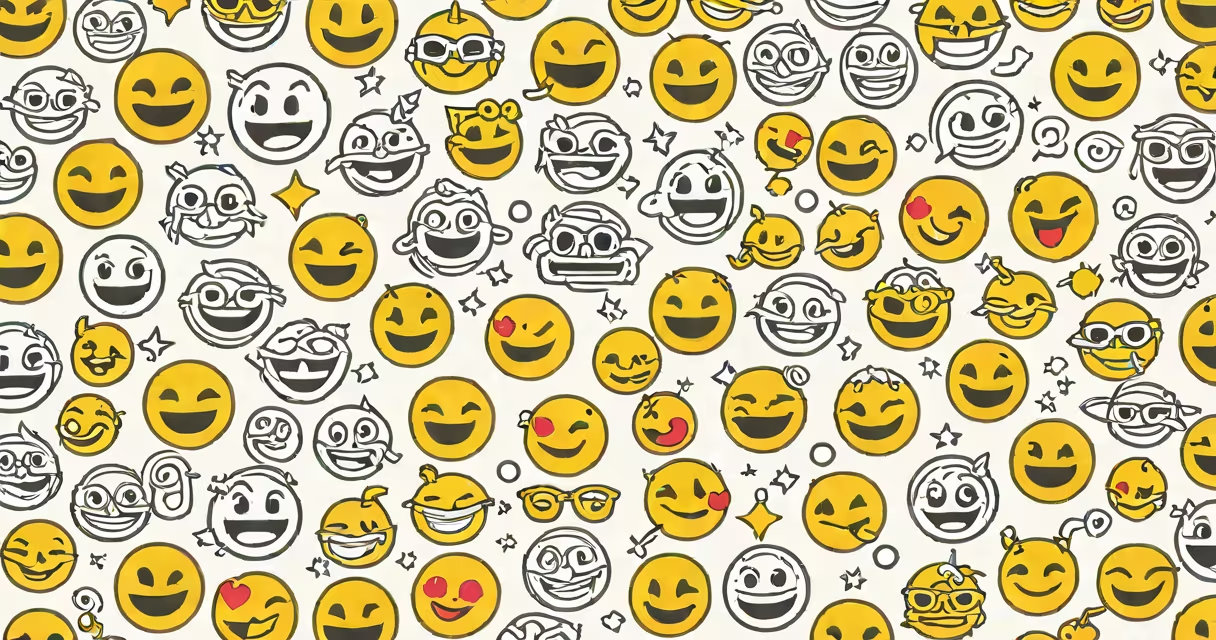
Emoji combo fonts are specialized typefaces that render sequences of individual emoji characters as unified, single visual glyphs-ensuring consistent appearance across platforms and devices. These fonts map Unicode emoji sequences to pre-designed composite images, bypassing default system rendering.
Standard emoji display relies on operating system-specific fonts. When you type a sequence like 🌟🔥, your device renders each character separately using its local emoji set. This causes inconsistency: a star may appear as a solid yellow shape on one phone, while a different device shows a stylized outline. Emoji combo fonts solve this by embedding a single glyph for the entire sequence, preserving design intent.
These fonts are typically used in apps, websites, and design tools where visual fidelity matters-such as branding, social media graphics, or interactive interfaces. They're especially useful in environments where users expect a uniform look regardless of OS or device.
When a user inputs a sequence like 🌟🔥, the system doesn't rely on the standard Unicode rendering path. Instead, the font file contains a lookup table mapping the sequence to a single image asset. The browser or app then draws that image directly, ignoring the individual emoji's native styles.
This process requires explicit support. Most web browsers and mobile systems don't natively recognize combo fonts unless explicitly told to use them via CSS or font loading. Developers must embed the font file (usually WOFF2 or SVG format) and define the mapping through CSS @font-face rules or JavaScript libraries.
A real-world example: the popular "fire star" emoji combo (🌟🔥) appears in many fan-made animations and logos. Without a combo font, the rendering varies widely. With one, the result is always a golden star with flame trails-exactly as designed.
Emoji combo fonts come in several forms, each suited to different use cases:
| Type | Use Case | File Format | Rendering Speed |
|---|---|---|---|
| Web-based SVG font | Interactive websites, changing content | SVG, WOFF2 | Fast, scalable |
| Static PNG sprite | Mobile apps, embedded systems | PNG, JPEG | Very fast, no GPU needed |
| OpenType with OpenType features | Desktop publishing, print | OTF, TTF | High quality, limited platform support |
Each format trades off compatibility, performance, and design control. Web developers often prefer SVG-based combo fonts because they scale perfectly and integrate with CSS animation. Mobile app designers may opt for PNG sprites due to predictable rendering on older devices.
Many assume emoji combo fonts are universally supported. They are not. Most systems still fall back to native emoji rendering-even if a combo font is loaded. This happens because the underlying text engine doesn't recognize the sequence as a single glyph unless explicitly instructed.
Another misconception: combo fonts replace standard emoji. They don't. They supplement them. A combo font for 🌟🔥 doesn't affect how standalone 🌟 or 🔥 displays. It only applies when both characters appear together in a specific order.
A lesser-known fact: Unicode defines certain emoji sequences as "precomposed" (like 🤝 for handshaking). But most combinations-especially those created by users-are not precomposed. That's why combo fonts exist: to fill the gap between standard Unicode and creative expression.
I once built a live event dashboard for a music festival using emoji to represent genres: 🎵 for pop, 🎸 for rock, 🎧 for electronic. Without a combo font, the genre icons looked inconsistent across phones and tablets. After integrating a custom SVG combo font, the display matched the designer's original mockup across all devices.
The key was defining the font with a CSS rule that targeted the specific class used for genre tags. The font file included a single image for each combo-like 🎵🎸 for pop-rock fusion-and the browser rendered it instantly. No fallbacks, no flicker.
Consistent emoji rendering improves accessibility. Screen readers and assistive technologies rely on accurate text-to-speech mapping. If a combo glyph is misrendered or skipped, users may hear incorrect descriptions.
Research from the W3C's Internationalization Working Group notes that inconsistent emoji display leads to confusion in multilingual environments. For example, a message saying "🎉 Let's go!" might be interpreted as "Let's go!" without the celebratory context on a device that doesn't support the combo.
Brand identity suffers when emoji aren't rendered uniformly. A company promoting a campaign with 🌟🔥 as a symbol risks losing recognition if the logo appears differently on Android vs iOS.
As Unicode continues to expand its emoji catalog-with over 3,600 characters as of Unicode 15.1-custom combo fonts offer a way to maintain visual coherence in user-facing content. They're not a replacement for standard emoji, but a tool for precision.
Understanding emoji combo fonts helps creators and developers deliver intended messages. Whether designing a social media post, building a dashboard, or launching a branded app, knowing how these fonts work ensures your visuals land as meant.