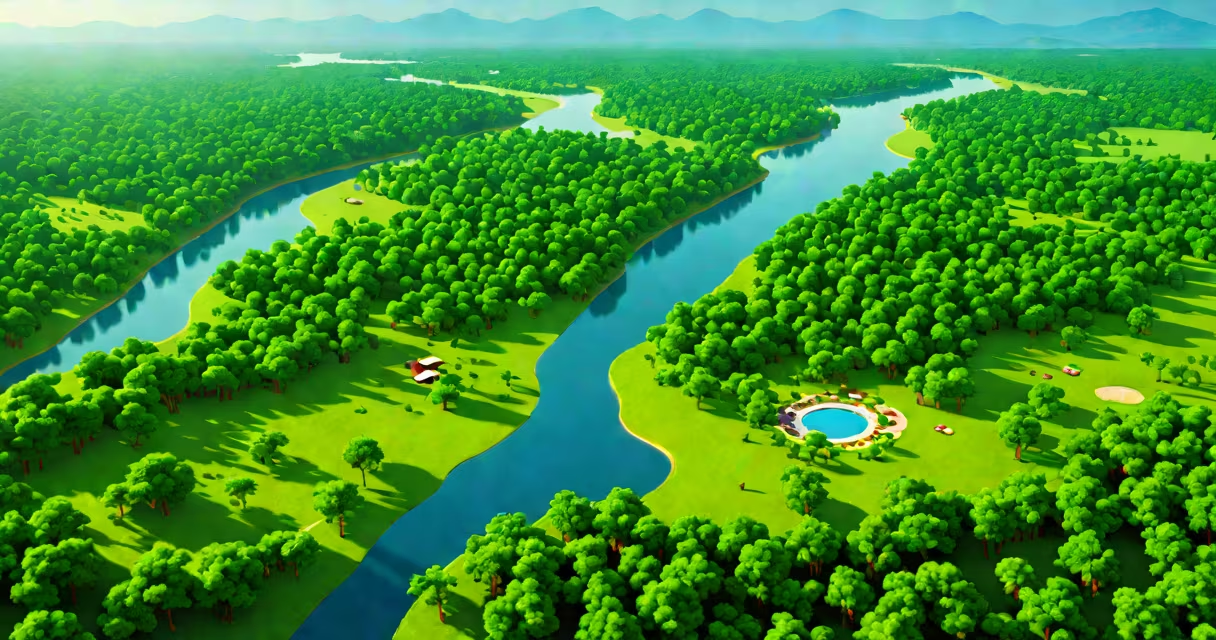
Facts about life on land describe the diversity, structure, and challenges of organisms living on Earth's terrestrial surfaces, including forests, grasslands, deserts, and mountains. These facts cover species distribution, system functions, human impacts, and conservation outcomes across continents.
Life on land evolved from aquatic ancestors around 450 million years ago. The earliest land-dwelling organisms were simple plants and arthropods. Over time, complex ecosystems emerged, supporting vertebrates, fungi, and microbial communities. Terrestrial ecosystems now cover 29% of Earth's surface and host 80% of known animal species.
These systems rely on nutrient cycling, soil formation, and climate regulation. Plants fix carbon dioxide through photosynthesis, while decomposers recycle organic matter. Soil microbiomes sustain plant growth and filter water. Without these processes, terrestrial environments would collapse.
Land-based ecosystems operate through energy flow and material cycling. Sunlight powers primary producers-mostly green plants, algae, and some bacteria. These convert light into chemical energy stored in glucose. Herbivores consume plants, carnivores eat herbivores, and decomposers break down dead matter, returning nutrients to the soil.
Food webs illustrate these relationships. In a temperate deciduous forest, oak trees feed deer and squirrels. Foxes prey on rabbits and mice. Fungi and bacteria decompose fallen leaves and animal remains, releasing nitrogen and phosphorus. This cycle sustains productivity across generations.
Water availability shapes system structure. Deserts receive less than 250 mm of rain annually, limiting plant growth. Tropical rainforests average 2,000 mm per year, enabling dense canopies and high biodiversity. Seasonal variation influences migration, reproduction, and dormancy patterns in animals.
Terrestrial biomes differ in climate, vegetation, and animal adaptations. The table below outlines major types based on temperature, precipitation, and dominant species.
| Biome | Annual Precipitation | Temperature Range | Key Species | Human Impact Level |
|---|---|---|---|---|
| Tropical Rainforest | 1,500-4,000 mm | 20-30°C | Orangutans, toucans, fig trees | High (deforestation) |
| Temperate Grassland | 500-900 mm | -10 to 30°C | Bison, prairie dogs, native grasses | Very High (agriculture) |
| Desert | 50-250 mm | 0-50°C | Cacti, kangaroo rats, lizards | Medium (urban expansion) |
| Boreal Forest (Taiga) | 300-600 mm | -50 to 20°C | Moose, wolves, spruce trees | Low to Medium (logging) |
Each biome supports specialized species. For example, cacti store water in thick stems and have spines instead of leaves to reduce evaporation. Prairie dogs dig burrows that aerate soil and provide shelter for snakes and birds.
Some habitats exist in transitional zones. The savanna lies between tropical forest and desert, combining scattered trees with grassy plains. Fire plays a natural role here-grasses regrow quickly after burning, preventing tree encroachment.
People often assume that land ecosystems are stable and self-regulating. In reality, they respond dynamically to disturbances. A wildfire may destroy a forest, but it also clears dead wood, stimulates seed germination, and creates new niches for pioneer species.
Another misconception is that biodiversity equals abundance. A region can have many species but low population density. The Amazon rainforest hosts over 400 bird species per 100 km², yet most individuals are rare. In contrast, agricultural fields may have few species but high numbers of a single crop or pest.
A lesser-known fact: soil contains more carbon than the atmosphere. Globally, terrestrial soils hold approximately 2,500 gigatons of carbon-twice the amount in the air. When soil is disturbed through plowing or deforestation, this carbon is released as CO₂, accelerating climate change.
In 2019, the Intergovernmental Science-Policy Platform on Biodiversity and System Services (IPBES) reported that 75% of terrestrial environments have been altered by humans. Habitat loss due to agriculture, urbanization, and mining has driven 25% of assessed species toward extinction.
For example, the African savanna has lost 30% of its wildlife populations since 1970. The Serengeti-Mara system supports wildebeest migrations covering 1,800 km annually. Roads and fences fragment routes, reducing access to water and grazing areas. This leads to lower birth rates and increased mortality during dry seasons.
On a smaller scale, a study in California's Sierra Nevada found that logging reduced the abundance of spotted owls by 60% within five years. These birds depend on old-growth forests for nesting and hunting. Their decline signals broader system degradation.
I once observed a small-scale restoration project in northern Michigan. A degraded farm field was converted into a native prairie using seeds collected from nearby remnants. After four years, plant diversity increased from 3 to 28 species. Birds such as meadowlarks and eastern bluebirds returned. This shows that recovery is possible with targeted effort.
Understanding facts about life on land informs policy, conservation, and education. The United Nations Sustainable Development Goals (SDGs) include targets for protecting terrestrial ecosystems. Goal 15 aims to halt biodiversity loss and restore degraded lands by 2030.
Actions like reforestation, sustainable farming, and protected area management rely on accurate ecological data. For instance, planting native trees in deforested regions increases carbon sequestration and provides habitat for pollinators and seed dispersers.
Individual choices also influence outcomes. Reducing meat consumption lowers demand for pastureland and soy cultivation. Choosing sustainably sourced products reduces pressure on forests and wetlands. These decisions align with global efforts to preserve life on land.
Facts about life on land are not abstract-they reflect measurable changes in species, soils, and climate. They show that human actions directly affect the stability of ecosystems we depend on. Addressing habitat loss, pollution, and overexploitation requires both scientific insight and public engagement.