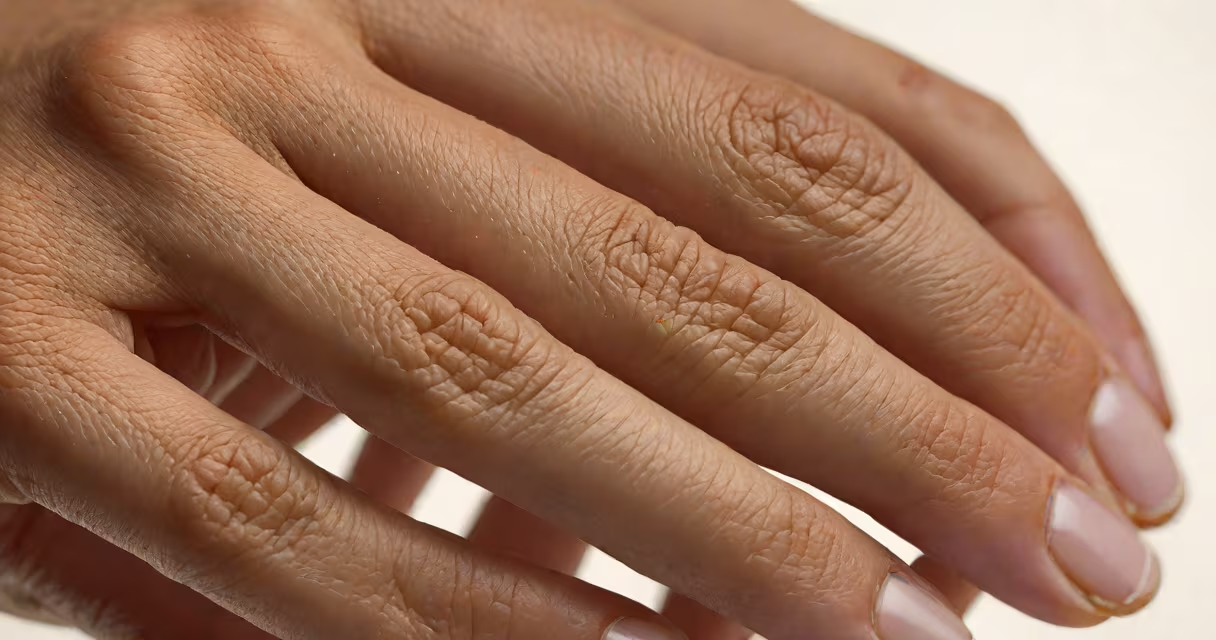
Finger locking happens when a finger suddenly catches in a bent position and won't straighten without a snap or pop, often due to inflammation or thickening of the tendon sheath around the flexor tendons in the hand. This condition most commonly results from trigger finger, a disorder where the tendon that bends the finger becomes inflamed and forms a nodule, preventing smooth gliding through the pulley system.
The mechanism begins when the A1 pulley at the base of the finger restricts the movement of the flexor digitorum profundus tendon. As the tendon moves, it may catch on the pulley, causing the finger to lock in a flexed state. When force is applied, the tendon suddenly releases, producing a clicking sensation. This process typically affects the ring or middle finger and is more common in people aged 40 to 60, especially women and individuals with diabetes or rheumatoid arthritis.
According to the American Academy of Orthopaedic Surgeons (AAOS), trigger finger affects about 2% of the population annually, with higher rates in those with metabolic conditions. The Mayo Clinic notes that repetitive gripping motions-such as using tools, typing, or playing instruments-can contribute to the development of the condition over time.
Trigger finger arises when the tendon sheath lining the hand's flexor tendons thickens, restricting the tendon's glide. This thickening often results from overuse, injury, or inflammatory diseases. The tendon itself may develop a small nodule, which acts like a knot that gets stuck on the pulley structure.
When the finger is bent, the tendon slides through the pulley. But if the pulley is too tight or the tendon is enlarged, the tendon cannot pass smoothly. As pressure builds, the finger remains locked until a sudden release occurs-often accompanied by a painful click. Over time, the condition may progress from occasional catching to persistent locking, requiring medical intervention.
A 2021 study published in *The Journal of Hand Surgery* found that 68% of patients with trigger finger reported symptoms lasting more than six months before seeking treatment, underscoring the importance of early recognition.
While trigger finger is the most frequent cause, other disorders can mimic or contribute to finger locking:
These conditions are distinct from trigger finger and require different treatments. For example, Dupuytren's contracture may need surgical release or collagenase injections, while carpal tunnel syndrome is managed with splinting or surgery to relieve nerve pressure.
Many assume finger locking is always due to arthritis or nerve compression. But the root issue is usually mechanical-related to tendon movement, not nerve function. A key distinction is that nerve-related conditions like carpal tunnel syndrome cause numbness, tingling, or weakness, not mechanical catching.
Another misunderstanding is that finger locking is harmless or temporary. While mild cases may resolve on their own, persistent locking can lead to permanent stiffness or tendon damage. The American Society for Surgery of the Hand warns that untreated trigger finger can result in irreversible joint deformity.
Some patients mistake snapping fingers for trigger finger when it's actually normal tendon movement. True triggering involves resistance, a visible catch, and often pain. If the finger locks and requires manual assistance to straighten, it's likely pathological.
In 2022, a 54-year-old office worker reported her right ring finger locking twice daily during keyboard use. She described a "click" when trying to straighten it and pain at the base of the finger. Physical exam revealed a palpable nodule at the metacarpophalangeal joint. Ultrasound confirmed thickened tendon sheath and a nodular lesion on the flexor tendon.
She was diagnosed with trigger finger and treated with a corticosteroid injection. After one week, the locking resolved completely. Follow-up at six weeks showed no recurrence. This case illustrates how early diagnosis and targeted therapy prevent progression.
Use this comparison to clarify confusion between similar conditions:
| Condition | Primary Symptom | Affected Area | Diagnostic Clue |
|---|---|---|---|
| Trigger finger | Locking, clicking, pain at base of finger | Flexor tendon sheath near palm | Nodule felt under skin; catching on flexion |
| Carpal tunnel syndrome | Tingling, numbness in thumb/index/middle fingers | Median nerve at wrist | Positive Phalen's test; no catching |
| Dupuytren's contracture | Palm lump, finger bending inward | Palm fascia | Contracture develops slowly; no clicking |
| Osteoarthritis | Stiffness, pain in knuckle joints | Proximal and distal interphalangeal joints | Bony enlargement; limited passive motion |
Recognizing these differences prevents misdiagnosis and ensures proper care. For example, treating trigger finger with carpal tunnel surgery would fail because the underlying issue is mechanical, not neural.
I once observed a carpenter who developed trigger finger after three years of daily hammer use. He initially ignored the clicking, thinking it was fatigue. By the time he sought care, his middle finger was locked in a bent position and required surgical release. Post-op, he regained full function within four weeks. His case highlights how occupational strain contributes to tendon overload.
Consult a hand specialist if you experience:
Early treatment options include rest, splinting, anti-inflammatory medication, and steroid injections. Surgery is reserved for severe or refractory cases, involving release of the A1 pulley to restore tendon mobility.
Knowing the precise cause of finger locking enables accurate diagnosis and effective management. Whether it's trigger finger, Dupuytren's disease, or another issue, timely action prevents long-term disability.